
Tiny House Zoning Laws by State: What’s Legal Where You Want to Live


Buying a tiny house is the easy part. Finding a place where you can legally live in it is where most plans get stuck.
Tiny house zoning laws by state are a patchwork. One state tells towns they must welcome tiny homes, while the state next door leaves every choice to the county.
That is why so many buyers get caught off guard. They pick a state with a good reputation, buy land, and then learn the county requires a much bigger house.
You can avoid that mistake with about an hour of homework. And you don’t need a lawyer to do it.
This guide shows you where you can legally live in a tiny house and how tiny house on wheels laws differ from foundation rules. You will also see which states make it easiest, plus a simple seven step check you can run on any lot before you spend a dollar.
Why a Tiny House Can Be Illegal Even in a Friendly State
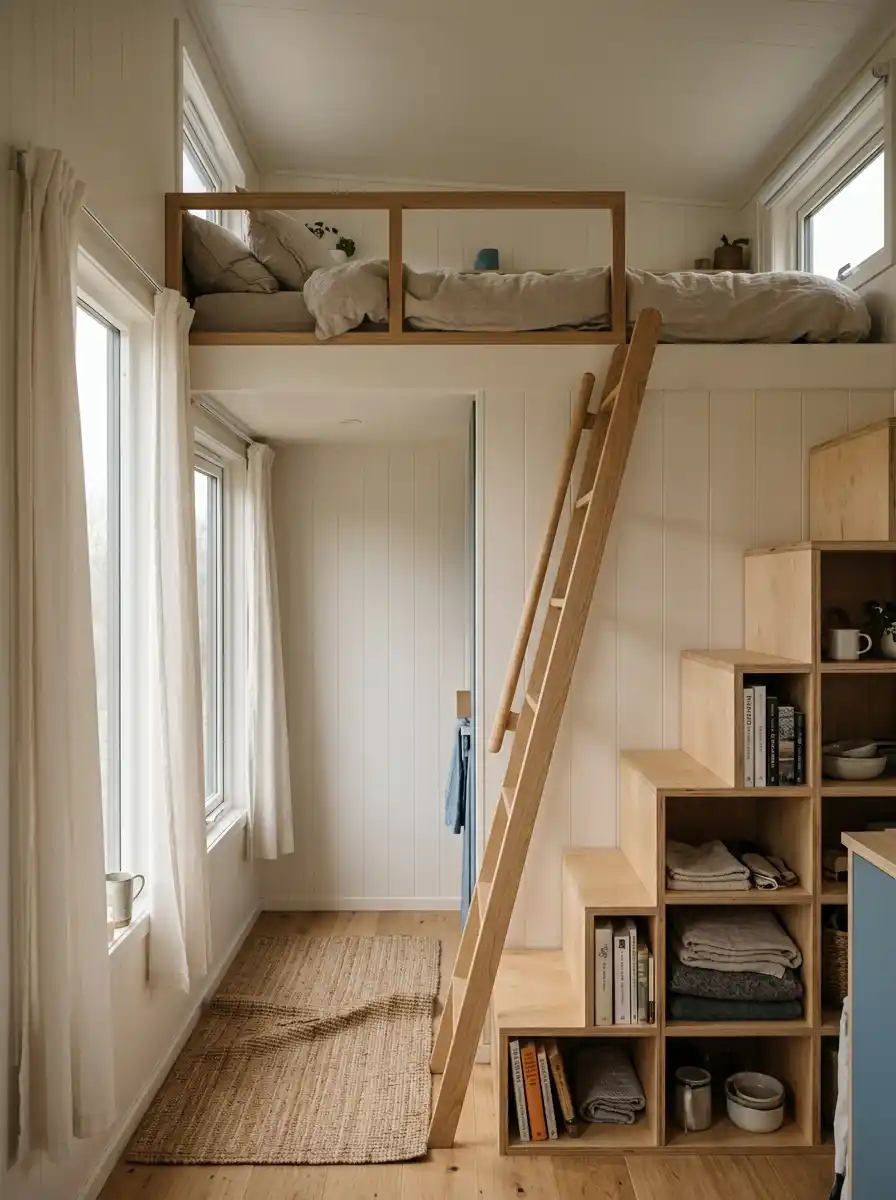
Three sets of public rules decide if your tiny house is legal. Each one comes from a different office, and you need a yes from all of them.
Private rules can add a fourth layer on top. Here is how they all stack up.
| Rule layer | Who sets it | What it controls |
|---|---|---|
| State law | Your state legislature | What cities and counties must allow |
| Building code | State or local building department | How the home must be built |
| Local zoning | City or county planning office | Where homes can go and how big they must be |
| Private rules | HOA or deed | Extra limits on your specific lot |
State Law Sets the Floor
Some states tell local towns what they must allow. Maine is the clearest example in the country.
Towns in Maine must allow a tiny home of 400 square feet or less anywhere a regular single family home is allowed. That includes homes built on a chassis.
Many other states took a different route. They passed ADU laws instead of tiny house laws.
An ADU, or accessory dwelling unit, is a small second home on the same lot as a main house. In states with strong ADU laws, a backyard tiny house is often the fastest legal path.
The Building Code Decides How It Is Built
Most of the country uses a model building code called the International Residential Code. It has a special tiny house section for homes of 400 square feet or less.
This section relaxes the rules for lofts, ladders, compact stairs and ceiling heights. Without it, a normal stair or ceiling rule can make a tiny design fail inspection.
Here’s the catch. That tiny house section only applies where your state or city has adopted it, and one phone call to the building department will tell you.
Local Zoning Decides Where and If
Zoning is the most common deal breaker. Many single family zones set a minimum house size.
Say your zone requires new homes to be at least 1,000 square feet. A beautiful 300 square foot home still won’t be allowed there, no matter how well it is built.
Zoning also controls whether you can live in an RV on private land. In many places you can park one, but you can’t live in it full time.
Private Rules Can Still Say No
HOA rules and deed restrictions sit on top of everything else. They can block a tiny house even when the city allows it.
A few states push back on this. California, for example, cancels HOA rules that make backyard homes impossible to build.
Most states don’t go that far, so read your HOA papers closely. So which rules apply to you first? That depends on one simple question: does your home have wheels?
Wheels or Foundation? This One Choice Changes Every Rule
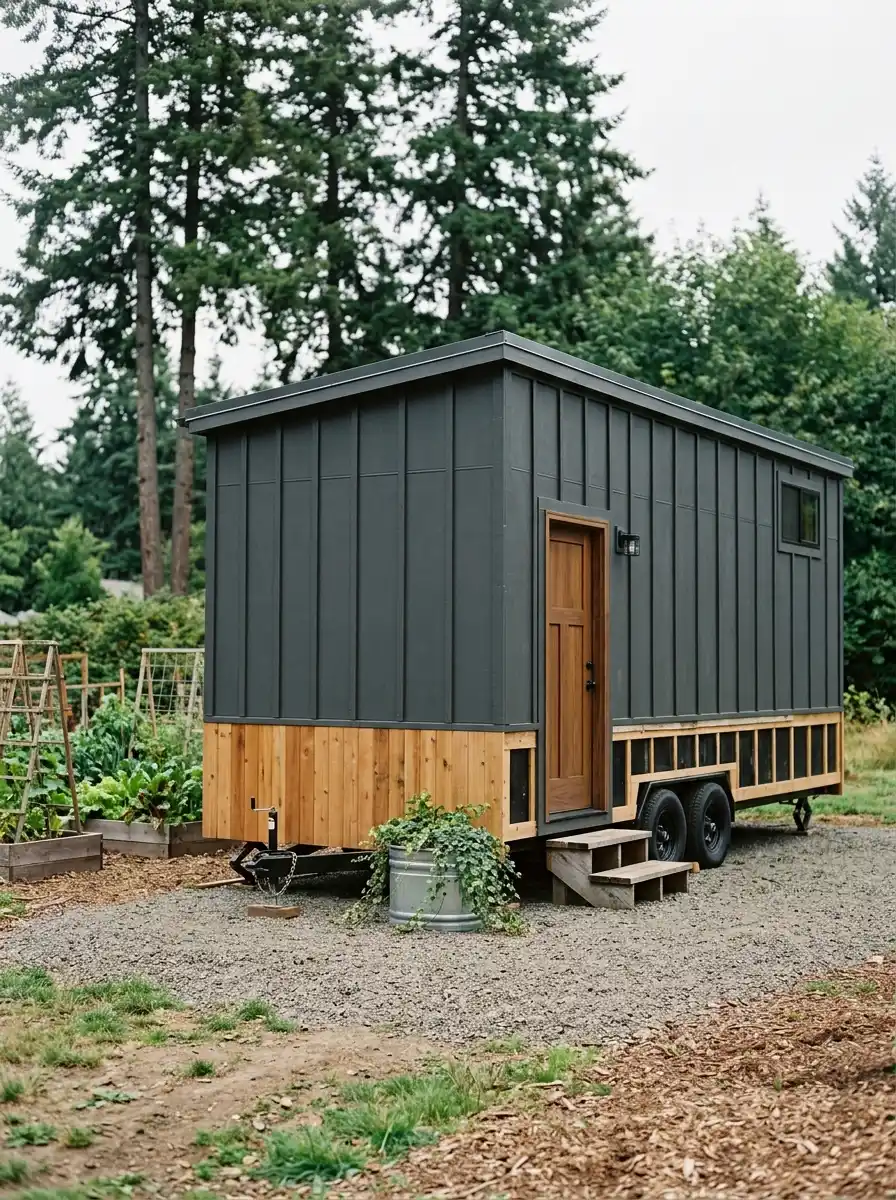
The same 300 square foot home can be treated as an RV, a house or a manufactured home. The label it carries decides which office is in charge.
This table shows the five common types side by side.
| Home type | Built to | Treated as | Usually allowed in |
|---|---|---|---|
| Tiny house on wheels | RV safety standards | Recreational vehicle | RV parks, plus a few cities as a backyard home |
| Park model RV | Park model RV standard, 400 sq ft max | Recreational vehicle | RV resorts and park model communities |
| Tiny house on a foundation | Local residential building code | House | Anywhere a house meets zoning, or as an ADU |
| Manufactured home | Federal HUD code | Manufactured home | Zones that allow manufactured homes |
| Modular home | State building code | House | Same places as a regular house |
Tiny Houses on Wheels
Most cities treat a tiny house on wheels as an RV. RVs are built for travel and camping, so most zoning codes don’t allow full time living in them.
That is changing in some places, but only where a city or county writes it into its code. You’ll see those places in a later section.
Certification matters a lot here. Many cities that allow movable tiny homes want a third party label showing the home meets RV or park model standards.
A DIY build without that label has far fewer options. If you plan to build your own, check local rules before you buy a trailer.
Park Model RVs
A park model is a type of RV built for longer stays. It tops out at 400 square feet when it is set up.
Park models fit well in RV resorts and park model communities. Some backyard home rules also accept them, but always confirm first.
Tiny Houses on a Foundation
Once your home sits on a foundation, it is treated like a regular house. It must pass the local building code and meet every zoning rule, including any minimum size.
In states with strong ADU laws, this is often the smoothest path. Building your tiny house as a backyard unit behind an existing home avoids most size limits.
Be Careful When You Switch Categories
Changing your home’s category changes its rulebook. Portland, Oregon is a good example.
Portland lets one tiny house on wheels sit on a lot that already has a house. But it only gets those simple rules while it stays on wheels.
Take the wheels off and set it on a foundation, and the full building code applies. That can mean costly changes to stairs, insulation and wiring.
What the New Federal Housing Law Changes
A new federal housing law removed an old rule that every manufactured home must sit on a permanent steel chassis. Over time, that could make factory built homes cheaper and more flexible.
But it does not make tiny houses legal everywhere. HUD still has to write the new building standards, and local zoning still decides where any home can go.
Now that you know your home’s category, let’s look at how each state treats it.
Tiny House Zoning Laws by State: Quick Comparison Table

Find your state below, then read the last column closely. A state law tells cities what they must allow, but it never promises that your exact lot will work.
| State | What state law allows | Tiny house on wheels? | Watch out for |
|---|---|---|---|
| Maine | Tiny homes up to 400 sq ft wherever a single family home is allowed | Yes, homes on a chassis count | Towns can still set land use and design rules |
| California | A backyard ADU on most home lots, with a city decision within 60 days | Only in some places, like Fresno, Los Angeles and Placer County | A tiny home must meet the state’s ADU definition |
| Oregon | Portland allows one lived in RV or tiny house on wheels per lot with a house | Yes, in Portland and some rural counties | Each rural county must choose to allow it |
| Washington | Two ADUs per lot in growing urban areas, with at least 1,000 sq ft allowed | Local choice | Mainly applies in and around cities |
| Colorado | One ADU wherever single family homes are allowed in covered areas | Local choice | Small rural towns may not be covered |
| Arizona | One attached and one detached ADU in cities over 75,000 people | Local choice | Smaller towns are not covered |
| Montana | At least one ADU per lot, with no extra parking or owner living rule | Local choice | Applies to cities |
| Massachusetts | One ADU per lot, up to 900 sq ft or half the main house | Must meet full building code | A second ADU needs a special permit |
| Texas | No statewide tiny house law; big cities must allow smaller lots in new neighborhoods | Depends on the city or county | Rules outside city limits vary by county |
| Florida | No statewide ADU rule; each city and county decides | Local only | Some websites wrongly say a statewide law passed |
| Nevada and Connecticut | Tiny house building code section adopted statewide | Not covered, since it is a building code rule | Zoning is still local |
States With a Tiny House Law
Maine stands alone here. Its law treats a tiny home like a regular house in any zone that allows single family homes.
That makes Maine the clearest place to live tiny on your own land. Towns can still set rules for setbacks, utilities and looks, so check those too.
States With Strong ADU Laws
California, Washington, Colorado, Arizona, Montana and Massachusetts all require many cities to allow backyard homes. A tiny house built as an ADU is the safest legal path in these states.
These laws work. In California, yearly ADU permits grew more than twentyfold once the state cleared local roadblocks, and backyard homes now make up over a quarter of all new homes permitted there.
There is one limit. Most ADU laws need a main house on the lot first, so they help homeowners more than people buying empty land.
States Where Local Rules Decide
Texas, Florida and most other states have no statewide tiny house rule. Your city or county makes the call.
Texas has some bright spots. The small town of Spur welcomes tiny homes on foundations, as long as they have proper framing, plumbing and a flush toilet tied to city utilities.
Rural Texas land outside city limits often has fewer zoning rules. County septic and health permits still apply, so plan for them early.
In Florida, a bill to require backyard homes statewide did not pass. You may see websites claiming otherwise, so check with your county directly.
Before you buy: A friendly state is not the same as a friendly lot. Always confirm the rules for your exact parcel with the local planning office.
If your state is not in the table, assume there is no statewide tiny house rule. Your county or city zoning code has the final word.
Want to keep your wheels? The list gets shorter, but you still have real options.
Where Can I Legally Live in a Tiny House on Wheels?

Living full time in a tiny house on wheels is legal in more places than it used to be. But it only works where a city or county has written clear rules for it.
Here are some places that have done exactly that.
- Portland, Oregon: One lived in RV or tiny house on wheels is allowed on a lot that already has a house. Renting it out as a short term vacation stay is not allowed.
- Rural Oregon counties: Counties can choose to allow one RV home on rural residential land, as long as the owner lives in the main house.
- Fresno, California: The city allows certified movable tiny houses as backyard cottages. They need skirting around the wheels and hookups to the main home’s utilities.
- Los Angeles, California: A movable tiny house can count as a backyard unit if it is registered with the DMV and meets the city’s design rules.
- Placer County, California: Movable tiny homes are allowed as backyard units, as main homes in some zones, and in small tiny home communities.
- Maine: State law counts tiny homes on a chassis as homes, so towns must treat them like other small homes.
Common Conditions You Will See
Most places that allow tiny houses on wheels ask for the same basic things. Get these lined up early and approval goes much faster.
- Third party certification to RV or park model standards
- Registration with your state DMV
- Skirting that hides the wheels and trailer
- Real hookups for water, sewer and power
- An existing main house on the same lot
- Long term rentals only, with no short term vacation use
Your Backup Option: RV Parks and Park Model Communities
If your town doesn’t allow wheels on private lots, RV parks and park model communities are the usual fallback.
Check the park’s stay limits before you move in. Some parks cap how long you can stay, so ask for a written long term lease.
One more warning. Parking a tiny house is not the same as living in it, and many towns let you store an RV on your land but not sleep in it every night.
Ready to test a specific piece of land? Here is the exact process to follow.
How to Check If a Tiny House Is Legal on Your Lot in 7 Steps

This takes about an hour, and it can save you from buying land you can’t live on. Do it before you sign anything.
- Name your home type. Decide if it is a tiny house on wheels, a park model, a foundation home, a manufactured home or a modular home. Find its certification label or building plans.
- Find your zoning district. Look up the parcel on your county’s online GIS map or assessor website. Write down the zoning district name.
- Read your zoning code. Most towns post their code online. Search it for minimum dwelling size, accessory dwelling, recreational vehicle and tiny house.
- Ask about the building code. Call the building department and ask which code they use. Then ask if they adopted the tiny house section for homes of 400 square feet or less.
- Check private rules. Read the HOA papers and any deed restrictions. A title company or the county recorder’s office can pull these for you.
- Confirm utilities. Find out how you will get water, power and sewer. If there’s no city sewer, ask the county health office about a septic permit.
- Get it in writing. Ask the planning office for a zoning verification letter, or book a planning meeting before you buy. A phone answer helps, but a letter protects you.
What to Say When You Call the Planning Office
Planning staff answer these calls every day. Keep your questions short and specific, and have your parcel number ready.
- My parcel number is ___. What zoning district is it in?
- Is there a minimum house size in that district?
- Can a tiny house on wheels, a park model, or a foundation home under 400 square feet be a main home or a backyard unit here?
- Which building code edition do you use, and did you adopt the tiny house section?
- Can you confirm this in a zoning verification letter, and is there a fee?
Write down the name of the person you spoke with and the date. If the answers sound good, request the letter before you move forward.
Red Flags to Watch For
Some answers mean you should slow down or keep looking. Watch for these warning signs.
- The zoning code says nothing about tiny homes or ADUs at all
- A minimum house size much bigger than your plans
- Rules that limit RV stays to a set number of days
- HOA rules that ban sheds, trailers or second homes
- A seller who promises it will be fine but offers nothing in writing
If you hit one of these, it doesn’t always mean no. It means you need a clear written answer before you spend money.
Your Next Move: Check Before You Buy
Tiny house zoning laws by state are getting friendlier, but your county still has the final word. State law sets the floor, the building code sets the build, and zoning decides where your home can go.
Know whether your home is an RV or a house. That one detail decides which rules you follow.
If you live in Maine or a state with a strong ADU law, you already have a clear path. Everywhere else, the seven step check above is your safety net.
Look up your parcel’s zoning today. Then call the planning office and ask for a zoning verification letter, because a short call now can save you months of trouble later.
Tiny House Zoning FAQs
Can I put a tiny house in my backyard and live in it?
Often, yes, if your state has an ADU law and the home meets local building code. Many cities treat a backyard tiny home as an ADU. Homes on wheels are trickier and only work where the city has written rules for them.
What is the minimum size for a house?
There’s no single national number. Each city or county sets its own minimum in the zoning code. Some have no minimum at all, while others require far more space than a tiny home offers.
Do I need a permit for a tiny house on wheels?
It depends on where you park it and how you use it. Places that allow it usually ask for a permit, proof of certification and proper hookups. Without approval, living in it full time may break local rules.
Can I rent out my tiny house?
Many backyard home rules allow long term rentals. Short term vacation rentals are often banned or limited, especially for tiny houses on wheels. Check your city’s rental rules before you list it.
Does the new federal housing law make tiny houses legal everywhere?
No. It removed the permanent chassis rule for manufactured homes, but it doesn’t override local zoning. Your city or county still decides where homes can go and how big they must be.
