
15 Tiny House Exterior Color Combinations With Serious Curb Appeal


A tiny house has little wall to work with, so every shade counts. Paint is the cheapest way to change how a small home looks from the street. The right pairing makes a cabin feel taller, warmer, and more settled.
Get it wrong and the house looks flat. These 15 tiny house exterior color combinations with serious curb appeal come from real homes, from sage cottages to bold yellow and cobalt builds.
Each one shows how siding, trim, roof, and door work together. Take the whole palette or borrow one detail that suits your climate, your lot, and your taste.
How to Pick Your Tiny House Exterior Colors
On a tiny house, every color choice shows from the street. A small facade has little room to hide a mismatch between siding, trim, and roof. Three simple steps help you pick a palette that fits your home before you buy a full can of paint.
- Start with the fixed parts. Your roof, stone, or deck stain costs the most to change, so choose a wall color that suits it. A brown roof pairs well with warm whites and greens. A silver metal roof suits cooler grays and blues.
- Use one bold shade only once. Choose a single spot for strong color, such as a red front door, an emerald roof, or blue siding. Keep the trim calm so that one choice gets noticed and the front doesn’t look busy.
- Test samples outside at different times. Paint large swatches on two sides of the house and check them in the morning, at midday, and at dusk. Light changes a lot on a small facade. Greige can look cool in shade and creamy in sun.
1. Sage Green With Crisp White Trim

Soft sage green covers the whole front of this little cottage. Shingle style siding fills the gable, and smooth lap boards run below the porch roof. Same color, two textures. That shift adds depth without adding another shade.
White trim does the heavy lifting. It outlines the roof peak, frames each window, and wraps the porch posts and railings.
Crisp edges like these make a short house read taller and more finished. A tall gable window sits inside its own white frame and echoes the lines of the roof.
Paint on the door matches the walls, so it blends in rather than shouting. Two black lanterns with a warm glow supply the contrast instead. Their dark metal sits against the green like punctuation. Rocking chairs in white and a few wreaths keep the porch calm and lived in.
2. All White With a Warm Brown Roof

Siding, posts, railings, and trim all share one clean white. Nothing competes. Brown shingles ground the roof and cap the pale walls. Single color homes prove that tiny house exterior color combinations can stay simple and still look rich.
Material note: Warm wood on the porch floor and steps keeps the white from feeling cold. Stain yours a shade close to the roof so the two tie together.
Hardware swap: Black lanterns sit beside the windows and on a porch post, and the side windows carry dark grids. Aged brass would soften that contrast if black feels too strict.
3. Bold Blue Board and Batten With White Trim
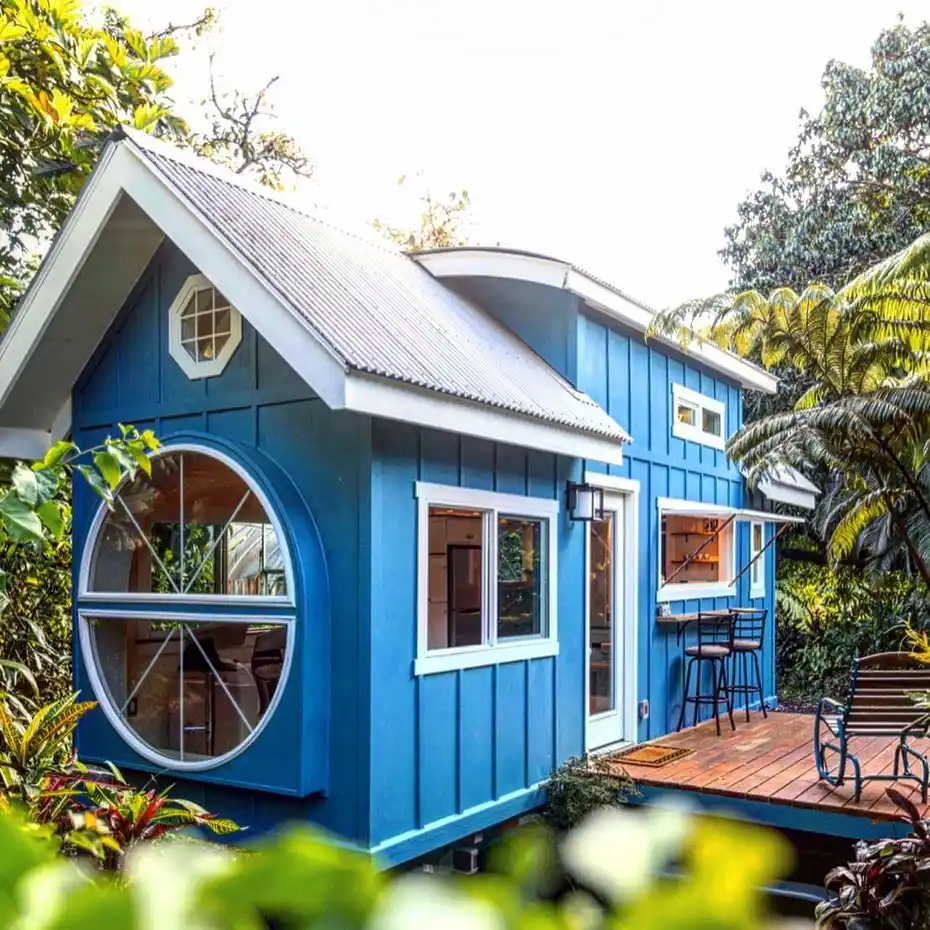
Bold cerulean blue wraps this tiny house from gable to deck skirt. Tall vertical battens add height and cast thin shadows across the siding. A silver corrugated metal roof stays cool and quiet above all that color.
Why it works:
- Thick white trim frames the round window, the octagon window, and the door.
- Reddish decking sits opposite blue on the color wheel, so both look richer.
- Leafy planting sits beside the blue and keeps the look natural.
4. Smooth White Walls With Rich Wood Beams

- Base: Smooth white plaster walls, a tall brick chimney, and a stone footing under the porch.
- Furniture: Slatted wood folding chairs and a bench with red cushions.
- Textiles: Gray daybed pillows and a white hanging swing chair.
- Finishing touch: Dark framed windows and two warm wall lanterns.
Brown timber does the framing here. Posts, beams, window frames, and the porch floor share one stain, so the white walls look crisp instead of stark. Burgundy roof tiles pull that brown toward red, and red cushions repeat the tone below.
5. White Siding With Charcoal Windows and Roof

Best for: Small cottages on open lawns, where the house needs strong edges to stand out.
White lap siding covers the walls, and a dark charcoal roof sits on top like a hat. Charcoal returns on the door and every window frame. That repeat does the work. Two colors, used with care, look sharp.
Dark frames turn each window into a graphic shape. The dormer shows it best, with one small dark square set into white. Railings and porch posts stay white, so the front reads open and light. Warm wood flooring peeks out between the spindles.
Paint tip: Use a satin finish on the door and frames, since it wipes clean and resists chalking. Sample a charcoal with a blue undertone, because it sits well beside white and a cool sky.
6. Sunny Yellow With Cobalt Blue Structure
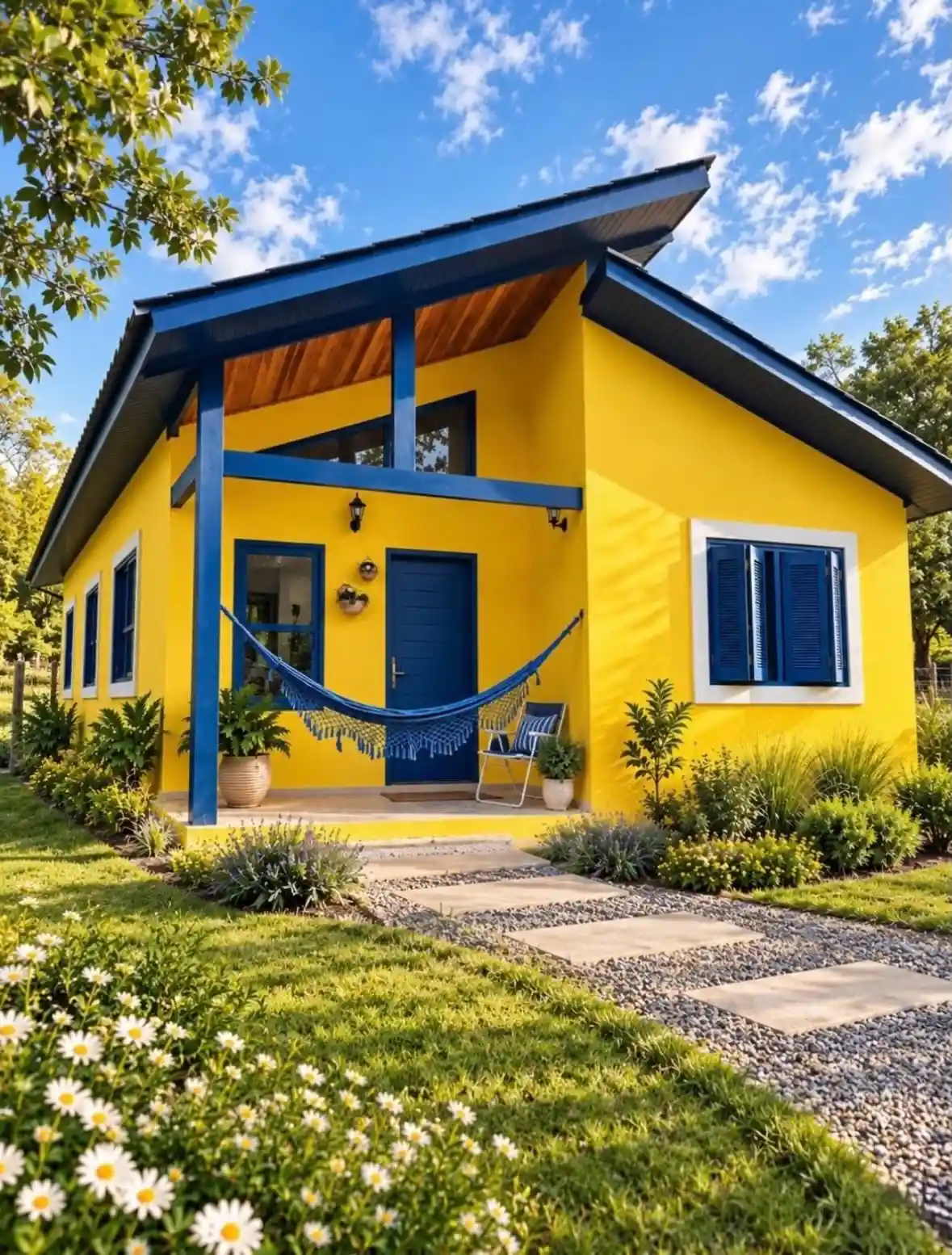
Room formula: Yellow walls + cobalt blue frame + white window trim.
Yellow carries this whole house. Cobalt blue takes the posts, the crossbeam, the door, and the roof edge. Blue sits opposite yellow on the color wheel, so each shade makes the other look stronger.
A white frame wraps the side window and gives the blue shutters room to breathe. Honey toned wood under the porch roof warms the contrast. These tiny house exterior colors work because the blue repeats in five places instead of one.
The detail to steal: The woven hammock echoes the blue and fills the porch without extra furniture. Hang one if your porch is shallow. A striped pillow on a folding chair adds one more repeat. Gray pebbles and pale pavers keep the path calm, so the walls stay the star.
7. Greige Board and Batten With a Silver Roof
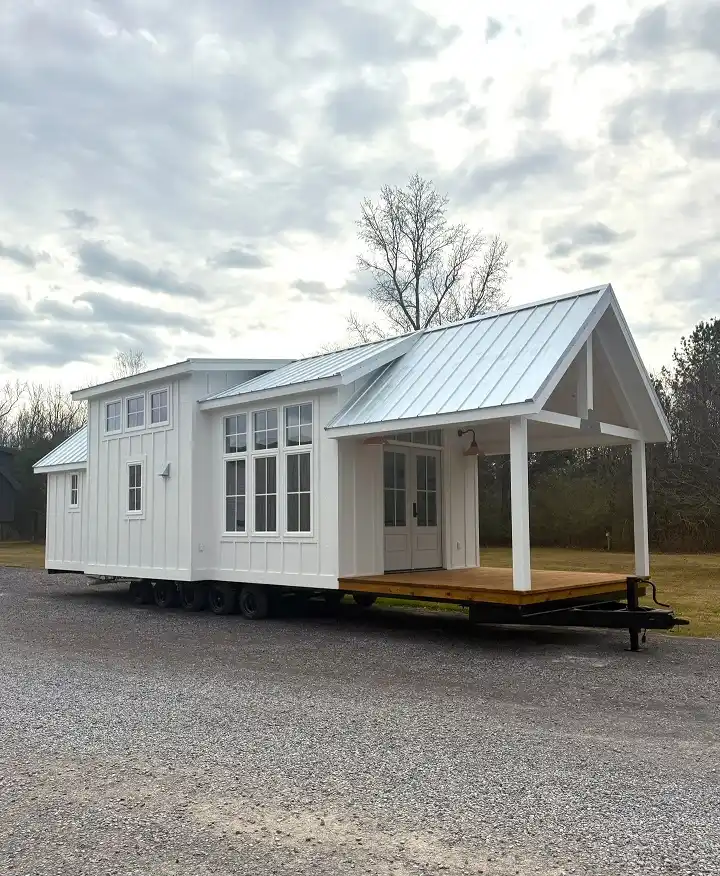
Pale greige wraps this tiny house in a quiet shade between white and light gray. Under an overcast sky, the walls lean cool.
In warmer light they would read creamier. Narrow vertical battens add shadow lines without adding color.
A standing seam metal roof in soft silver carries the cool tone upward. White trim, white posts, and white window grids stay close to the wall shade, so the house reads as one calm block. Tall grouped windows supply the interest instead. Glass doors open onto a covered porch.
8. Deep Forest Green With White Trim and Pink Blooms
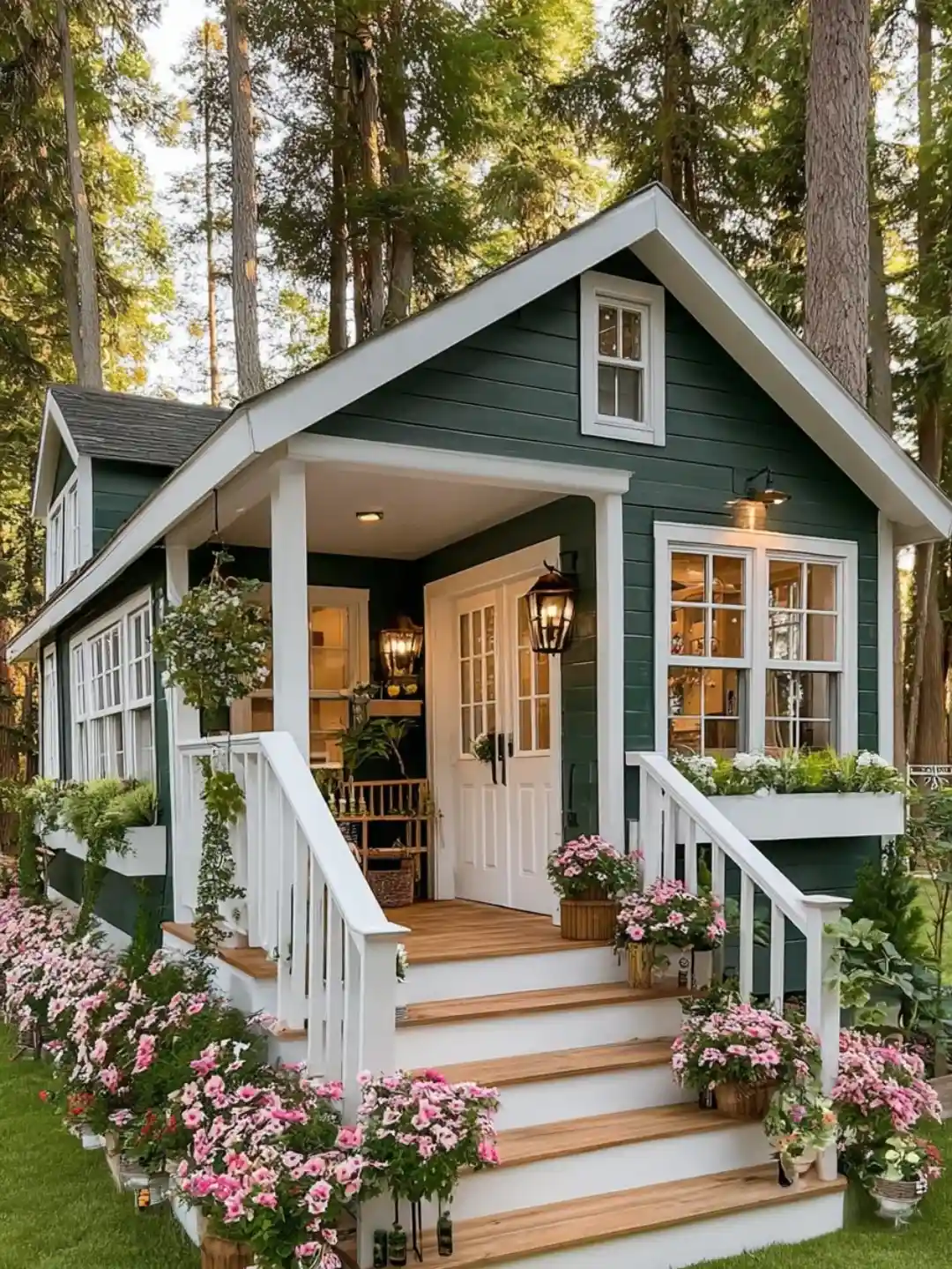
Deep green covers the lap siding on this cabin, and the shade nearly turns black in the shadows. White frames the dormer, the windows, and the double glass doors. Warm wood steps climb to the porch.
Why it works:
- Surrounding evergreens echo the wall color, so the cabin feels rooted in the woods.
- Window boxes and railings in bright white pop against the dark siding and keep the front light.
- Pink flowers sit opposite green on the color wheel, so they glow.
9. Slate Navy Siding With Cedar Shingles in the Gable

Context first: Best for: Narrow city lots and backyard cottages, where the front faces a patio instead of a lawn.
Slate navy lap siding fills the lower walls, and reddish brown cedar shingles crown the gable. Two textures, two colors, one clear line between them. A wide white band marks the break. Without it, the dark tones would blur together.
White frames the gable window, the transom row, and the glass doors. Orange stained wood on the open door and the pergola post on the left warms the cool blue. White barn lights flank the entry on both sides, and they repeat the trim color above.
10. Dusty Sage Siding With a Red Cedar Deck
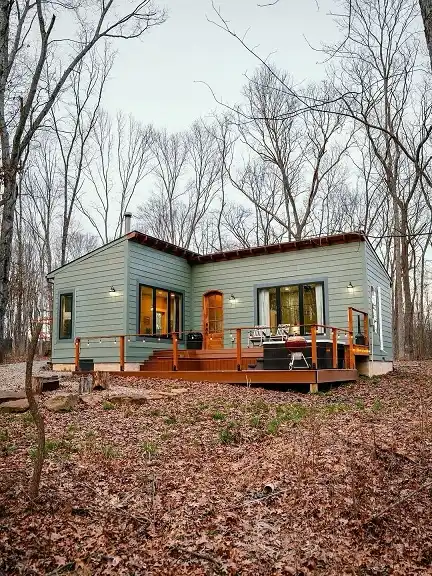
Dusty sage green covers the wide lap siding on this low, flat roofed cabin. The shade leans gray, so it melts into bare winter trees instead of fighting them. Small black framed windows give the walls a crisp edge.
Why it looks expensive: The deck and railings wear one rich red cedar stain, and the front door matches it.
That single warm tone sets off the cool green. Fascia boards along the roof edge pick up the same color, which ties the whole house together.
Lighting note: Small black sconces sit above the windows and door. At dusk, their glow and the lit windows make the cabin feel warm against the gray woods.
11. Charcoal Metal Siding With Honey Wood Trim
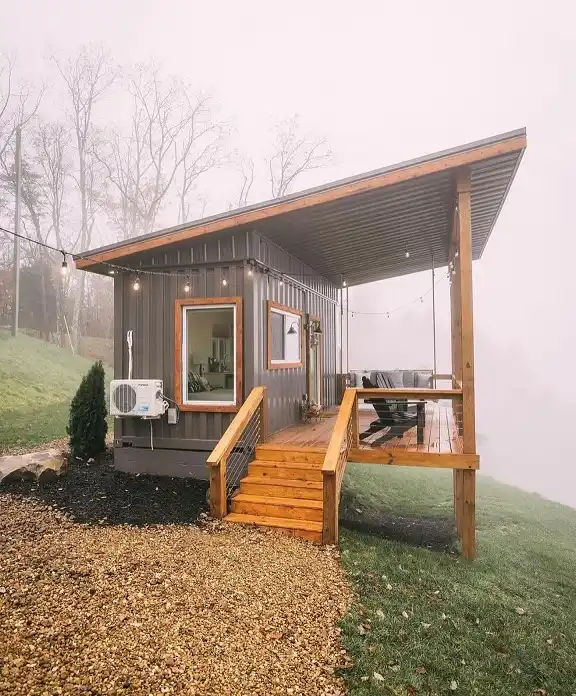
Room formula: Charcoal corrugated metal + honey wood frames + a quiet gray roof.
Dark gray ribbed panels wrap the walls, so the texture shows up before any extra color does. Honey orange wood frames the windows and runs along the roof edge. Posts, steps, and deck boards repeat it. Warm sits against cool, and the pairing stays easy to read.
A gray metal roof overhangs the walls and the deck. Fog softens the whole scene, yet the wood still glows. Tiny house paint colors like these suit a hillside, where the cabin needs a strong outline against grass and sky.
12. Teal Green Panels With Black Trim and Silver Skirting
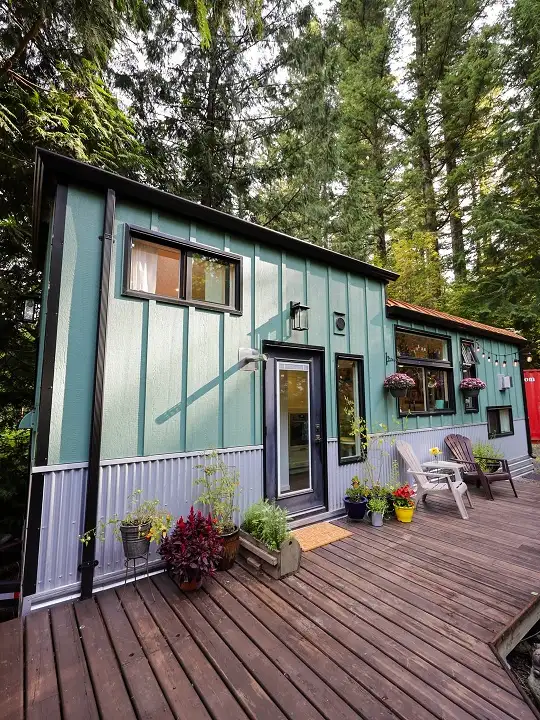
Seafoam teal covers the vertical panels on this tiny house, and thin seams run between each board. Black window frames and a black door frame outline the walls like pen lines. Corrugated metal in pale silver forms a skirt along the base.
Copy the look:
- Base: Teal vertical siding over a silver ribbed metal lower band.
- Furniture: Two Adirondack chairs, one pale and one dark brown, with a small side table.
- Textiles: A tan doormat at the entry and flowers in hanging baskets.
- Finishing touch: A black lantern by the door and string lights along the roofline.
Planters do a lot of work on this deck. Red foliage, yellow pots, and pink mums sit against the teal, and each one reads clearly. A weathered brown deck keeps the palette grounded.
13. Blue Gray Siding With a Red Front Door

Muted blue gray siding runs in long horizontal boards across this little porch house. White shutters, window frames, and railings stand out against it. A dark shingle roof caps the top and keeps the palette grounded.
Then comes the red door. It is the loudest thing on the facade, and that is the point. Only one red element appears, so it reads as a choice rather than a clash. Blue gray and warm red sit far apart on the color wheel, which gives the door extra snap.
Honey toned decking warms the porch floor. Three small wall lanterns throw a yellow glow across the siding at dusk. Vines wind up one post, and tidy green shrubs line the base.
Under the table, a small round mat sits beneath black bistro chairs. Try a larger outdoor rug in a neutral stripe to anchor the seating.
14. Soft Teal Siding With a Black Foundation
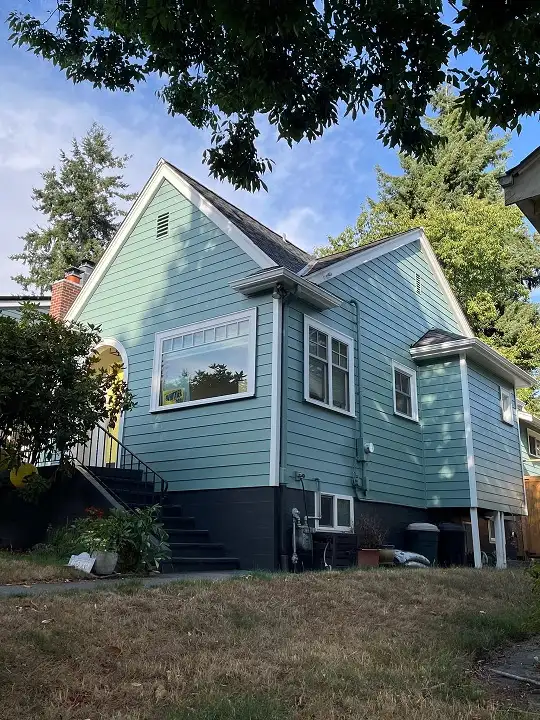
Soft teal lap siding covers this small gabled house, and the shade shifts from blue to green as the light moves. White trim runs along the roof edges, the corner boards, and the window frames. A black painted base grounds the whole look.
Why it works:
- The black foundation hides dirt and makes the teal above seem to float.
- Thin white corner boards give each wall a clean, straight edge.
- A large picture window with white framing pulls the eye to the front.
Paint tip: Pick a low sheen on the siding and a gloss on the trim. The contrast in finish adds depth even when the colors stay close. Match the black base to the roof shingles so the top and bottom feel linked.
15. Concrete Gray Walls With an Emerald Metal Roof

Best for: Warm climates and open rural lots, where a low house needs one strong color overhead.
Smooth concrete gray walls keep the body of this house calm. An emerald green hip roof does all the talking. Its standing seam ribs catch the sun and draw the eye up. Dark green trim at the eaves sharpens the edge.
Black window frames, black railings, and a dark front door repeat across the facade. That steady repeat ties walls, porch, and fence into one clear picture. The wall color reads as a pale putty gray, so it gives the green room to shine.
Swap idea: Pick a deep teal roof for a quieter look, or a charcoal one for a more modern feel.


