
How to Dry Clothes in a Small Apartment Without a Dryer


A normal load of laundry puts about 2 quarts of water into your air as it dries. In a small apartment with no balcony, that water has nowhere to go, so towels stay damp and the whole place starts to smell. This guide shows how to dry clothes without a dryer in an apartment, using gear that costs $0 to $60.
Most people make the same few mistakes. They pile wet clothes on a chair, drape them over a radiator, or close the door on the drying room. Each one slows things down. I name the common slip in every step so you can skip it.
Plan on about 15 minutes of setup and 3 to 24 hours of drying time, depending on the fabric. Start with the free changes and add gear only if you need it.
Dry Clothes Without a Dryer
4 moves for an apartment with no balcony
- 1
Pick a Spot With Moving Air
Look for a window you can crack or a bathroom vent fan. A folding rack needs about 2 feet by 4 feet of floor.
- 2
Spin Out the Water
Run 1 extra spin on high for about 5 minutes. Use medium for delicates so they do not stretch.
- 3
Leave Space Between Pieces
Keep 2 inches between every item, about 3 fingers. Put jeans and towels on the outer bars.
- 4
Aim a Fan Across the Rack
Place the fan about 3 feet away and open a window 1 inch so damp air can leave.
Most loads dry in 3 to 24 hours. Check waistbands and pockets before you fold.
What You’ll Need
- A folding drying rack ($15 to $35) or a tension rod for your shower
- 10 plastic hangers
- A white bath towel for flat drying
- A small box fan, or a window that opens
- A tape measure
Plan How to Dry Clothes Without a Dryer in an Apartment Before You Wash
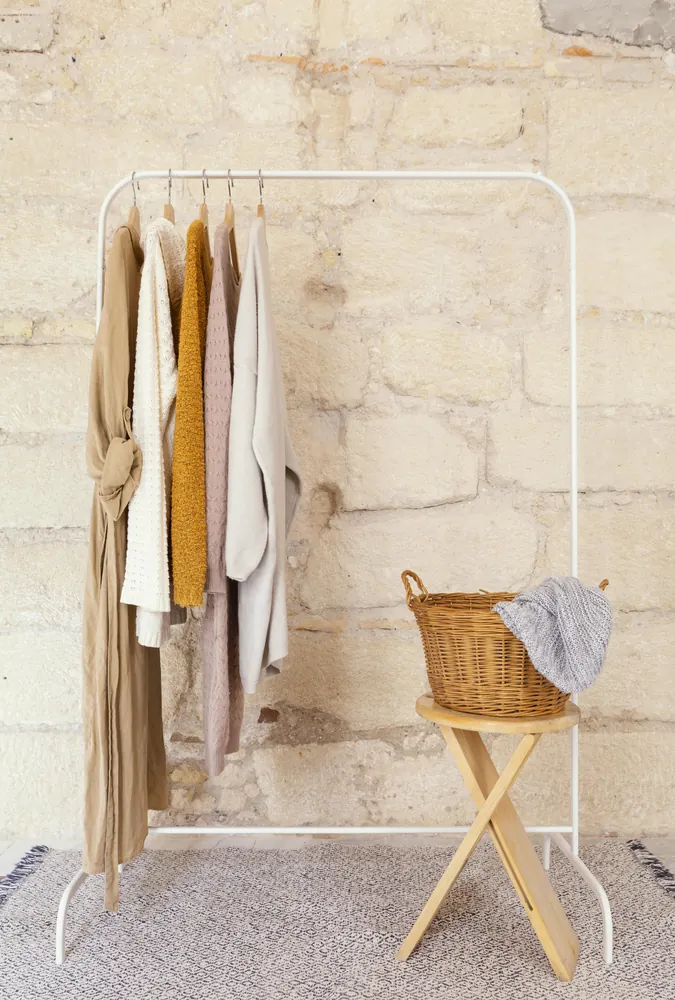
Walk your place with a tape measure and look for moving air. A window you can crack, a bathroom with a vent fan, or a hallway with a cross breeze all work.
A folding rack needs about 2 feet by 4 feet of floor, and a shower rod gives you about 5 feet of hanging room. The most common slip is picking a closed bedroom. Damp air gets stuck there, and clothes stay wet for hours longer.
Here is what each budget gets you.
| Budget | What you use | What it handles |
|---|---|---|
| $0 | Shower rod, door tops, and hangers you own | Shirts and light pants, about 8 to 10 pieces |
| Under $25 | Folding X-style rack | About 1 load of jeans, towels, and socks |
| Under $60 | Tall tiered rack and a small box fan | Up to 2 loads, with faster drying |
Run One Extra Spin Cycle So Less Water Hangs Around

If your washer has a high spin setting, use it. Water you spin out is water you never wait on.
Do this: run 1 extra spin on high, about 5 minutes.
Not that: pull clothes out dripping and hope the rack catches the water.
The slip to watch for is spinning delicates on high, which can stretch or tear them. Use medium for those.
Shake Each Piece Out

Myth: wet clothes smooth out on their own. Reality: they dry in whatever shape you hang them.
Snap each piece 3 or 4 times with both hands before it goes up. This opens the fabric so air can get in. Skip it and you get stiff creases that need an iron.
Hang Shirts by the Shoulders on Plastic Hangers

It’s 7 p.m., the shower is done, and your tension rod is empty. Slide each shirt onto a plastic hanger and hang up to 8 to 10 shirts along the rod. Button the top button on button-ups so the collar holds its shape. The common slip is using thin wire hangers, which leave pointy bumps in the shoulders. Wide plastic ones cost about $1 each, and a pack of 10 runs under $10.
Fabric changes the plan, so check this chart before you hang anything else.
| Fabric | Best method | Dry time with a fan |
|---|---|---|
| Cotton tees | Plastic hanger on the shower rod | 4 to 8 hours |
| Jeans | Rack, hung by the waistband | 12 to 24 hours |
| Bath towels | Rack, folded over a bar 1 time | 8 to 12 hours |
| Athletic wear | Hanger or rack | 3 to 5 hours |
| Thin knits and delicates | Flat on a towel | 6 to 10 hours |
Leave 2 Inches Between Every Piece

Crowded racks are how clothes end up smelling like a basement. Keep 2 inches between every piece, about the width of 3 fingers. Put heavy items like jeans and towels on the outer bars, where air hits first, and light pieces in the middle. Hang jeans by the waistband and fold towels over a bar 1 time, not twice. Clip socks to a hanger so they do not pile up.
Lay Sweaters Flat on a Towel
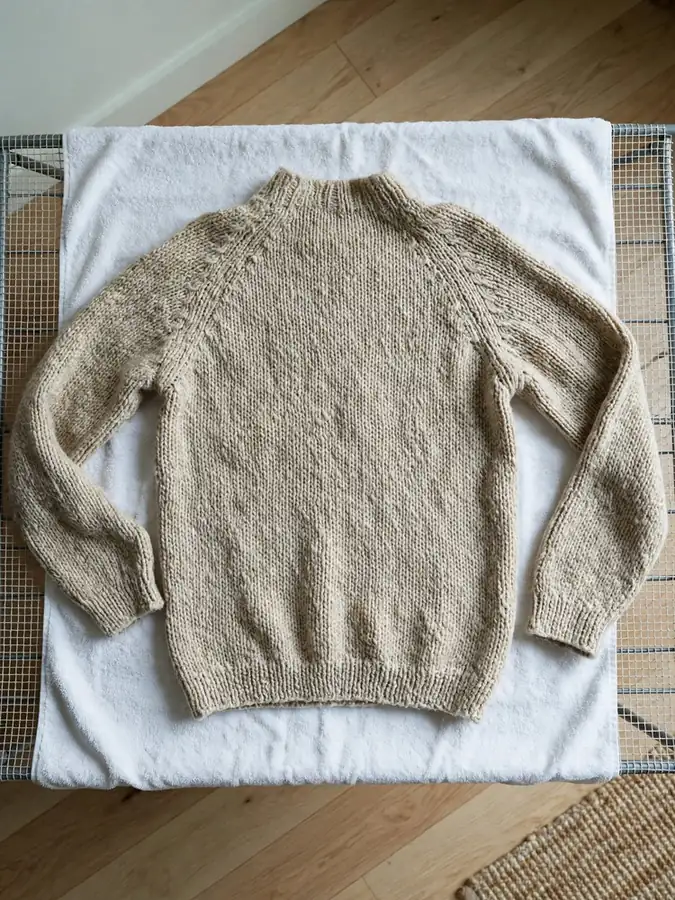
A wet sweater on a hanger grows. The weight pulls the shoulders down, and the sleeves stretch out of shape. Flat drying keeps the fit:
- Roll the sweater in a dry towel to press out extra water.
- Spread a white bath towel on a mesh rack, or on a clean bed.
- Smooth the sweater back to its original size.
- Flip it after 4 hours.
Thick sweaters can need up to 24 hours to dry this way.
Aim a Fan Across the Rack So Damp Air Moves Out

Air that sits still holds on to moisture, so clothes stay damp. A box fan moves more air than a cracked window, but a window sends the damp air outside. In a small apartment, use both when you can. Place the fan about 3 feet from the rack and aim it across the clothes, not at one shirt. Open a window about 1 inch. The usual slip is running the fan with every window shut, which only moves the same damp air around.
Dry times change with the season, so use this as a guide for a mixed load.
| Season | Mixed rack load | Fan and window plan |
|---|---|---|
| Winter, heat on | About 10 to 14 hours | Fan on low, window open 1 inch |
| Spring or fall | About 14 to 18 hours | Fan on medium, window open 1 inch |
| Humid summer | About 18 to 24 hours | Fan on high with the AC running |
Check Seams and Waistbands Before Anything Goes Away

Touch the thickest spots first, which means waistbands, pockets, and towel hems. They dry last, and damp cloth folded into a drawer starts to smell within a day. The slip is judging by the thin parts, because a dry shirt body can hide a wet seam. If a spot feels cool or heavy, hang it for another 1 to 2 hours.
Your Questions Answered on How to Dry Clothes Without a Dryer in an Apartment
Can I dry clothes in a bedroom with no window?
Yes, if you add a fan and leave the door open. A closed room with no airflow can take more than 24 hours to dry a load.
How long does it take to dry jeans without a dryer?
Jeans take about 12 to 24 hours on a rack with a fan. Hang them by the waistband and check the pockets before you call them done.
What if my clothes smell musty after drying?
Rewash them with 1 cup of white vinegar in the rinse, then dry them with more space and a fan. The smell usually comes from clothes sitting damp for too long.
Should I buy a dehumidifier?
Only if a fan and an open window are not enough, like in a humid summer. A small unit costs more than a fan, so try the cheap fix first.
What’s the difference between a folding rack and a wall-mounted one?
A folding rack moves and stores flat, but it takes up floor space while you use it. A wall-mounted rack saves floor space, but it needs screws, so check your lease first.
Save this pin to your laundry board so the setup is ready on your next wash day.


