
How to Unclog Bathroom Sink: A Complete Step-by-Step Guide

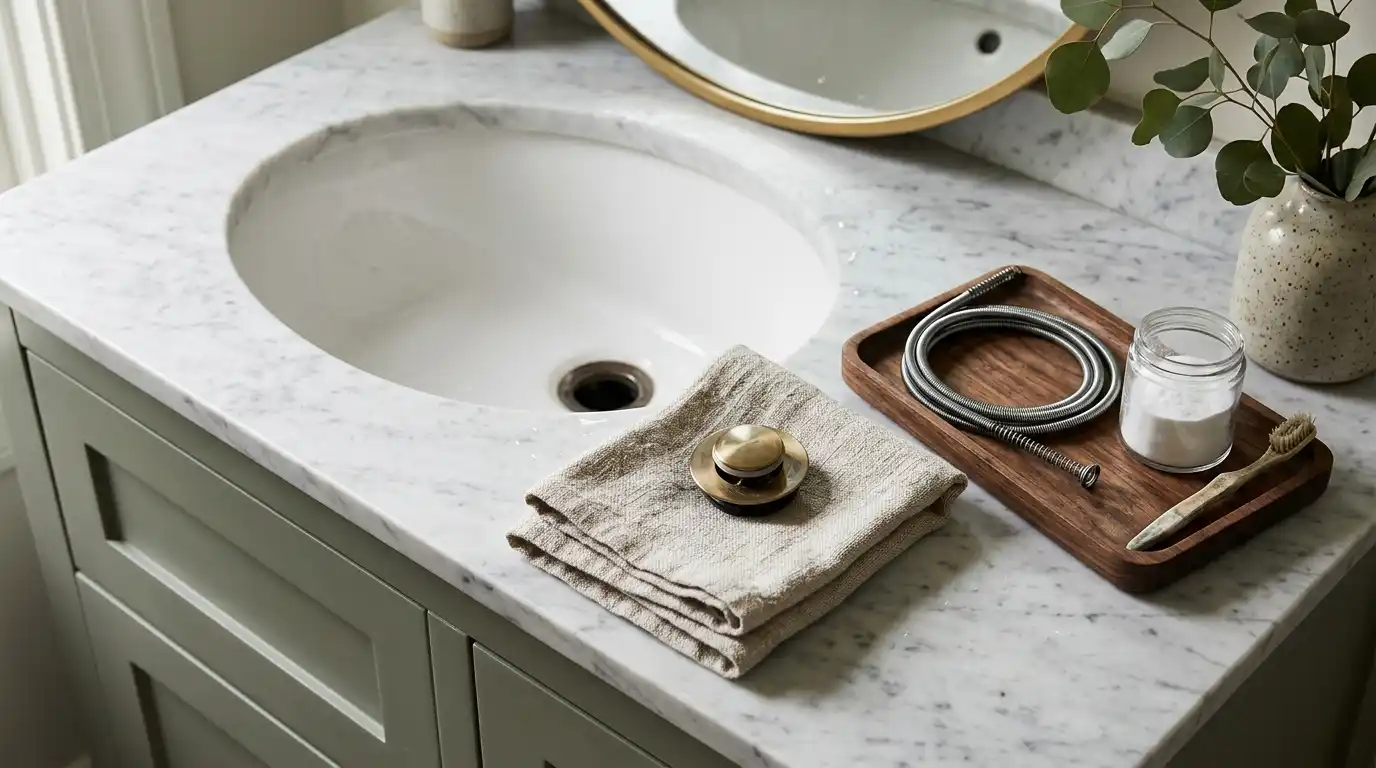
A slow or completely blocked bathroom sink is one of those household problems that sneaks up on you.
One day the water drains fine, and the next you are standing in a puddle of soapy water wondering what went wrong.
The good news? You do not need a plumber for most clogs. With the right approach, you can fix it yourself in under an hour.
This guide walks you through everything — from understanding why clogs happen to choosing the best method to clear them fast.
Why Does Your Bathroom Sink Keep Clogging?
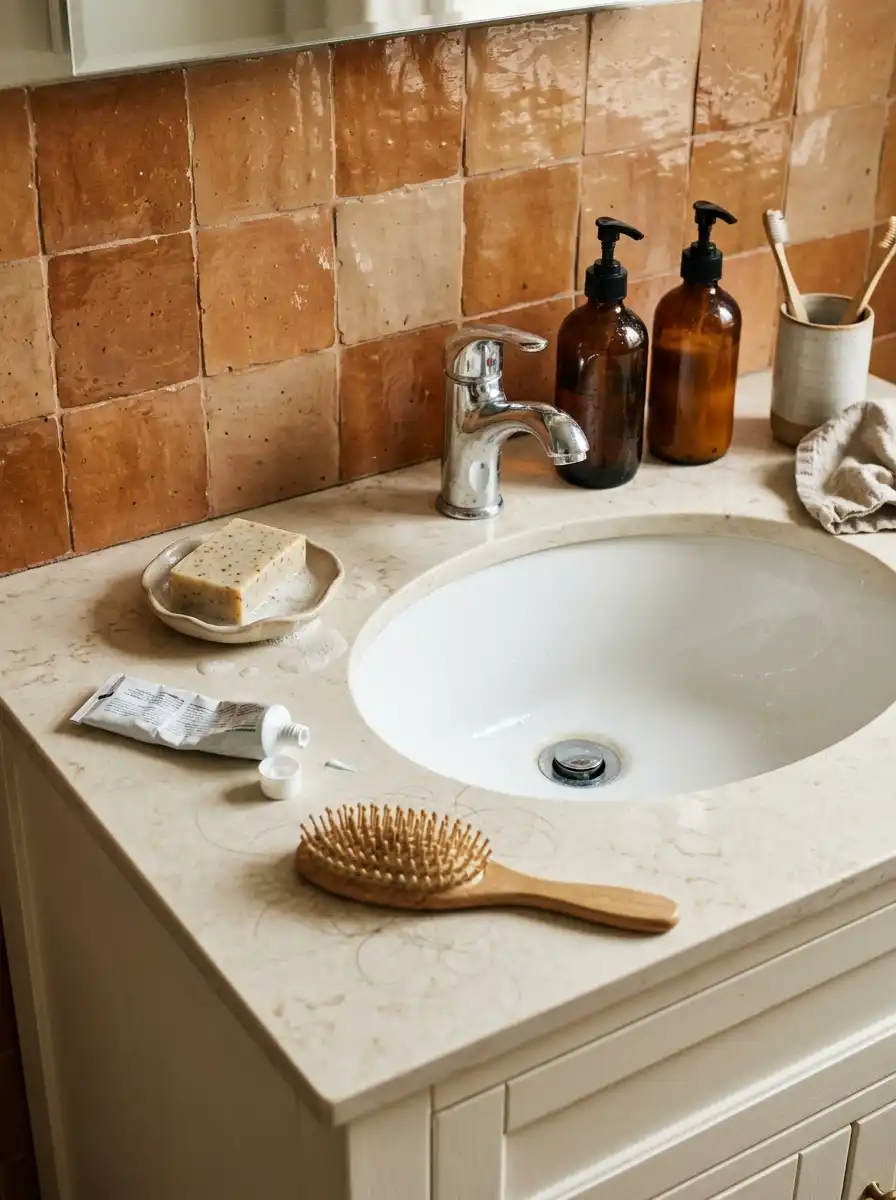
Before grabbing tools, it helps to know what you are actually dealing with. Bathroom sink clogs are almost always caused by the same culprits.
The most common causes include:
- Hair — The number one offender. Hair wraps around the drain stopper and builds up over time.
- Soap scum — Bar soap leaves behind a sticky residue that coats the inside of pipes and catches debris.
- Toothpaste buildup — Toothpaste is thicker than people realize, and it accumulates on pipe walls.
- Dead skin and product residue — Lotions, face wash, and shaving cream all contribute.
- Mineral deposits — Hard water leaves calcium and magnesium deposits inside pipes, narrowing the passage.
Most of the time, the clog sits right near the drain opening or just below the pop-up stopper — which is great news because it means it is easy to reach.
Tools and Supplies You May Need
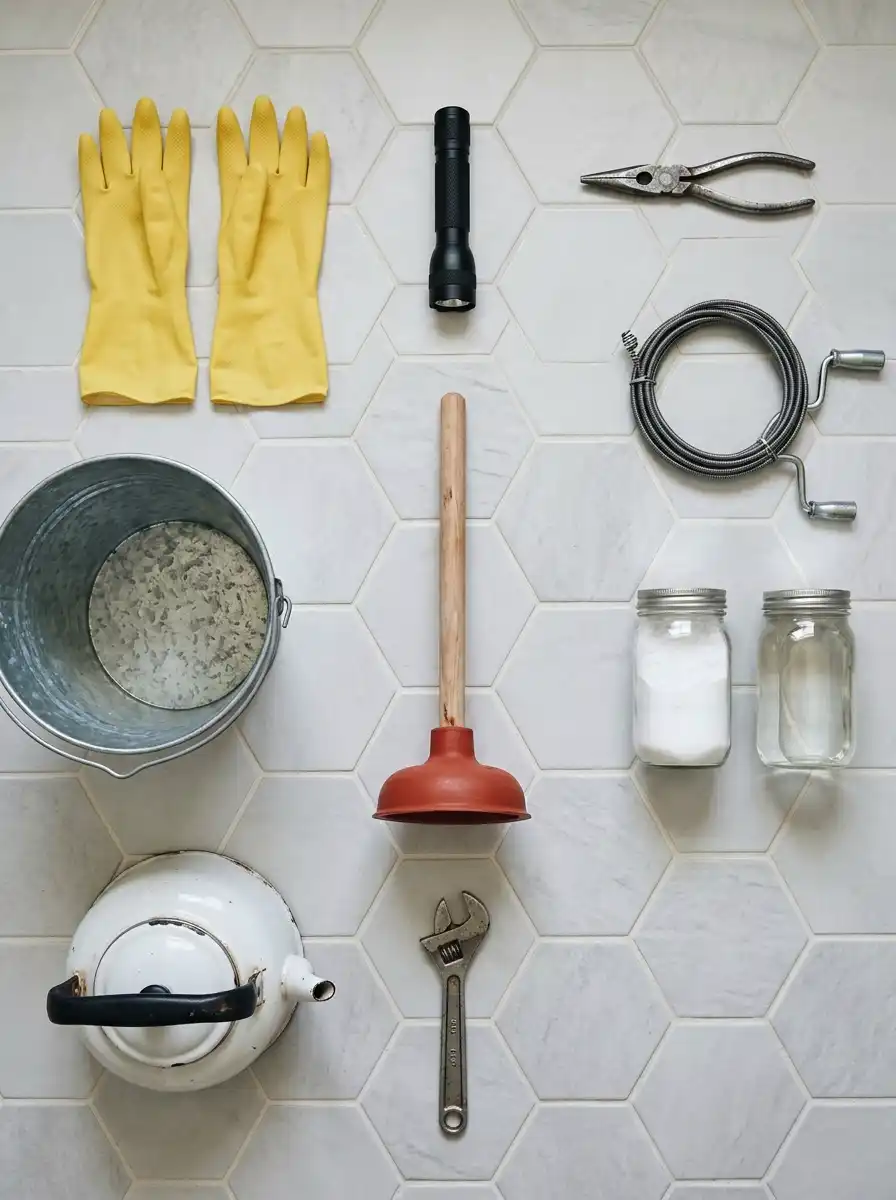
You probably have most of these at home already.
| Tool / Supply | Purpose |
|---|---|
| Rubber gloves | Protect your hands from grime and chemicals |
| Flashlight | See inside the drain clearly |
| Needle-nose pliers or tweezers | Pull out hair and debris |
| Plunger (cup-style) | Create suction to dislodge clogs |
| Drain snake / drain auger | Reach deeper blockages |
| Baking soda and white vinegar | Natural clog-dissolving method |
| Boiling or very hot water | Flush loose buildup |
| Adjustable wrench | Remove the P-trap if needed |
| Bucket | Catch water when removing the P-trap |
Method 1: Remove the Pop-Up Stopper and Clean It
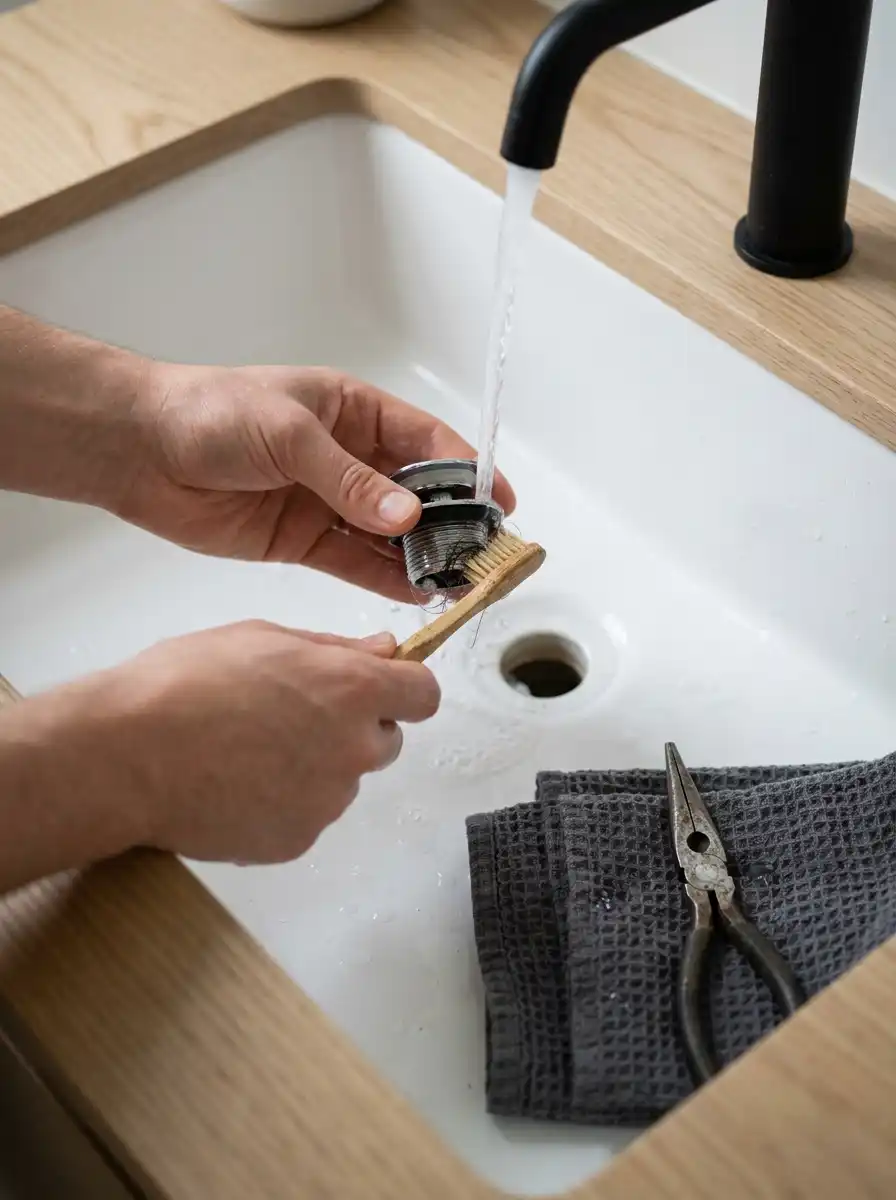
This is always the first thing to try. The pop-up stopper — the small plug in your drain that you push up and down — is a magnet for hair and toolk.
- Lift or unscrew the stopper. Most twist counterclockwise or simply pull straight up. Some are held by a small pivot rod underneath the sink.
- Once removed, you will likely find a matted clump of hair wrapped around the base. It will not be pretty.
- Clean it thoroughly under running water using an old toothbrush.
- While the stopper is out, use needle-nose pliers or a hair-catching tool to pull out any remaining debris from inside the drain.
- Rinse the drain with hot water and reinstall the stopper.
This single step fixes a surprising number of slow-drain problems. Do this first before anything else.
Method 2: Baking Soda and Vinegar Flush
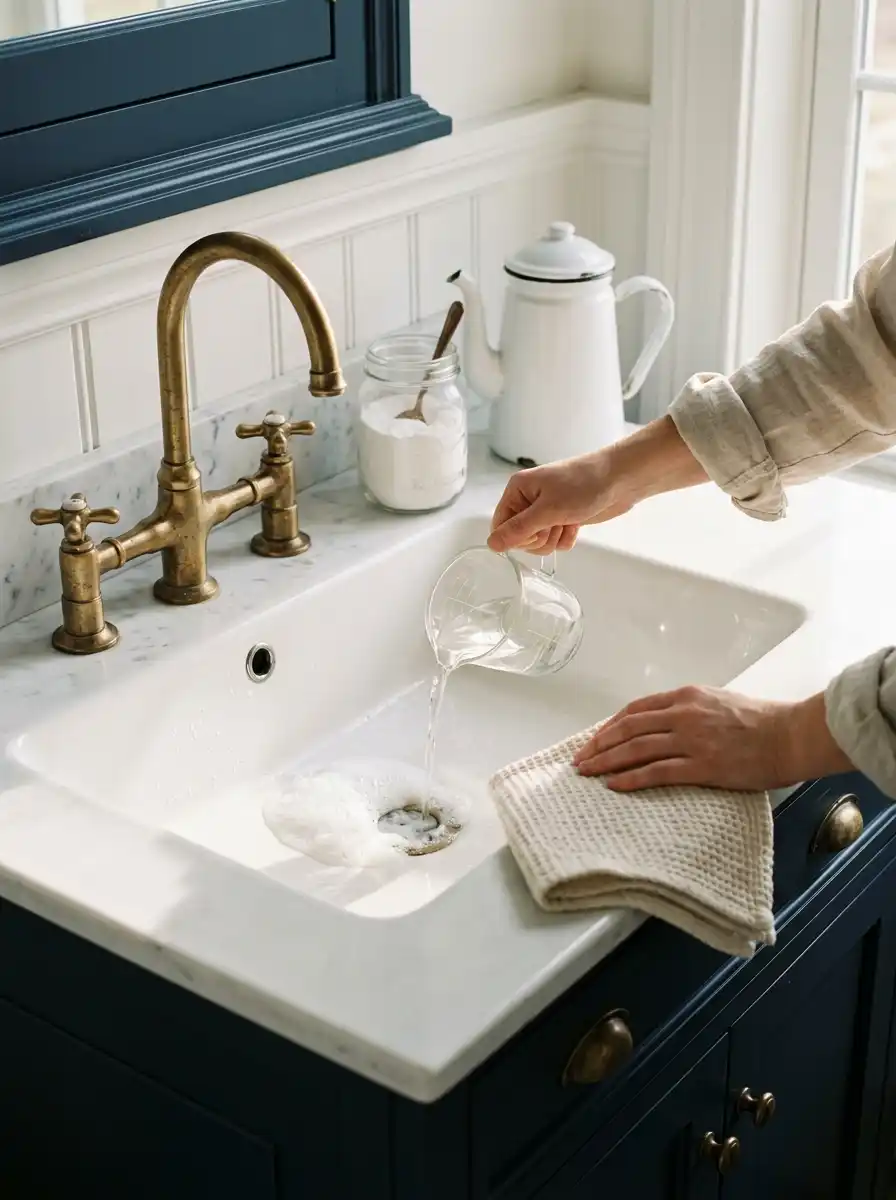
If cleaning the stopper did not fully solve the problem, this natural method is your next move. It works well on soap scum and light organic buildup.
Steps:
- Pour one cup of baking soda directly down the drain.
- Follow immediately with one cup of white vinegar.
- Cover the drain opening with a cloth or drain cover to keep the fizzing reaction working downward.
- Wait 15 to 20 minutes.
- Flush with a full kettle of very hot (not boiling if you have PVC pipes) water.
Repeat if needed. This method is gentle, chemical-free, and safe for most pipe types.
Method 3: Use a Plunger
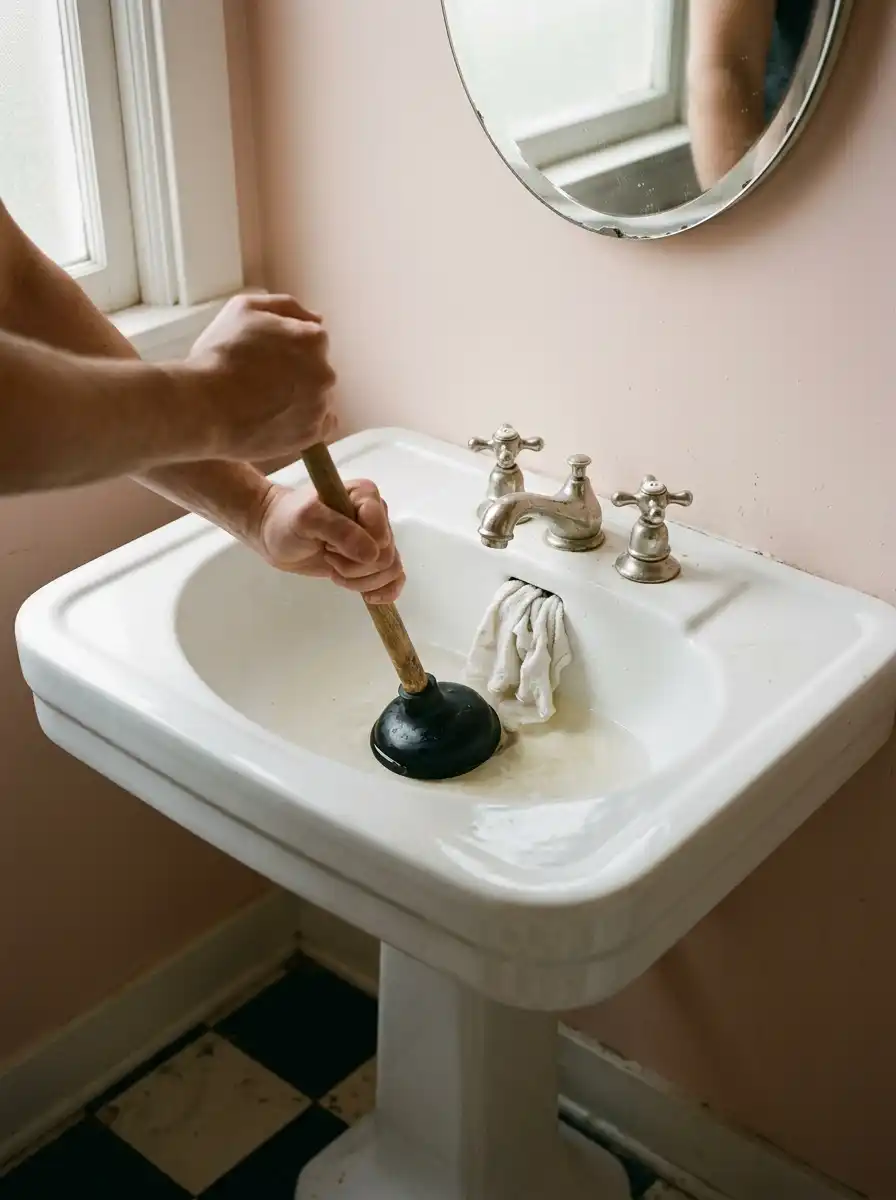
A standard cup plunger creates enough suction to break up blockages that are a little deeper in the drain. This is how to unclog bathroom sink problems that sit a few inches below the surface.
- Remove any standing water from the sink if possible — just enough so the plunger cup can seal around the drain.
- If your sink has an overflow hole (the small hole near the top of the basin), stuff it with a wet cloth. This keeps the suction from escaping.
- Place the plunger cup firmly over the drain and push down slowly to create a seal.
- Pump vigorously up and down 10 to 15 times without breaking the seal.
- Pull the plunger off sharply to release the pressure.
- Run hot water to test the drain.
Repeat two or three times if needed. If water flows freely after, you are done.
Method 4: Use a Drain Snake
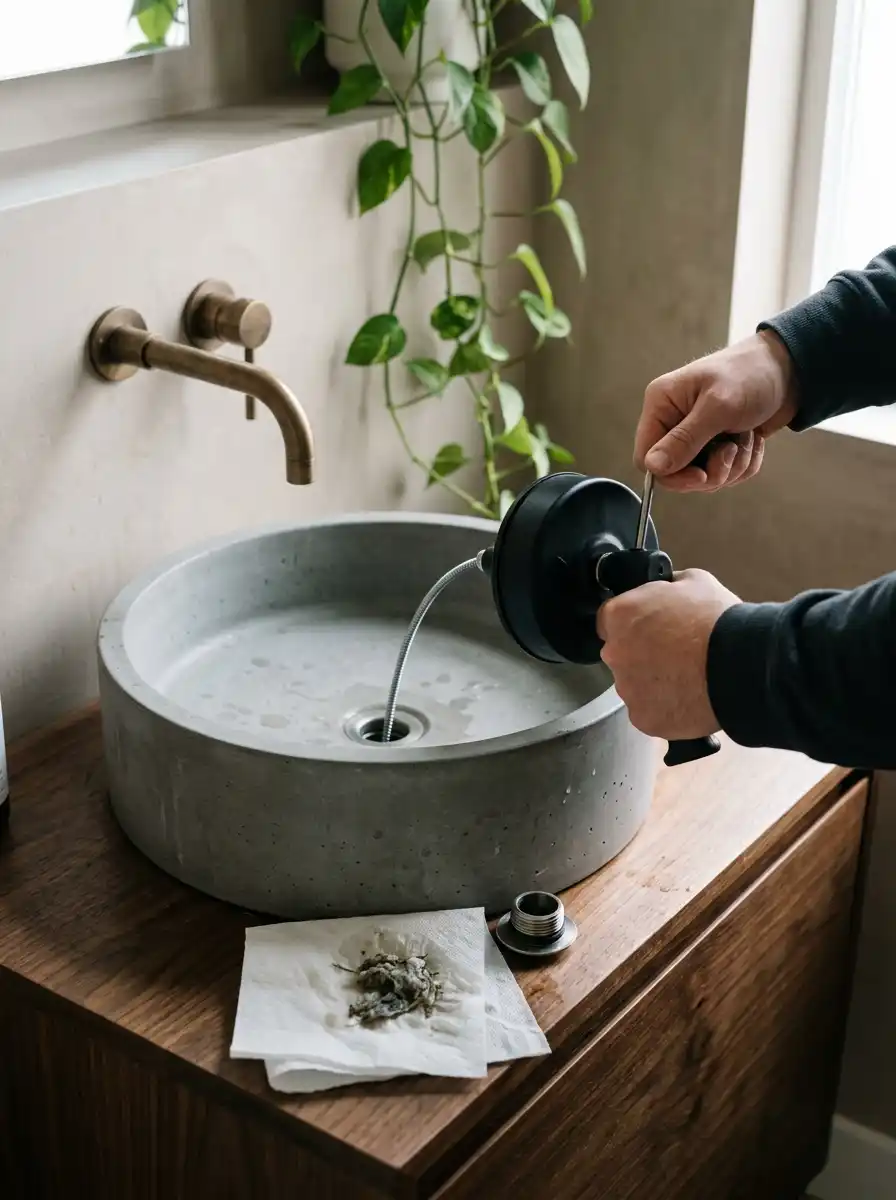
For stubborn clogs that plunging cannot reach, a drain snake (also called a hand auger) is the right tool. It extends several feet into the pipe and physically breaks up or retrieves the blockage.
- Insert the tip of the snake into the drain opening.
- Turn the handle clockwise while pushing it gently forward. You will feel resistance when you hit the clog.
- Continue rotating to break through or hook the debris.
- Pull the snake back slowly — the clog material will often come out with it.
- Run hot water for a full minute to flush everything clear.
Drain snakes are inexpensive and reusable. If you have never owned one, it is worth picking one up — they handle the clogs that no other DIY method can touch.
Method 5: Clean the P-Trap
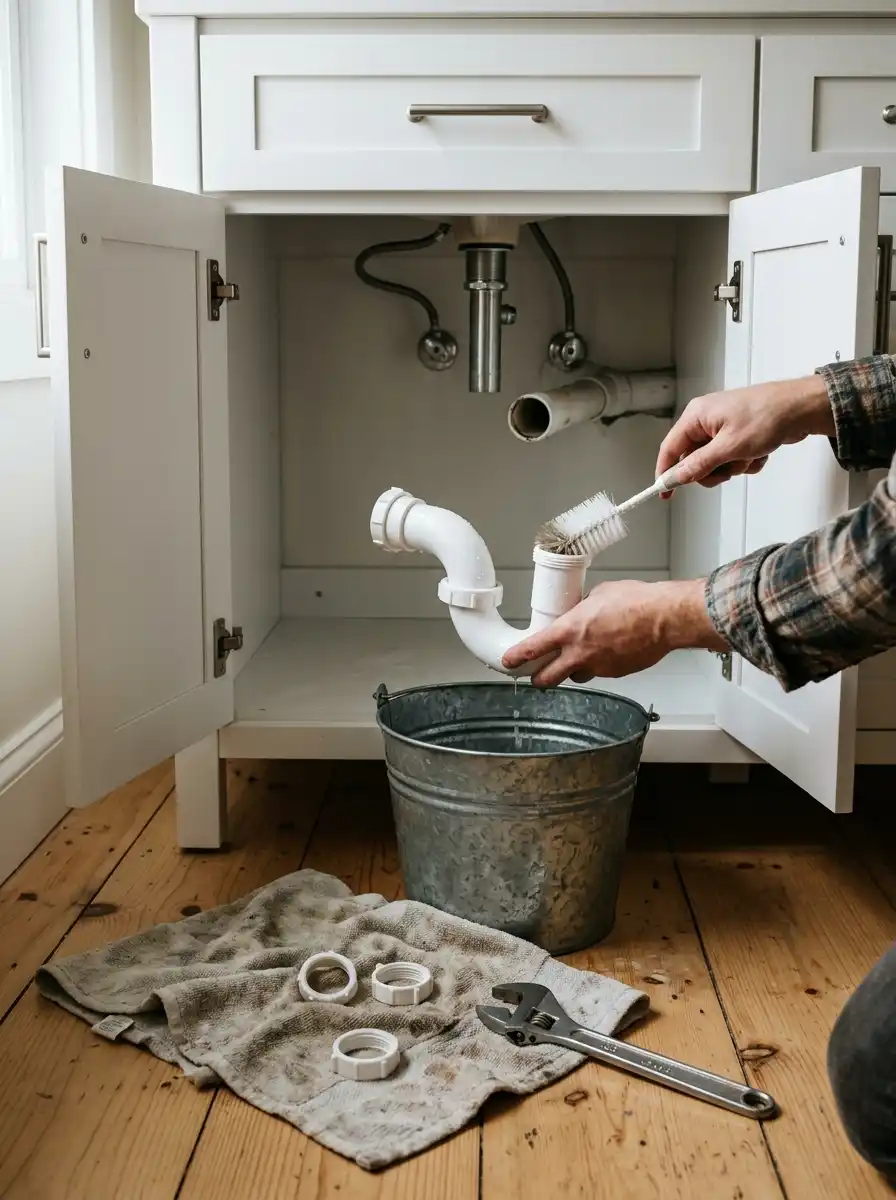
If none of the above methods worked, the clog is likely sitting in the P-trap — the curved pipe section beneath your sink. This is not as intimidating as it sounds.
- Place a bucket under the P-trap to catch water.
- Unscrew the slip nuts on both ends of the curved pipe by hand or with a wrench.
- Remove the P-trap and empty it into the bucket. This is usually where a dense, compacted clog lives.
- Clean the inside of the trap with a bottle brush and hot water.
- Inspect the pipes on both sides for buildup and clean them too.
- Reassemble and run the water. The drain should flow freely.
How to Prevent Bathroom Sink Clogs
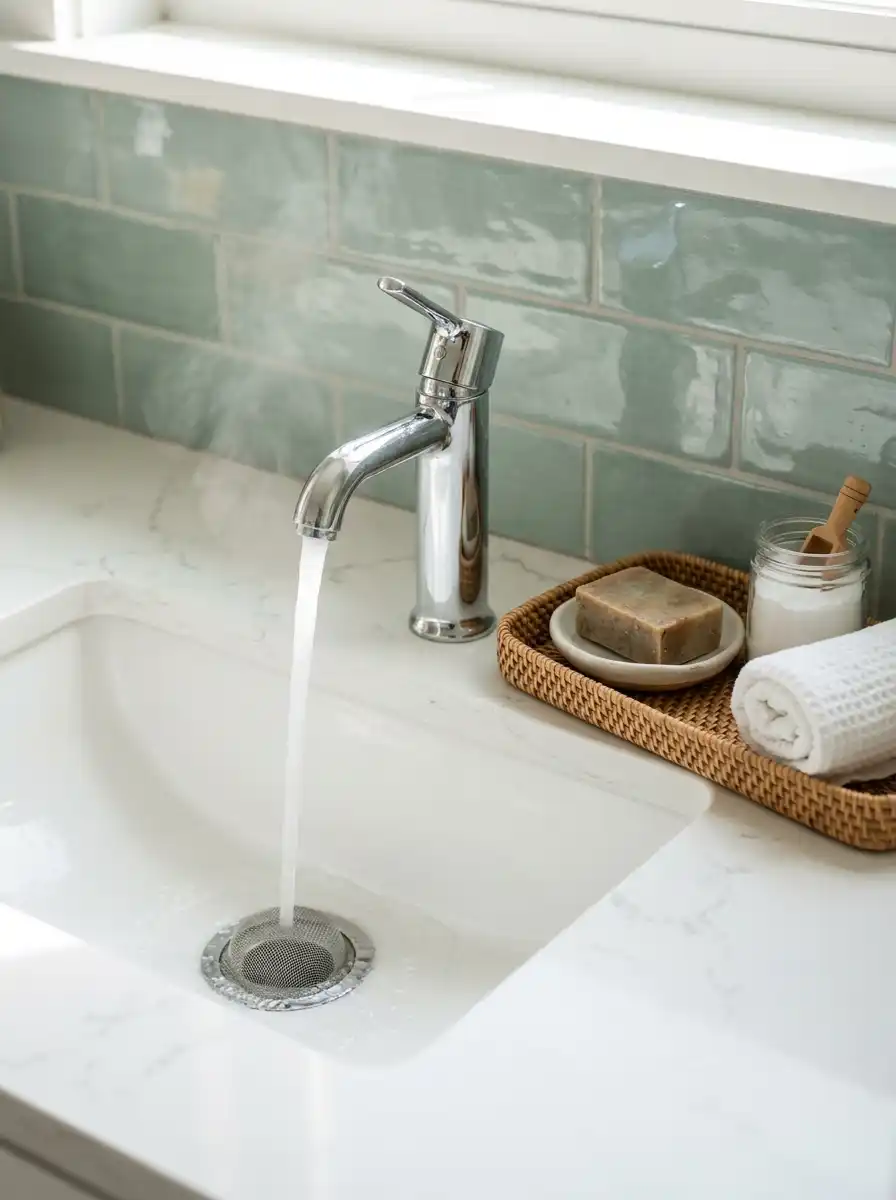
Fixing a clog is satisfying. Not getting one in the first place is even better.
- Install a drain cover or hair catcher — These inexpensive mesh screens sit over the drain and collect hair before it enters the pipe.
- Do a monthly baking soda and vinegar flush — Even when things seem fine, a preventive flush keeps buildup from hardening.
- Avoid rinsing thick products down the drain — Thick creams and hair masks should go in the trash, not the sink.
- Run hot water after every use — A 30-second hot water rinse after brushing teeth or washing your face keeps soap moving through the pipes.
When to Call a Plumber

Most bathroom sink clogs are DIY-friendly. But there are a few signs that a professional is the smarter call:
- The clog keeps coming back within days of clearing it
- Multiple drains in your home are slow simultaneously
- You hear gurgling sounds from other fixtures when the sink drains
- There is a foul sewage smell coming from the drain
These signs point to a deeper issue in the main drain line, which requires professional equipment to diagnose and fix.
Final Thoughts
A clogged bathroom sink is rarely a serious plumbing emergency — it is just an inconvenience that needs a methodical approach.
Start simple with the pop-up stopper, work your way through the natural and mechanical methods, and you will have it flowing cleanly in no time.
Regular maintenance after that keeps the problem from coming back.
A little attention goes a long way in keeping your bathroom running the way it should.
