
Minimalist Living Room Ideas for a Sleek, Modern Space


Ready to refresh your living room with a minimalist touch? These minimalist living room ideas focus on style and function without the extra clutter.
I used to think minimalism meant sacrificing comfort.
Our living room was filled with sofas, side tables, and decorative accents but it felt chaotic, not cozy.
I wanted a modern space that was simple, clean, and easy to enjoy every day.
The key was curating: neutral colors, furniture with clean lines, and intentional décor.
Even small touches, like a single textured throw or a sculptural lamp, instantly elevated the room.
Removing clutter allowed the natural light to fill the space and made the room feel larger.
A minimalist living room isn’t about emptiness it’s about balance.
By editing carefully and keeping design purposeful, you can create a homey, stylish space without overthinking every detail.
Understanding Minimalist Living Rooms
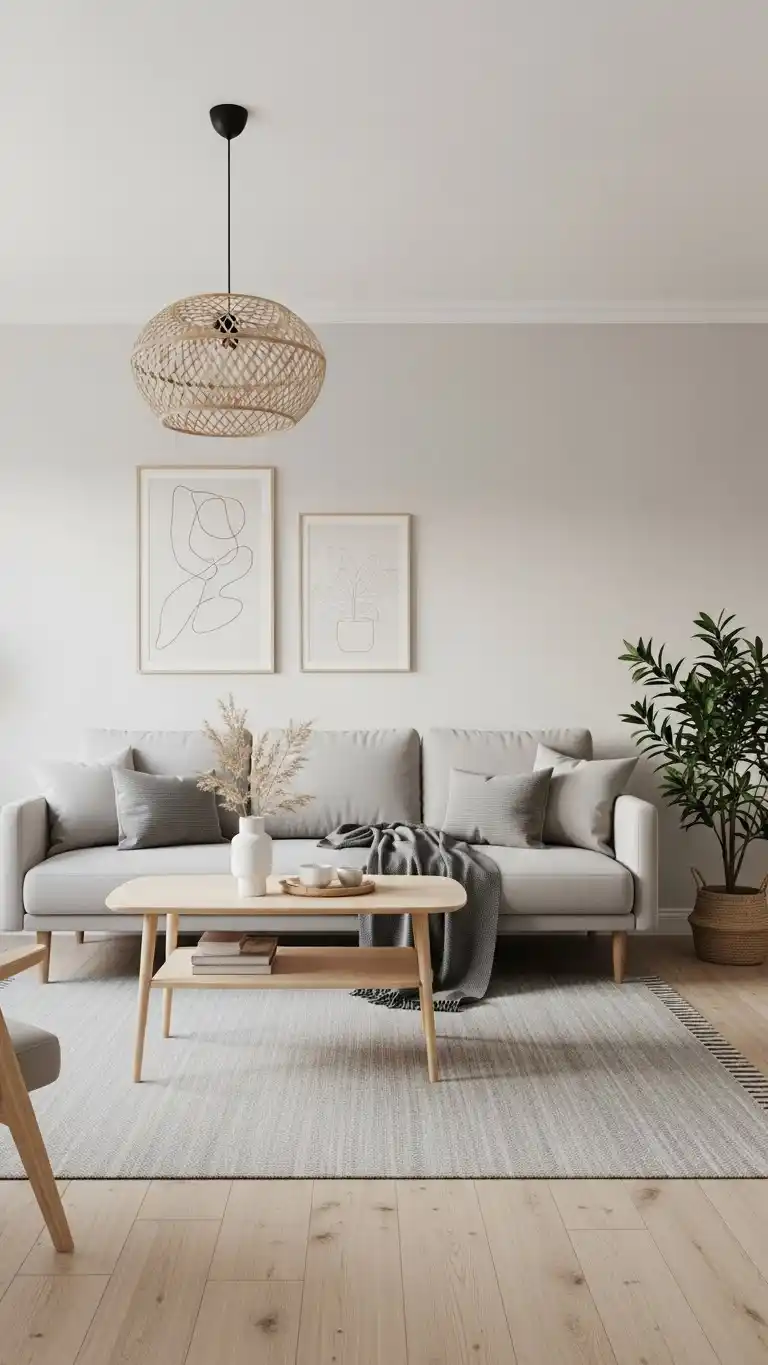
Minimalist living rooms focus on simplicity, functionality, and intentional design choices that prioritize quality over quantity.
This approach encourages selecting furniture that serves multiple purposes and spaces that allow natural light to flow freely.
Neutral color palettes, clean lines, and thoughtful décor are essential for achieving a serene and visually appealing environment.
Minimalist rooms also emphasize open spaces and breathing room, avoiding unnecessary accessories that add visual clutter.
Incorporating texture and natural elements, like wood or plants, provides warmth and depth while maintaining simplicity.
Focusing on essential items ensures that every piece in the room contributes to both aesthetic appeal and practicality.
Ultimately, the goal is to create a living space that feels organized, harmonious, and welcoming without overcrowding.
Alternate keywords for this section include simple living room design, minimalist home styling, and clutter-free living space.
Essential Tips Before Designing Your Minimalist Living Room
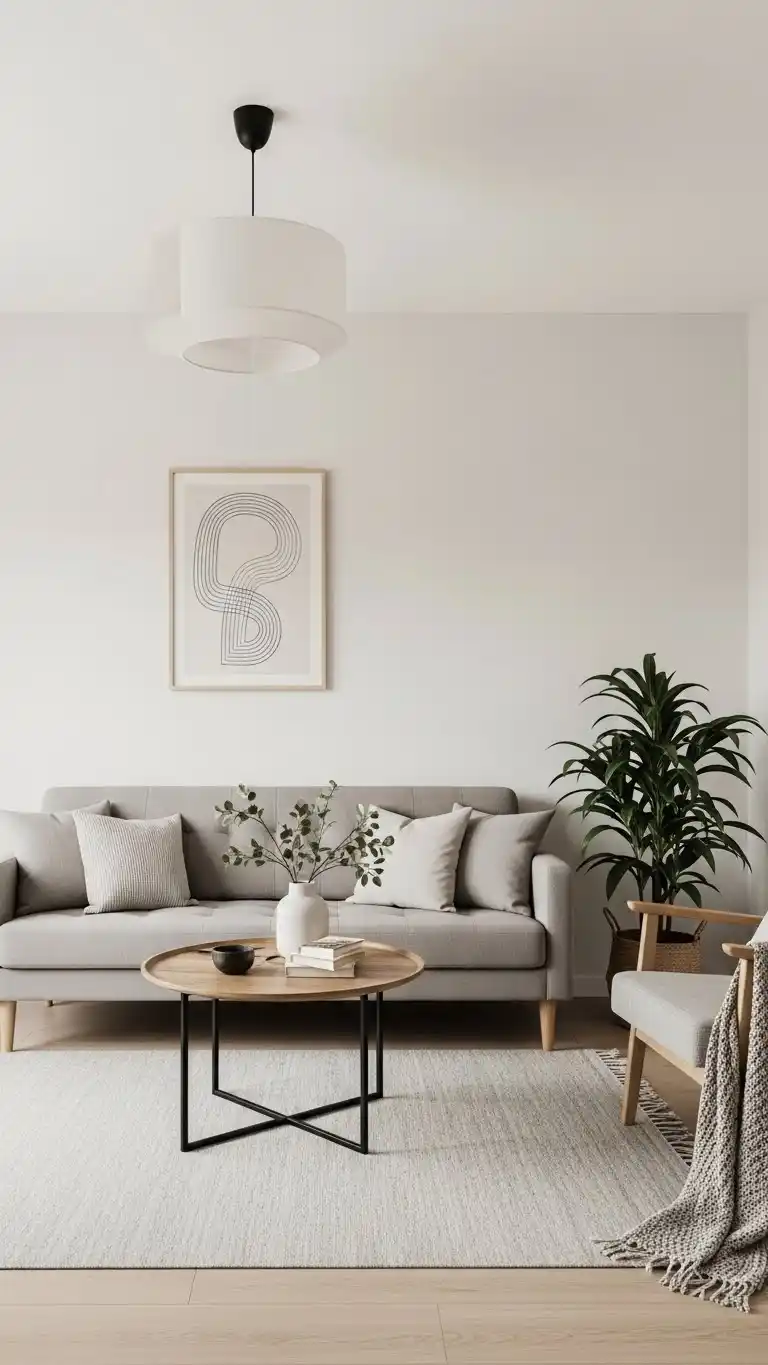
Planning is the first step in creating a successful minimalist living room that meets both aesthetic and functional needs.
Start by measuring your space accurately to determine which furniture pieces fit comfortably without obstructing movement.
Identify a focal point, such as a fireplace, artwork, or large window, to anchor your layout and guide your design decisions.
Choose furniture that combines simplicity with functionality, ensuring that each item serves a clear purpose in your living room.
Prioritize quality over quantity by selecting fewer, high-quality pieces that last longer and maintain the minimalist look.
Use storage solutions, such as built-in cabinets or hidden compartments, to reduce visible clutter and keep the room organized.
Lighting plays a critical role, so maximize natural light with sheer curtains or strategically placed mirrors to enhance the sense of openness.
Additional tips include maintaining consistency in color palettes, textures, and materials to achieve a cohesive and calming environment.
Alternate keywords include minimalist décor ideas, space-saving furniture tips, and functional living room essentials.
21 Minimalist Living Room Ideas
Choose a Neutral Color Palette

Neutral tones like white, beige, and gray create a calm and elegant look in a minimalist living room.
These colors reflect light, making the space feel bigger and brighter.
Adding subtle variations in shades can keep the room from looking too plain while maintaining a cohesive style.
A neutral backdrop also allows you to introduce textures and patterns without overwhelming the space.
Keep Furniture Simple and Functional
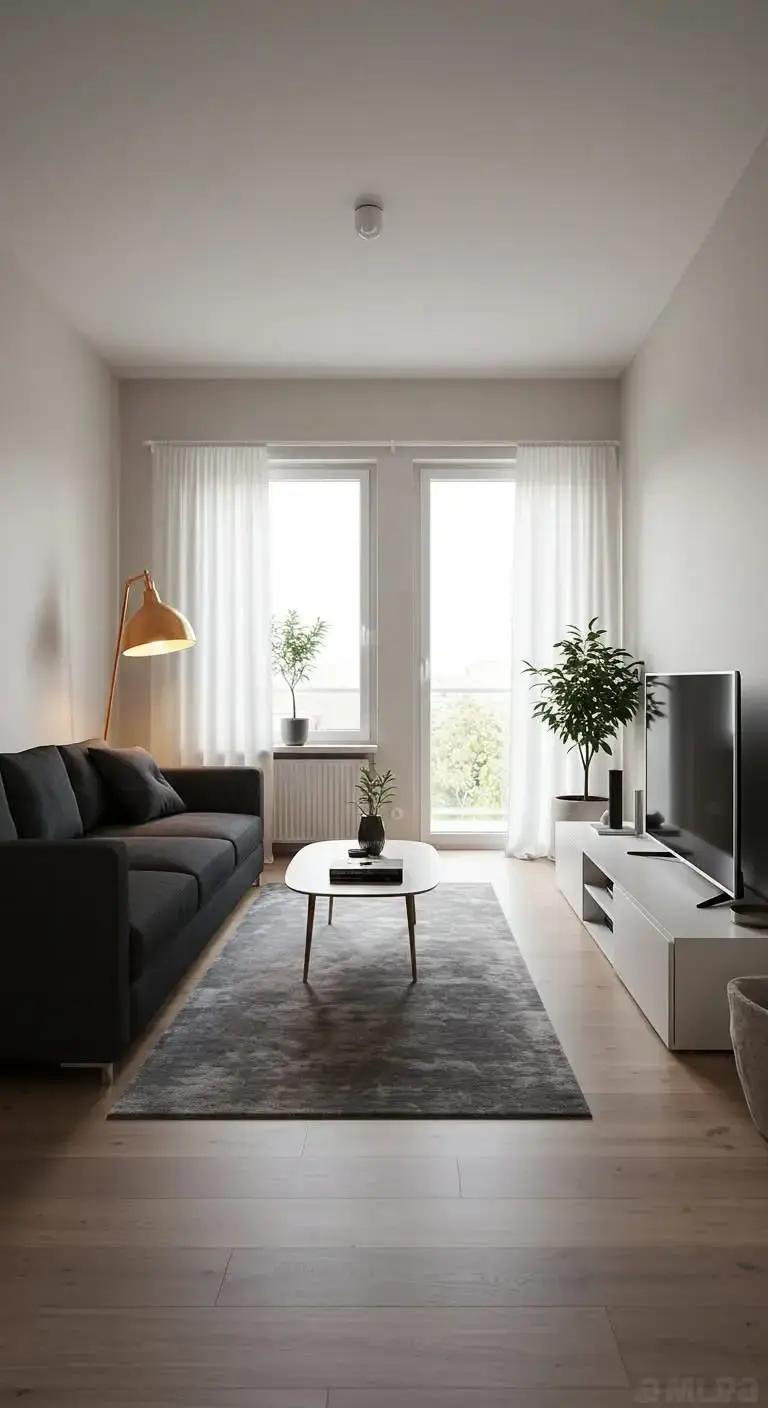
Minimalist furniture should be sleek, practical, and free of unnecessary details.
Opt for streamlined sofas, coffee tables with hidden storage, and multipurpose furniture.
This approach ensures your living room remains clutter-free while maximizing comfort and usability.
For inspiration, check out these small living room design ideas.
Maximize Natural Light
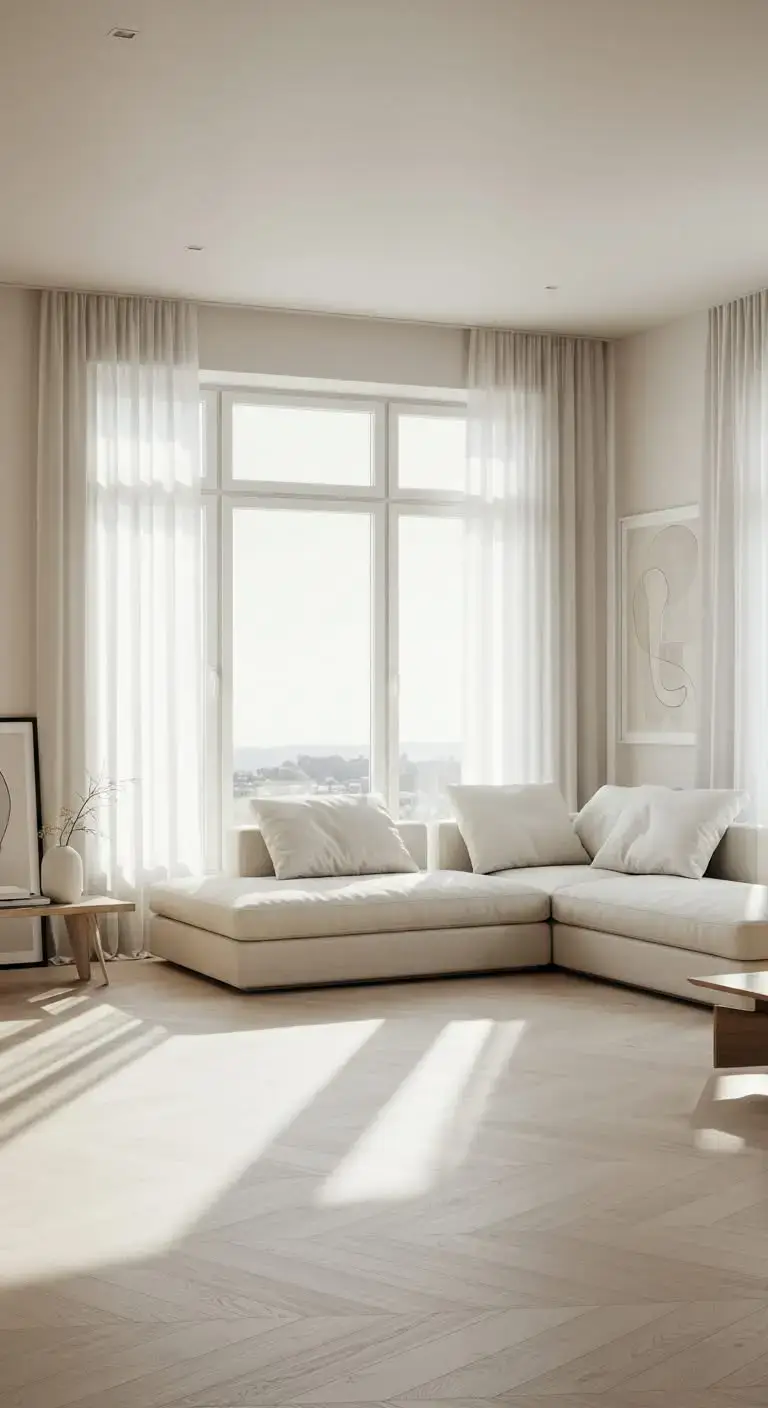
Allowing natural light to flow into your living room enhances its minimalist feel.
Large windows, sheer curtains, and strategically placed mirrors can brighten up the space.
Natural light creates an airy atmosphere and highlights the simplicity of your decor.
If privacy is a concern, opt for light-filtering shades rather than heavy drapes.
Declutter with Smart Storage Solutions
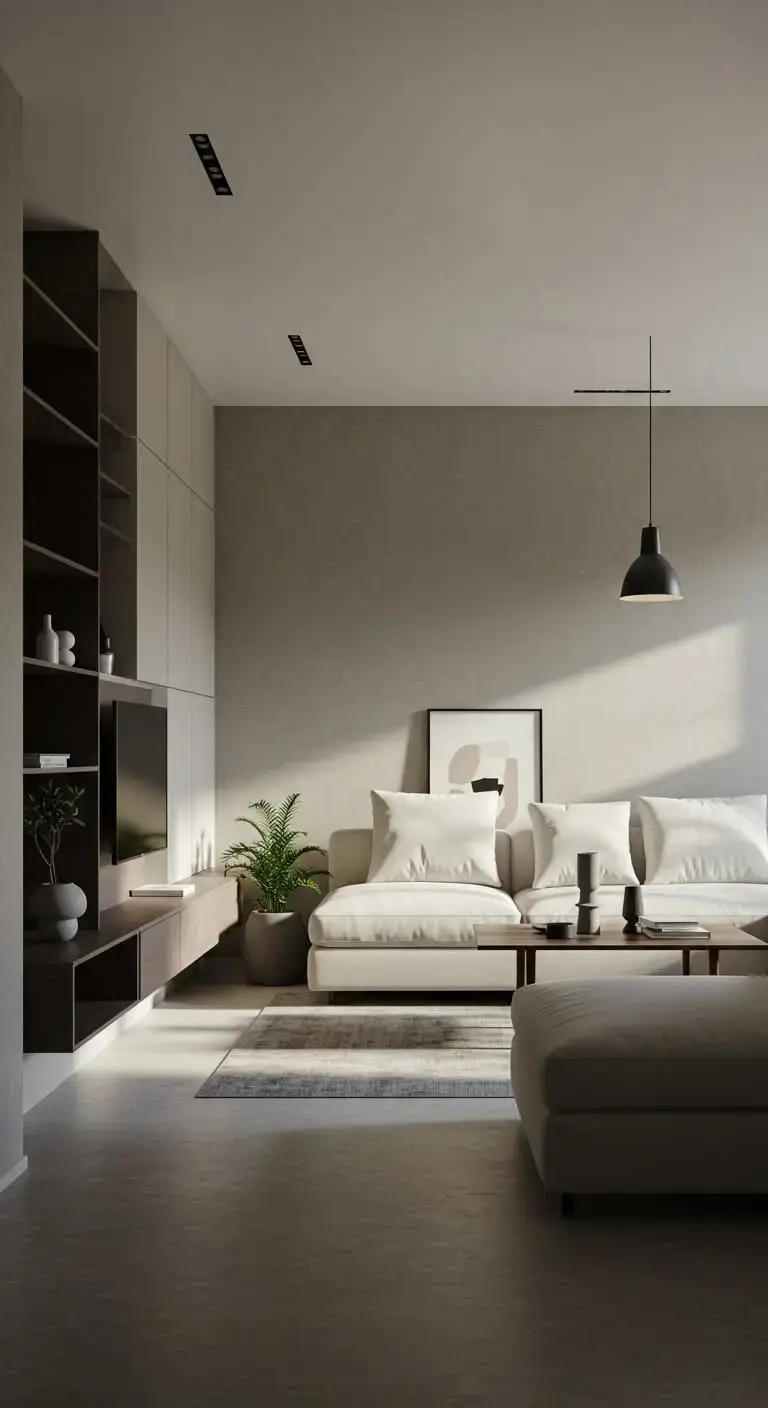
Clutter can quickly take away from the minimalist aesthetic.
Invest in smart storage options like floating shelves, built-in cabinets, and storage ottomans.
Hidden storage solutions help maintain a clean and organized look while ensuring everything has its place.
Learn more about creating a balanced space with these big living room ideas.
Use Statement Pieces Sparingly
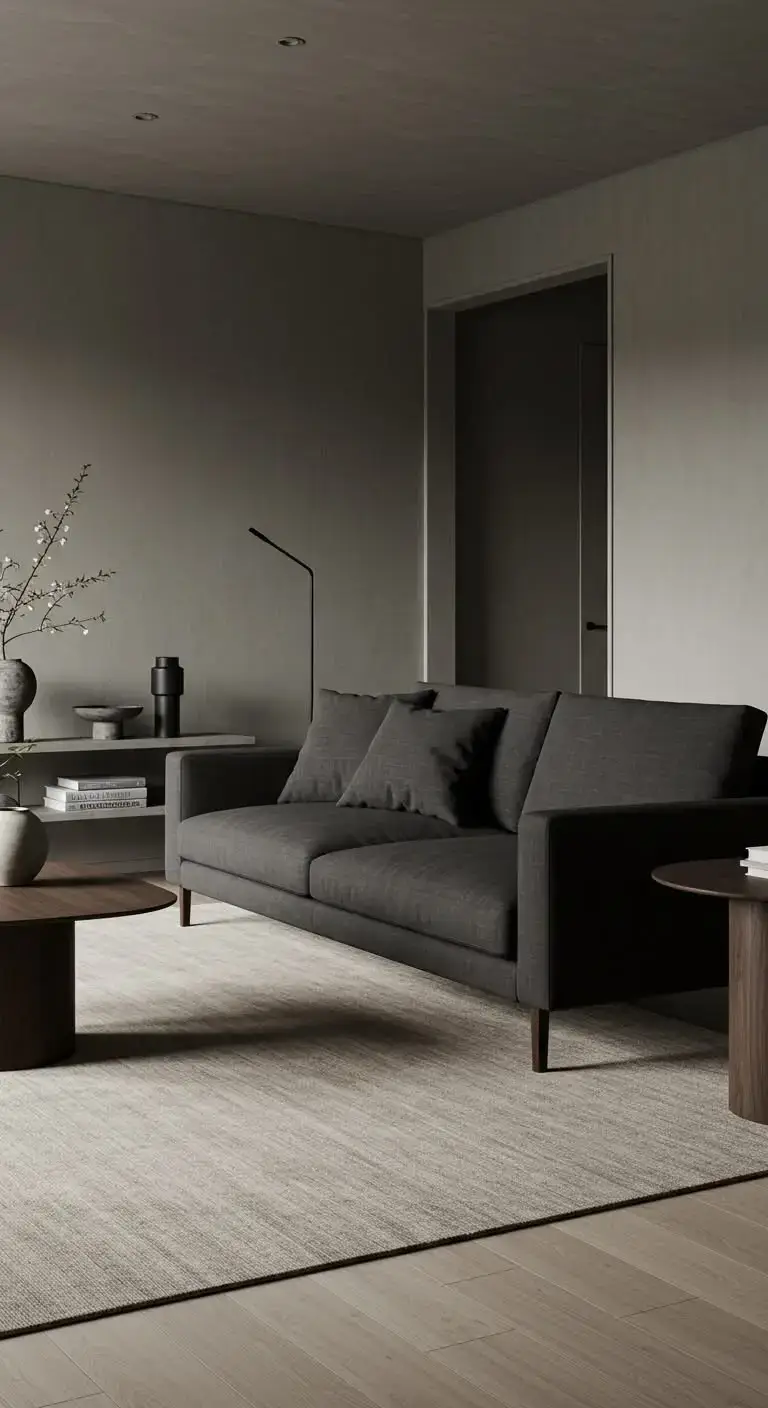
A minimalist living room doesn’t have to be boring.
Introduce a statement piece such as a bold artwork, a unique coffee table, or a sculptural chair.
Keeping the rest of the decor simple allows these elements to stand out without creating visual clutter.
Incorporate Natural Materials
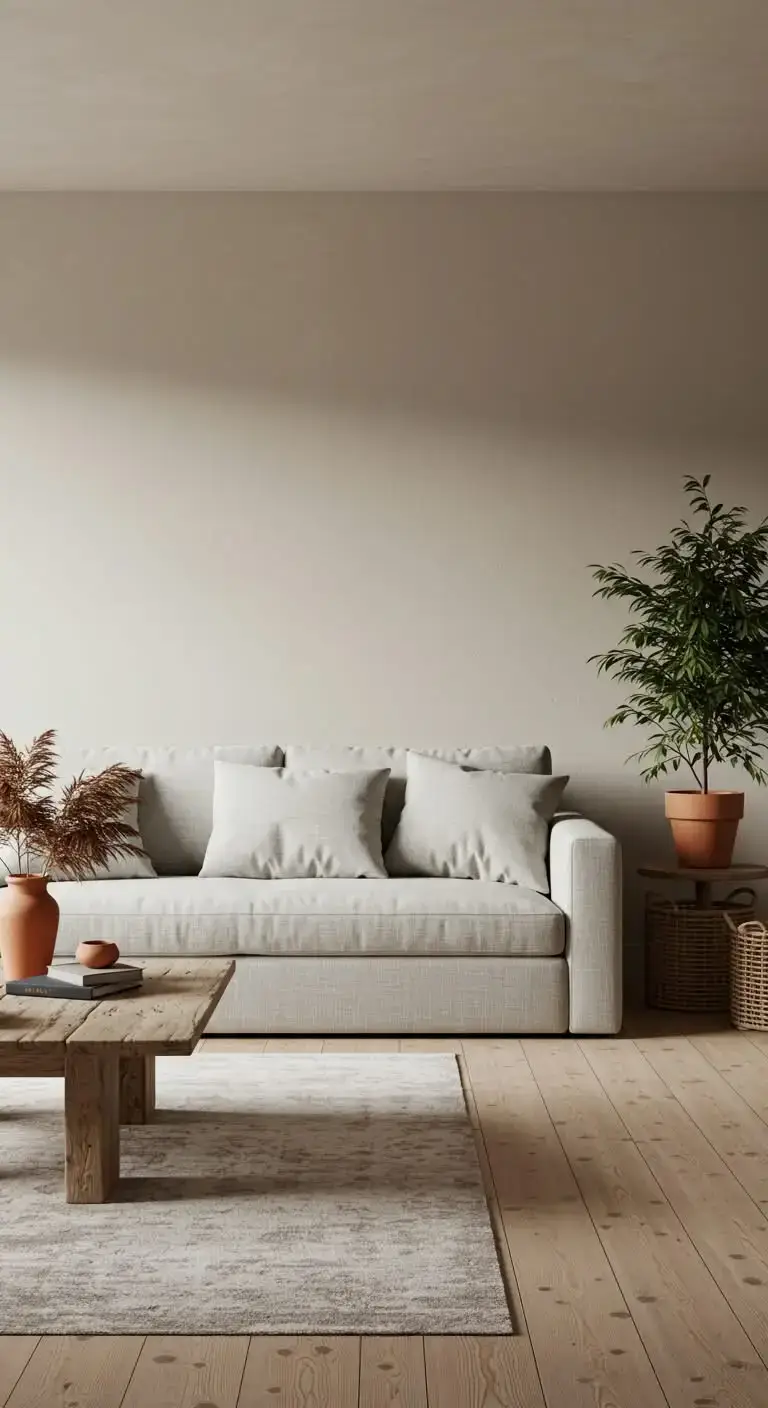
Materials like wood, stone, and linen add warmth and texture to a minimalist living room.
Wooden furniture, marble countertops, and woven baskets create a harmonious balance between simplicity and comfort.
Consider these cottage living room ideas for more inspiration.
Create a Cozy Atmosphere with Layered Textures
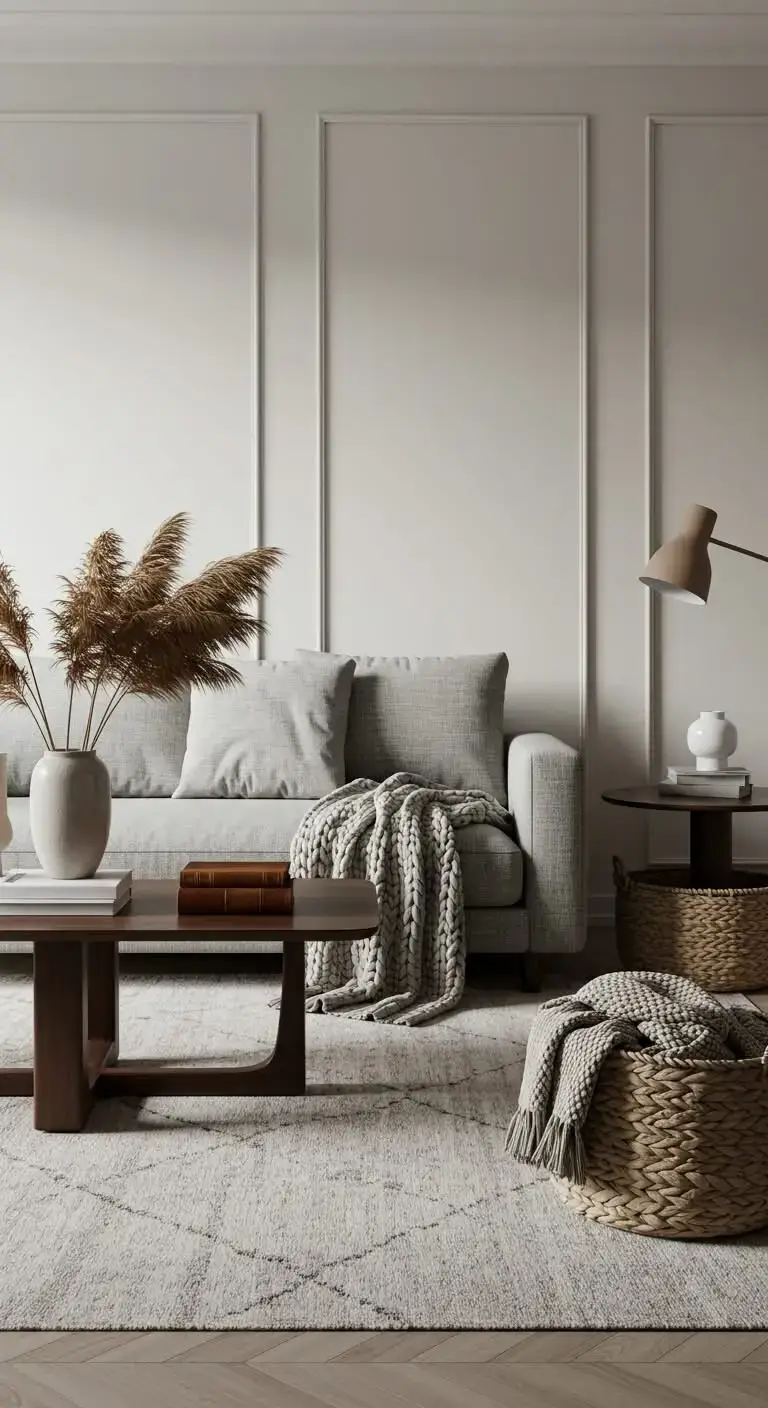
Layering different textures can add depth and character to a minimalist space.
Use soft rugs, plush cushions, and linen throws to make the room feel inviting.
Combining smooth and rough textures creates contrast without relying on excessive decor.
Choose a Single Focal Point
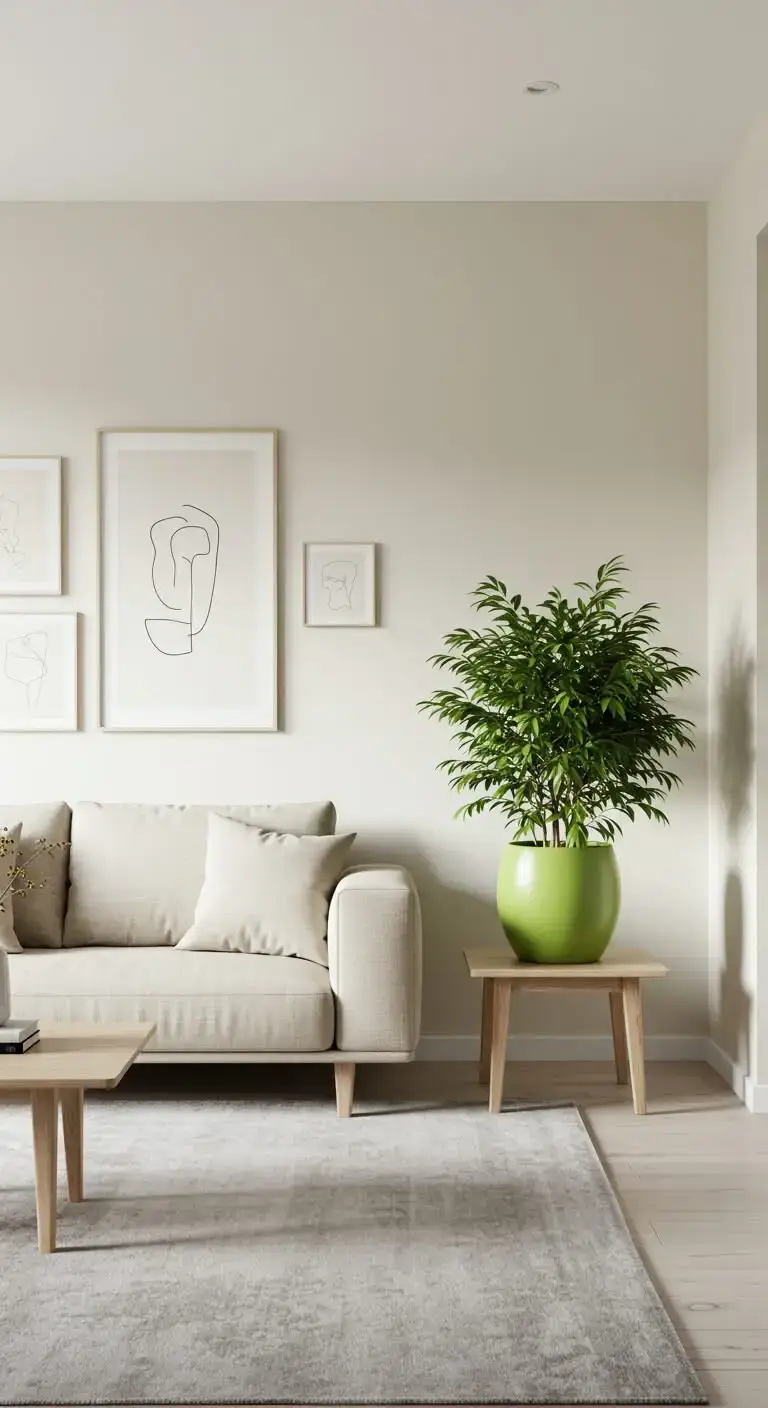
Minimalist spaces benefit from a clear focal point, such as a fireplace, an accent wall, or a large window.
Keep other design elements subtle to ensure the focal point remains the star of the room.
If you love bold elements, consider these black accent wall ideas for living rooms.
Incorporate Indoor Plants
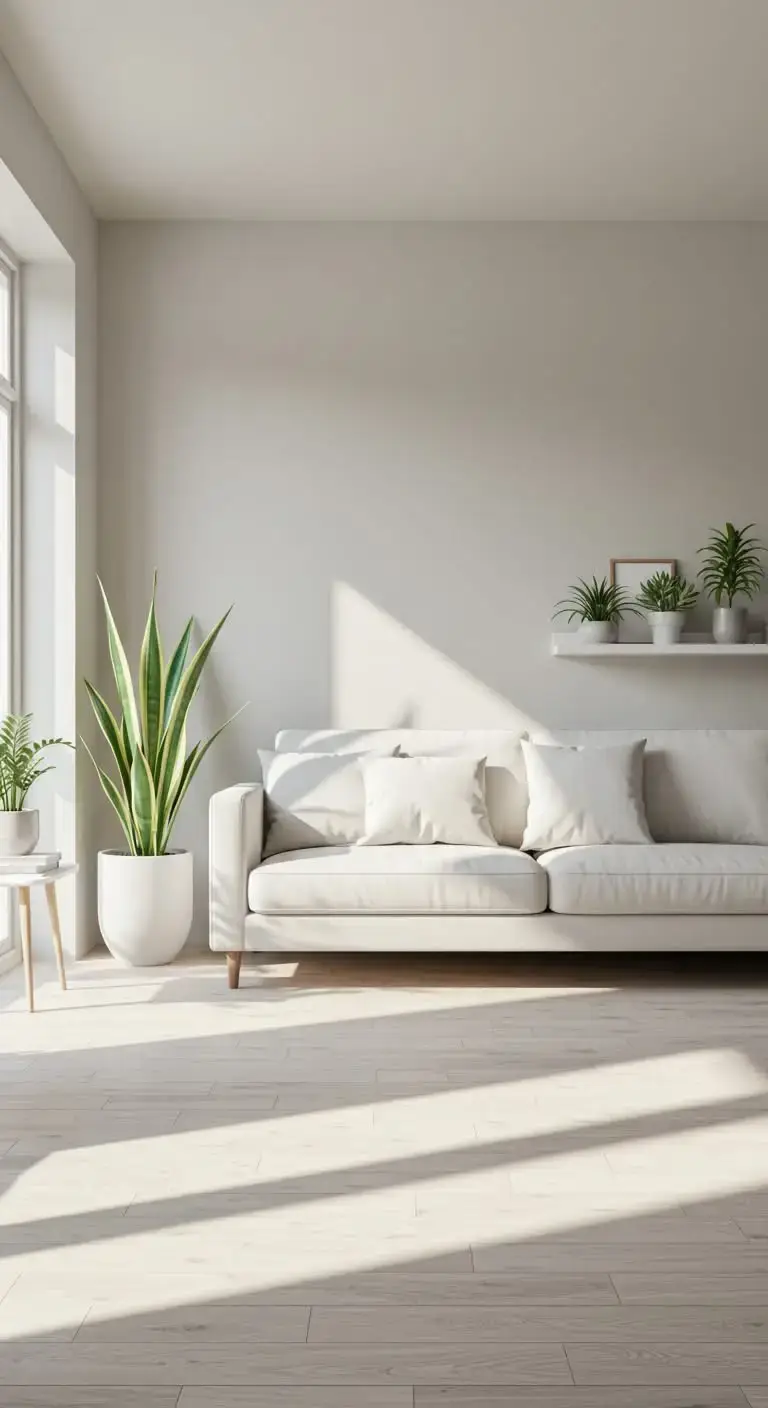
Adding greenery brings life to a minimalist living room without overwhelming the space.
Choose low-maintenance plants like snake plants, pothos, or succulents to keep the look effortless.
Greenery enhances air quality while complementing the neutral tones of minimalist decor.
Opt for a Monochrome Theme
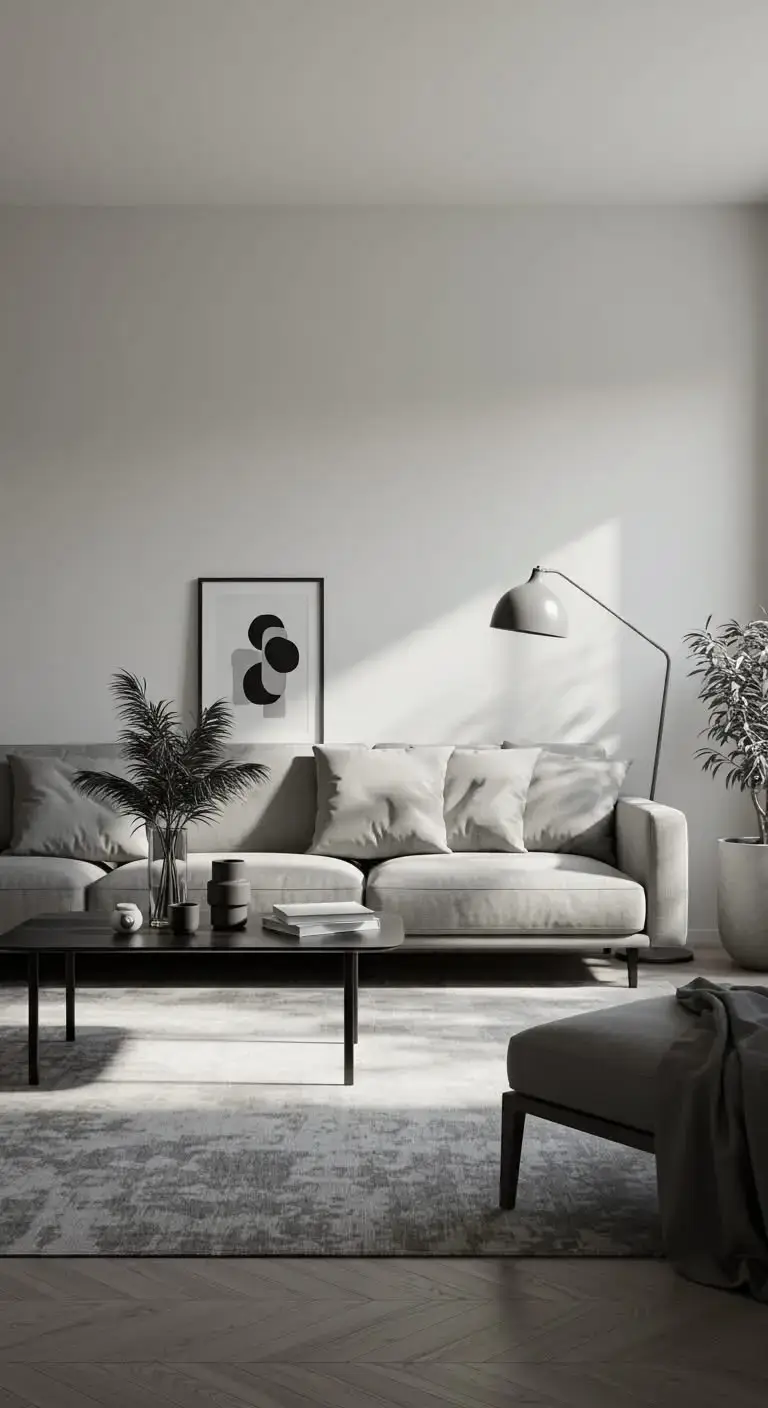
A monochrome color scheme, such as all-white or shades of gray, can enhance the minimalist appeal of your living room.
This approach creates a cohesive, elegant look while allowing textures and shapes to take center stage.
Use Floating Shelves for Minimalist Display
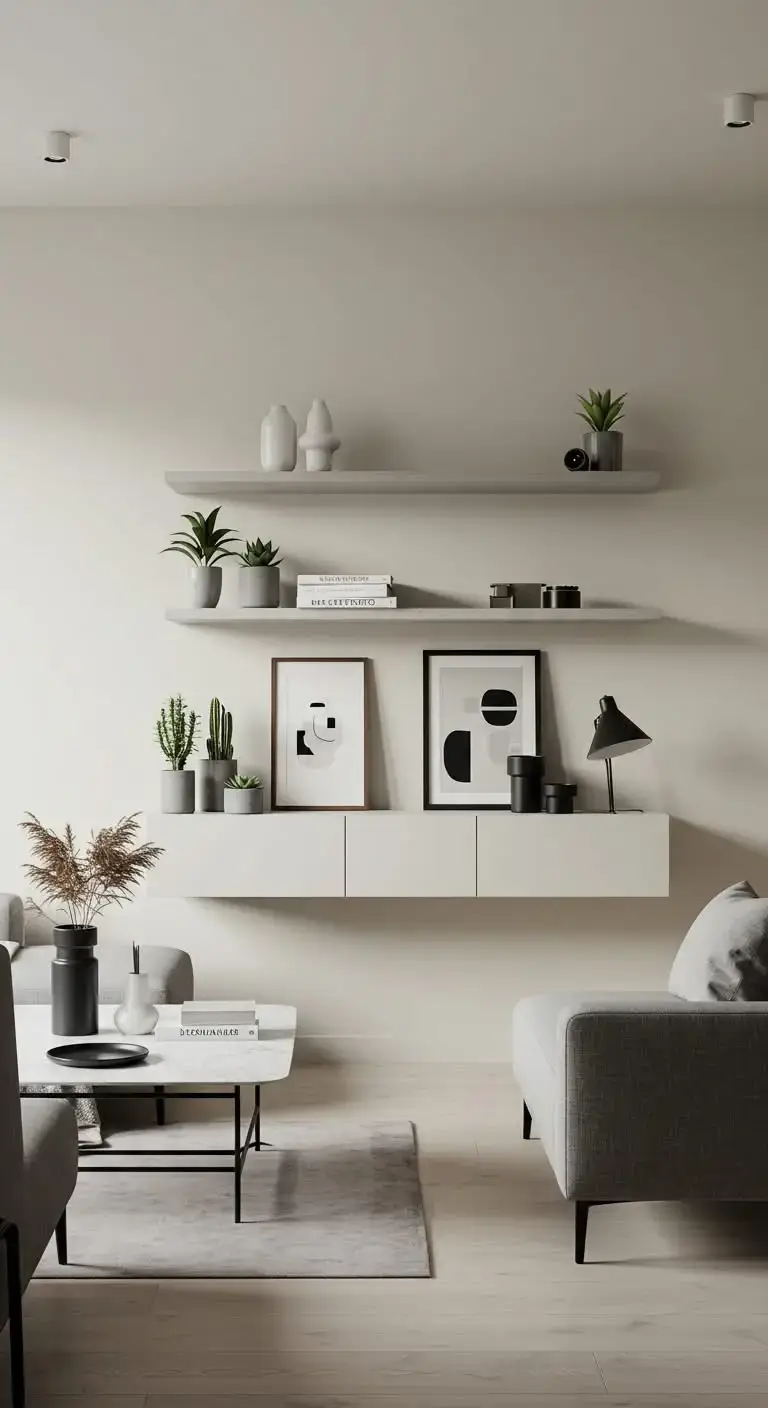
Floating shelves offer a sleek way to showcase decorative items without taking up floor space.
Keep displays simple with a few books, candles, or framed photos to maintain a clutter-free appearance.
Keep the Floor Space Open
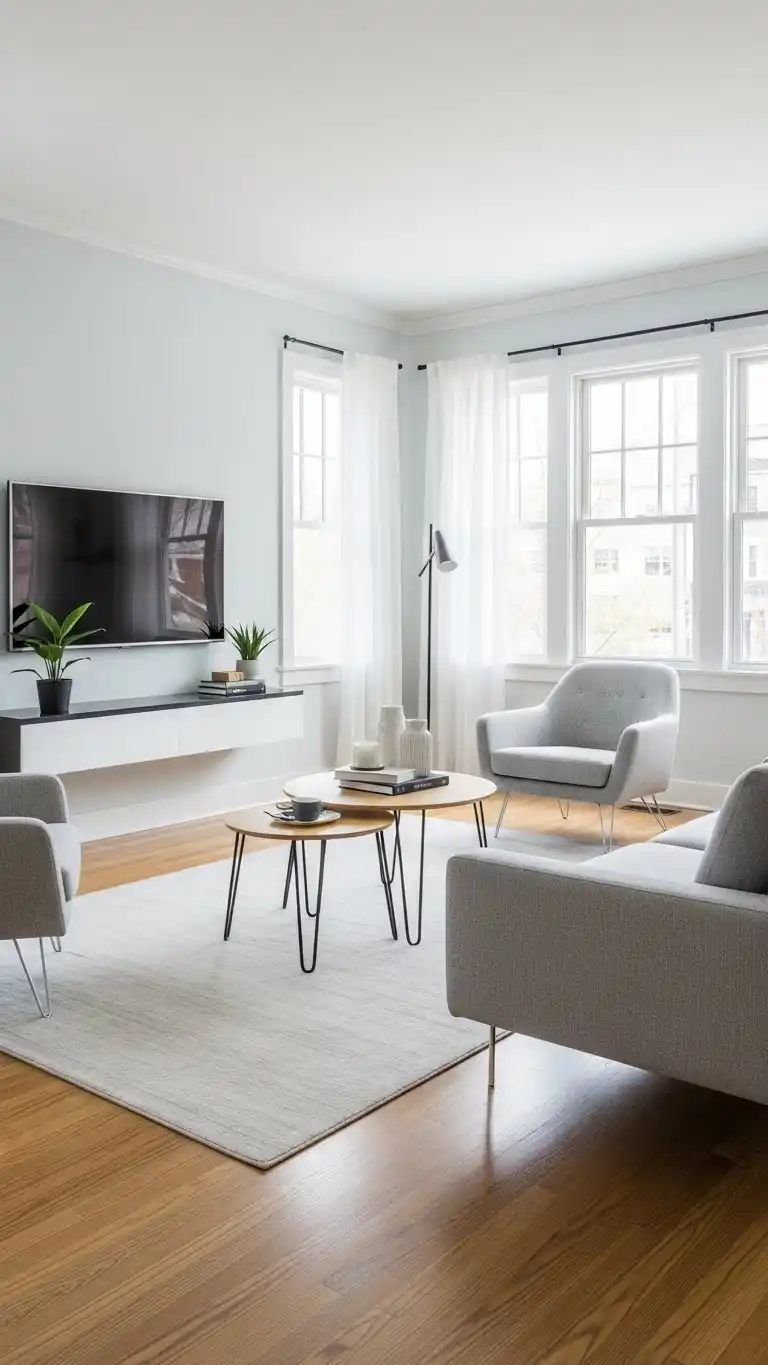
Too much furniture can make a living room feel cramped.
Keep the floor as open as possible by using wall-mounted furniture, nesting tables, and leggy chairs.
This layout enhances movement and makes the room feel more spacious.
Introduce Subtle Patterns
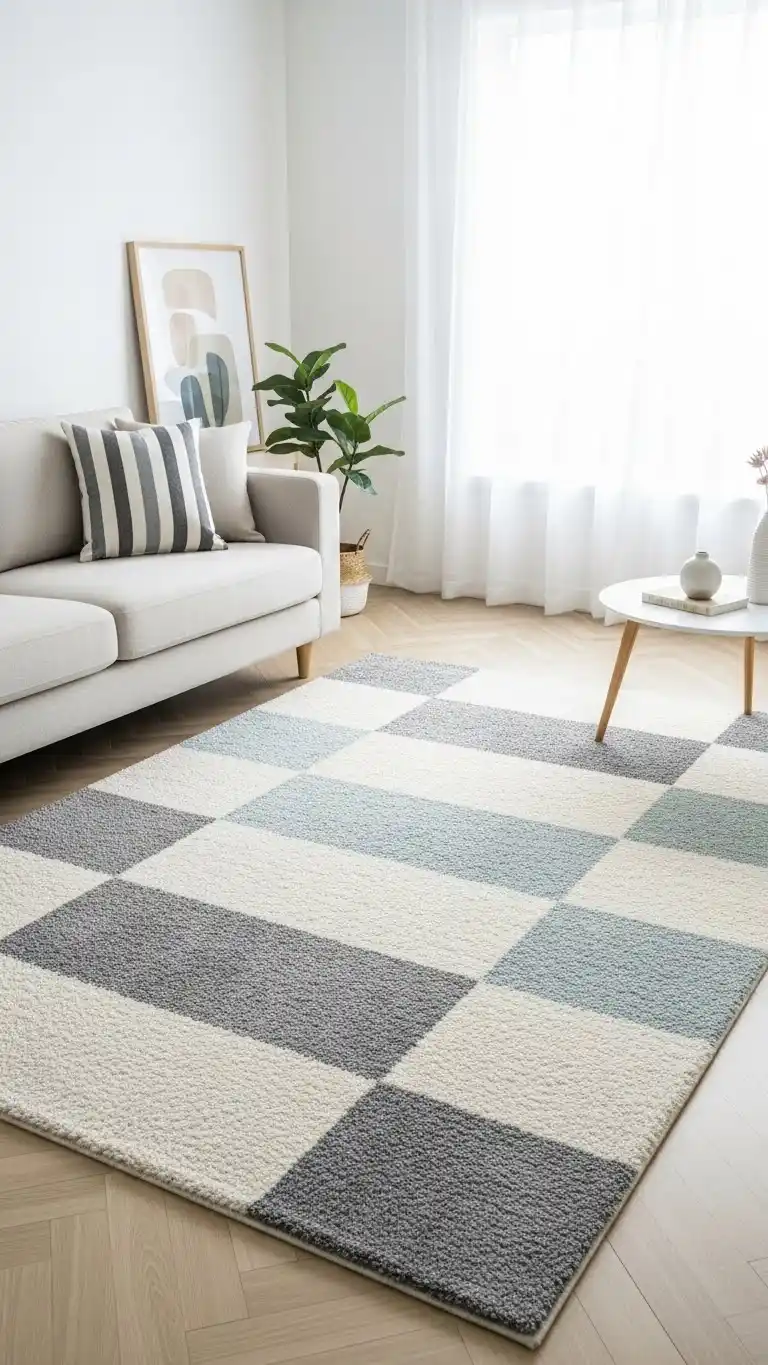
While minimalism favors simplicity, subtle patterns like herringbone floors, geometric rugs, or striped pillows can add visual interest.
Stick to a single pattern to keep the design cohesive.
Add a Shiplap Wall for Texture
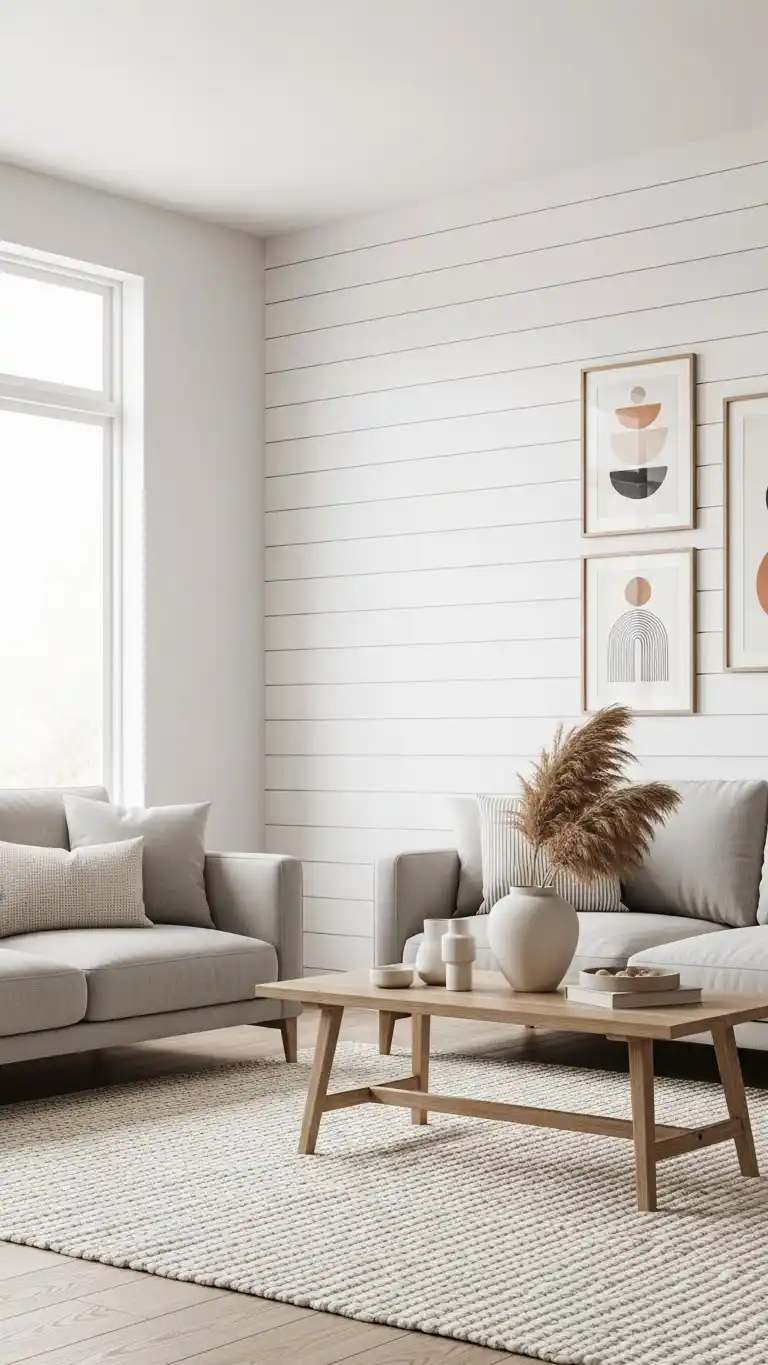
Shiplap walls provide a simple yet stylish way to introduce texture to a minimalist living room.
A white or neutral-colored shiplap wall can add depth without overpowering the space.
Explore more shiplap wall ideas for living rooms.
Keep Electronics Hidden
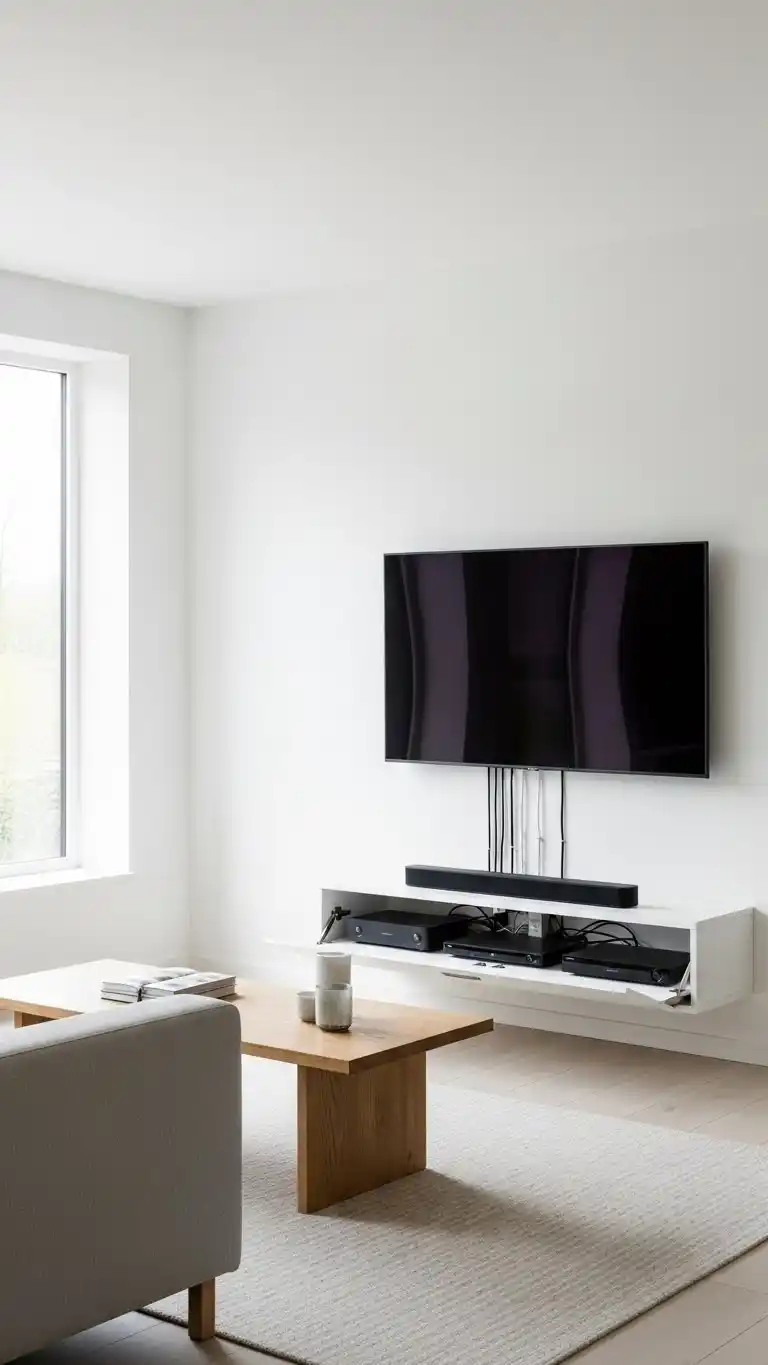
Visible cables and electronics can disrupt the clean lines of a minimalist living room.
Use cord organizers, hidden cabinets, or wall-mounted TVs to keep things looking neat and tidy.
Stick to a Limited Color Palette
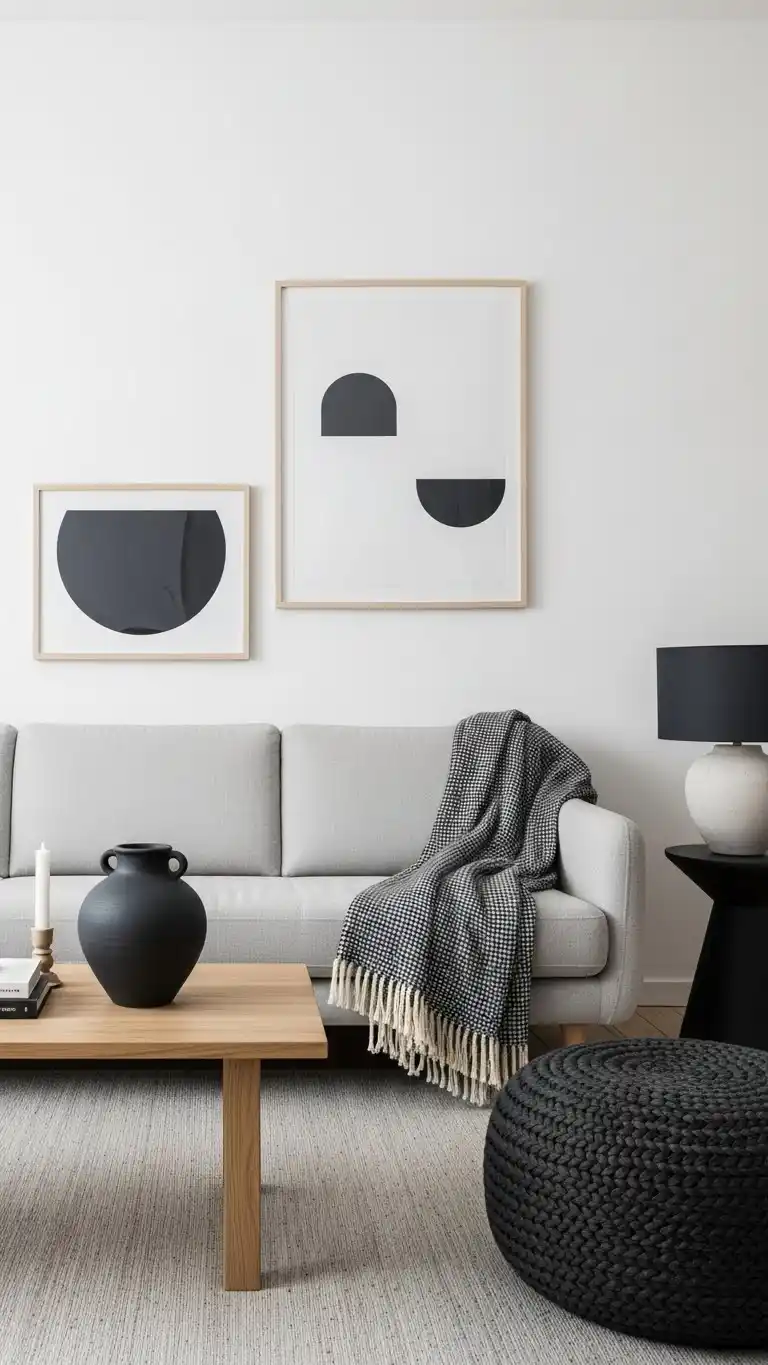
A minimalist living room benefits from a limited color palette of two to three shades.
This ensures a cohesive and tranquil environment while allowing textures and shapes to stand out.
Use Multi-Functional Decor
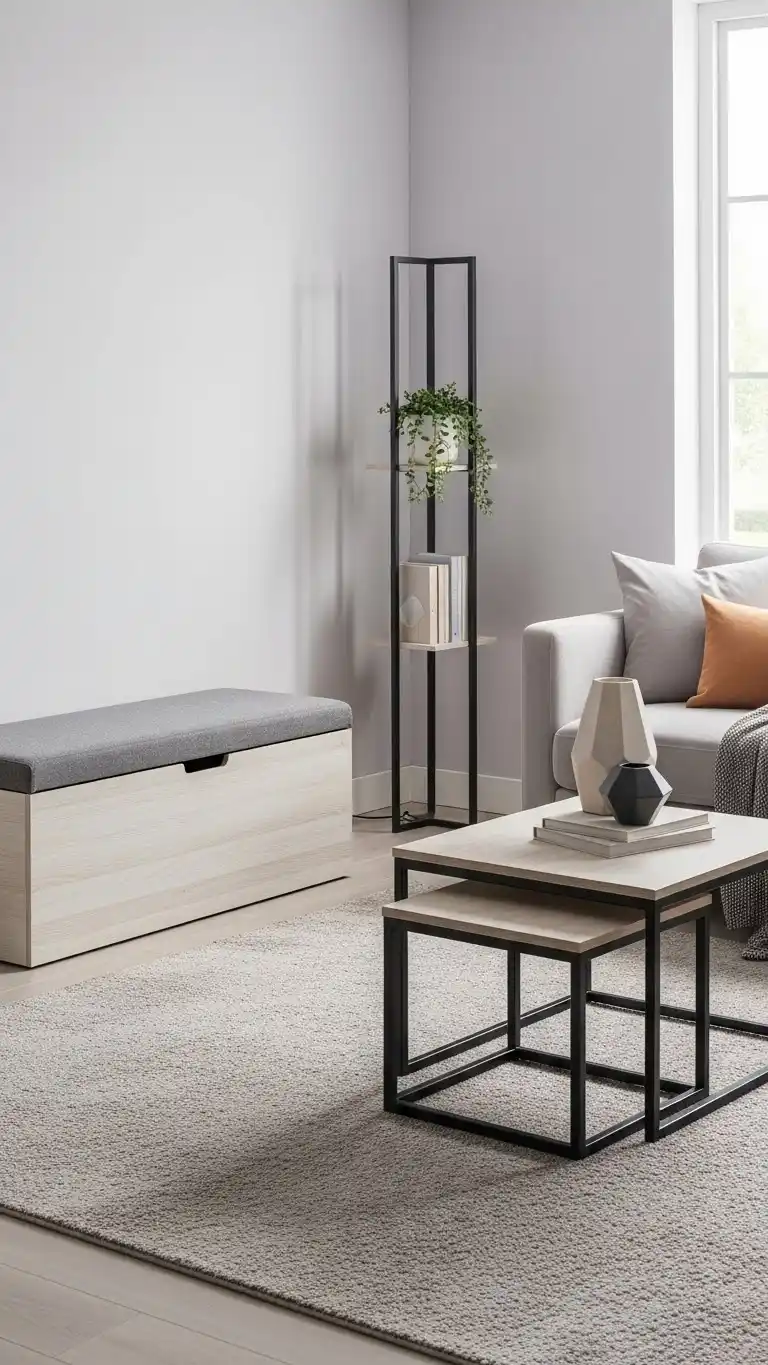
Decor that serves multiple purposes, such as a storage bench or a nesting coffee table, helps maintain a minimalist aesthetic while maximizing functionality.
Arrange Furniture Thoughtfully
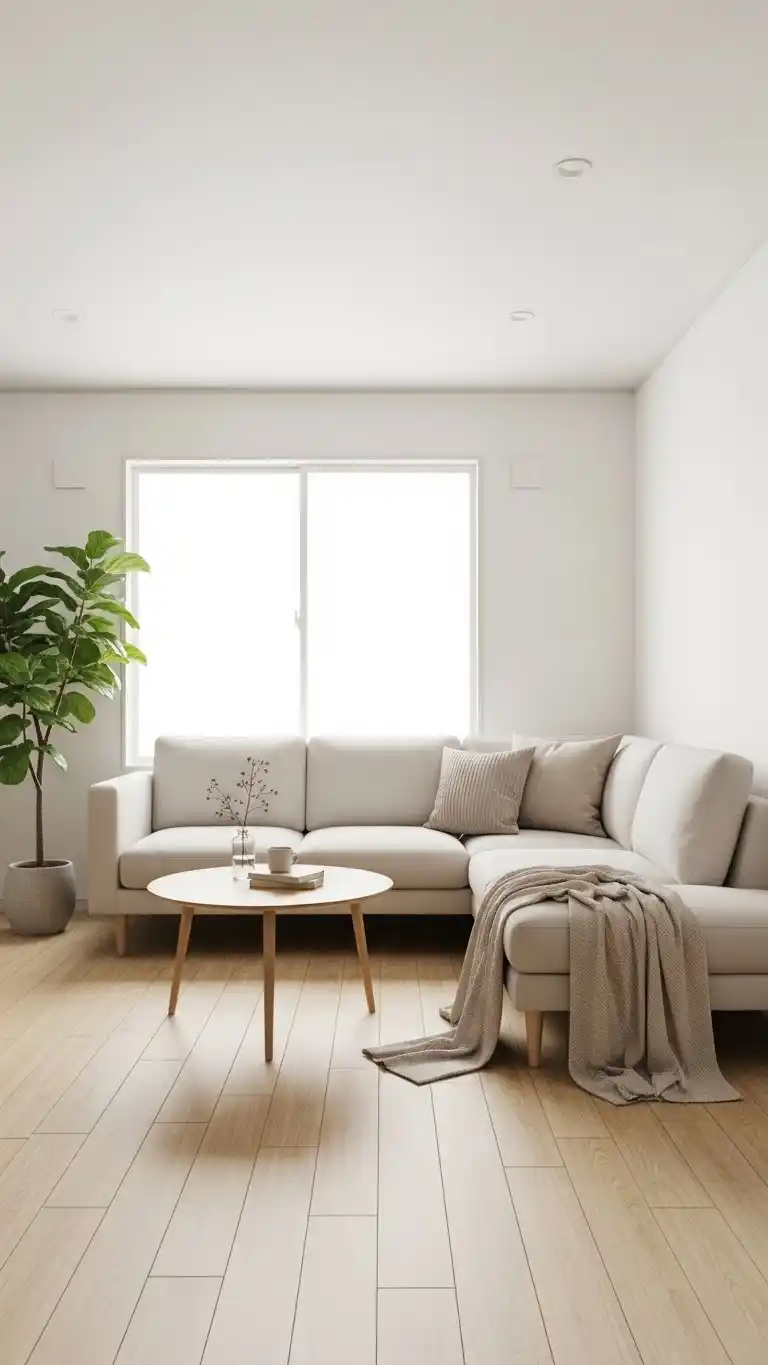
Minimalism isn’t just about having less—it’s about intentionality.
Arrange furniture in a way that promotes easy movement and conversation.
Avoid overcrowding the space with unnecessary pieces.
Add Soft Lighting
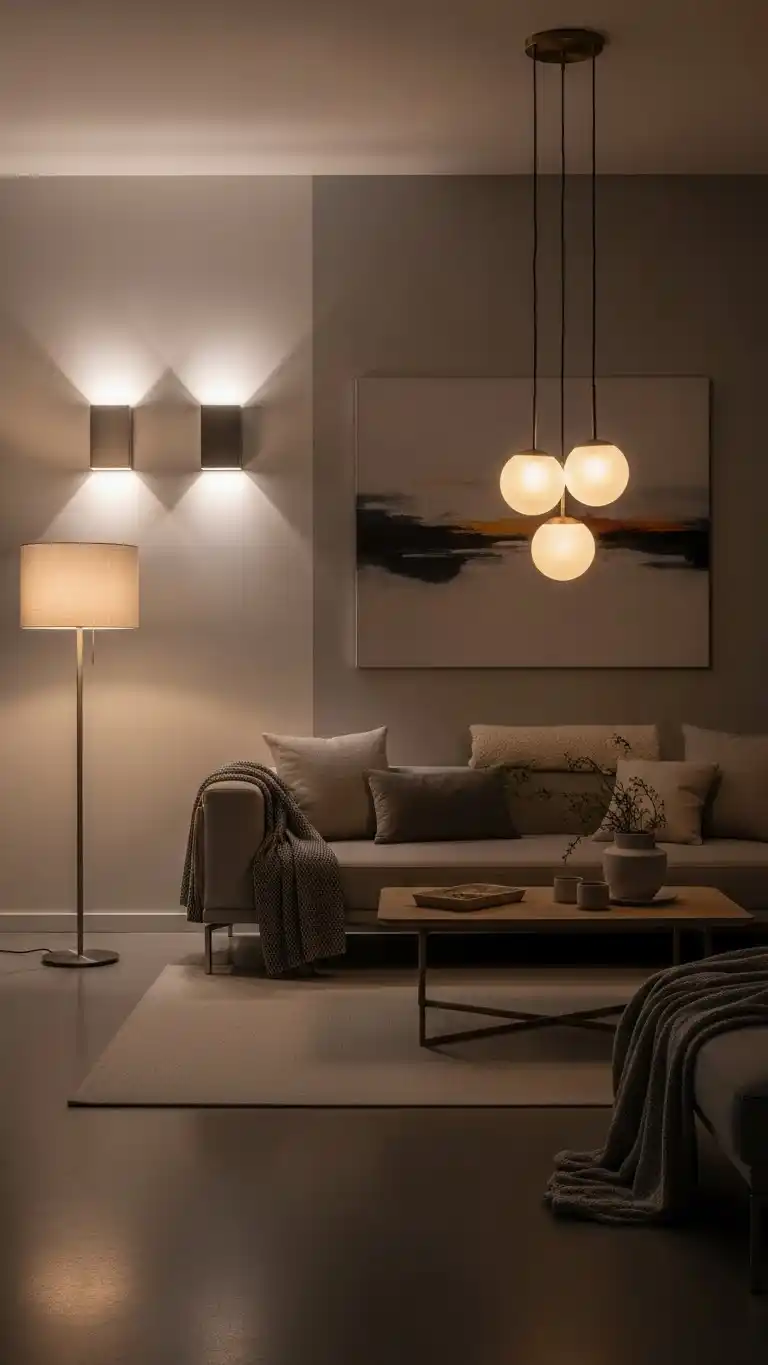
Soft lighting from floor lamps, pendant lights, and sconces can create a cozy and inviting atmosphere.
Warm white bulbs and dimmable lights enhance the minimalist look.
Incorporate Earthy Tones
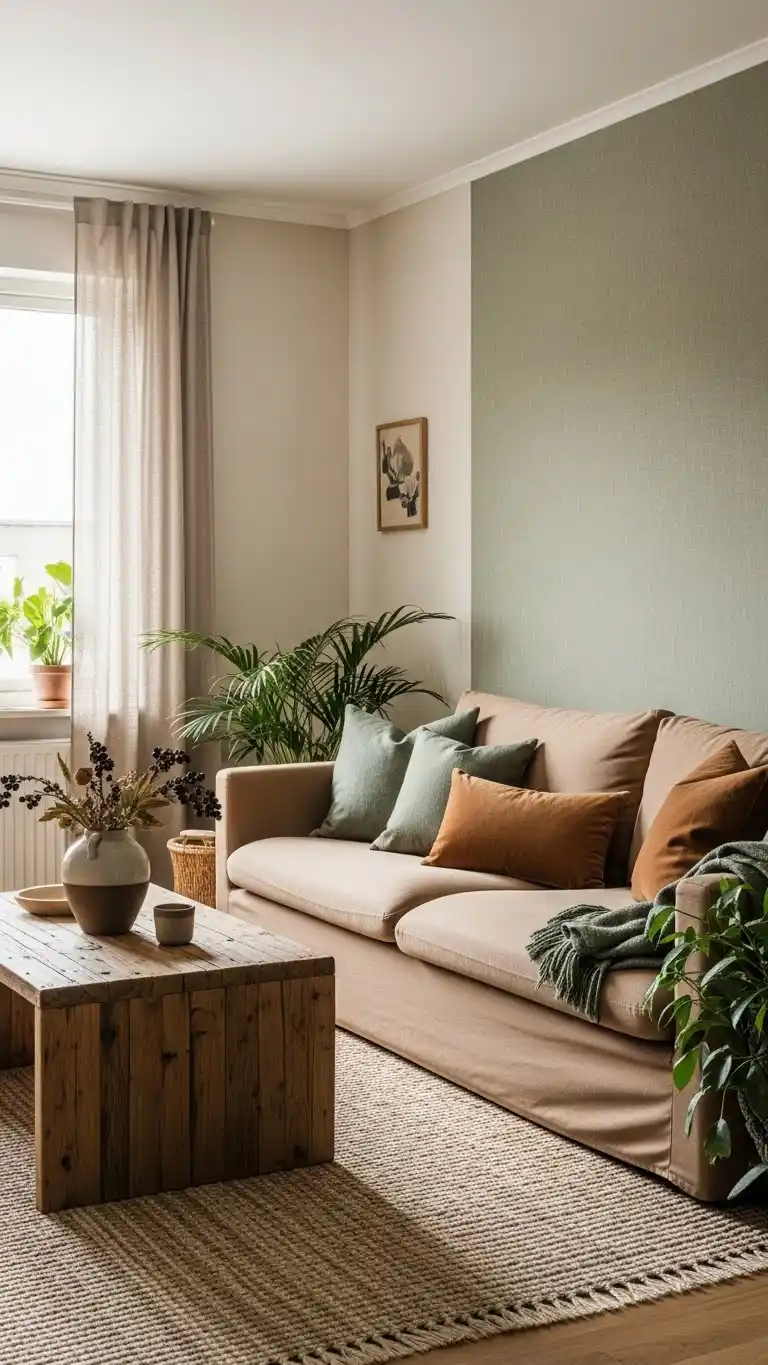
Earthy hues like warm browns, muted greens, and sandy beiges bring warmth to a minimalist living room.
Consider these green living room ideas for more natural-inspired decor tips.
Maintain a Clutter-Free Mindset
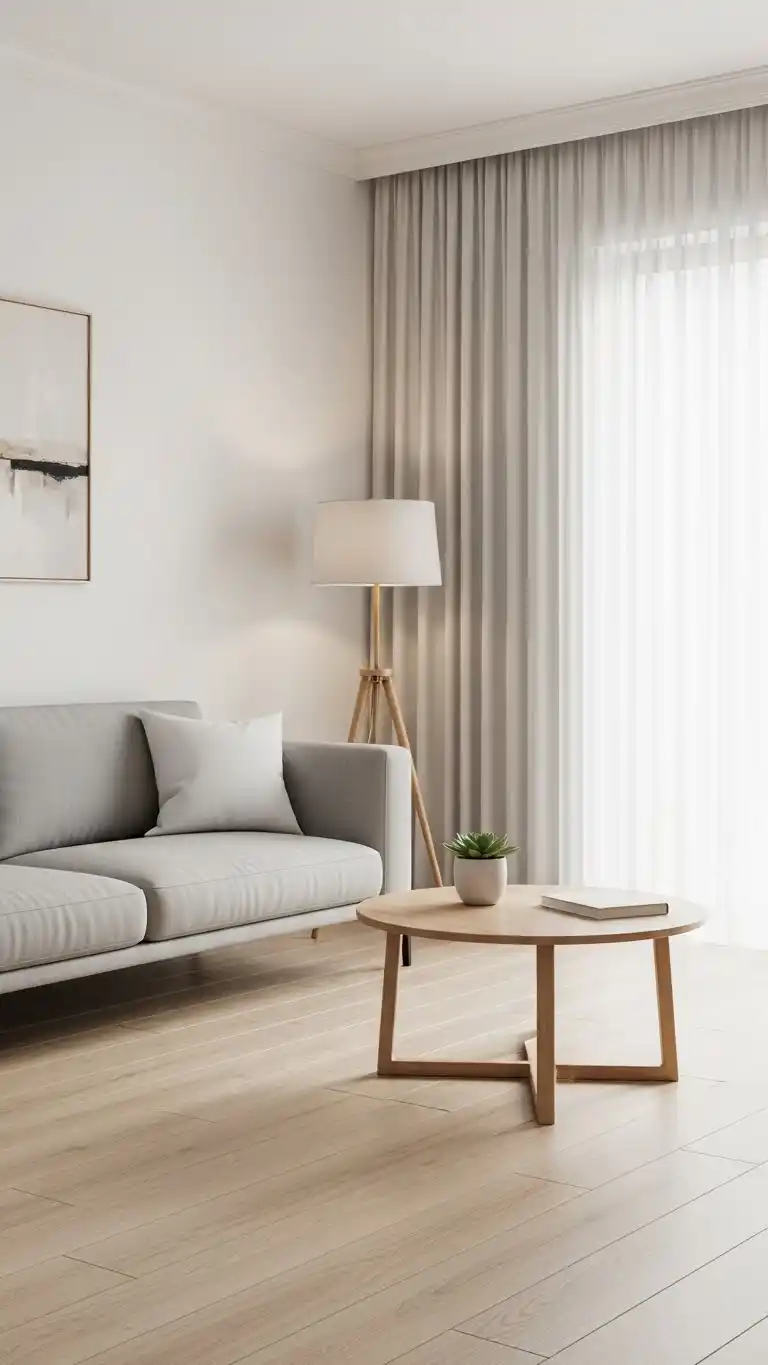
A minimalist living room isn’t just about the design—it’s about the mindset.
Regularly decluttering, organizing, and keeping only what you truly need ensures your space remains serene and stress-free.
Common Mistakes to Avoid in Minimalist Living Rooms
Overdecorating or filling the room with excessive furniture disrupts the calm, airy feel central to minimalism.
Choosing furniture that is overly complex or mismatched can reduce the sense of harmony and coherence in the space.
Neglecting lighting or natural light flow makes even simple rooms feel cramped, dark, or uninviting.
Accumulating clutter over time, such as unnecessary accessories or redundant items, erodes the minimalist aesthetic.
Ignoring personal style can result in a space that feels sterile or disconnected from the people living there.
Avoiding these mistakes ensures your minimalist living room remains functional, comfortable, and visually appealing.
Intentional choices in furniture, décor, and layout promote a serene and organized environment for daily life.
Budget-Friendly Tips for Achieving Minimalist Living Room Design
Adopting minimalist design does not require a large budget; creativity and strategic planning go a long way.
Consider DIY décor projects, second-hand furniture, or refinishing existing pieces to achieve high-end looks affordably.
Prioritize multipurpose furniture that reduces the need for extra pieces while maintaining style and functionality.
Focus on essentials, selecting fewer but high-quality items that contribute to both aesthetics and longevity.
Use neutral colors, simple décor, and natural textures to create an elegant and timeless minimalist environment.
Organizing items effectively and maintaining clutter-free surfaces reinforces the minimalist style without overspending.
Budget-conscious strategies ensure you can achieve a functional, calm, and visually appealing living room efficiently.
One Last Look
Minimalist living room ideas provide inspiration to transform your space into a calm, organized, and stylish environment.
Focusing on simplicity, functionality, and intentional décor allows you to create a room that is both visually appealing and practical.
From neutral color palettes to hidden storage, each idea contributes to a cohesive, inviting, and clutter-free living room.
Careful planning, thoughtful furniture selection, and mindful decoration ensure the minimalist principles remain consistent throughout.
Incorporating natural light, textures, and personal touches enhances the atmosphere without compromising simplicity.
Following these tips and ideas will help you achieve a minimalist living room that reflects your style while remaining functional and serene.
By avoiding common mistakes and using budget-friendly strategies, anyone can create a living room that feels expansive, balanced, and welcoming.
Minimalist design encourages intentional choices, resulting in a home environment that supports calm, comfort, and aesthetic harmony.
For more inspiration, explore these inspiring living room ideas.
