13 Mediterranean Garden Ideas to Transform Small Yards

Looking to add timeless beauty and vibrant greenery to your outdoor space? Check out these stunning Mediterranean Garden Ideas for instant inspiration.
I’ve always admired gardens that feel like they belong in the South of France or along the Italian coast—sunlight filtering through olive trees, the air fragrant with herbs, and colorful pots scattered here and there.
But creating that Mediterranean vibe at home? That felt a little intimidating at first.
After a few trials (and plenty of trips to the garden center), I discovered how easy it can be to bring a touch of the Mediterranean to your backyard, porch, or patio.
Whether you’re dreaming of lush greenery, fragrant blooms, or rustic accents, these 13 Mediterranean garden ideas will help you capture that effortless, sun-soaked charm.
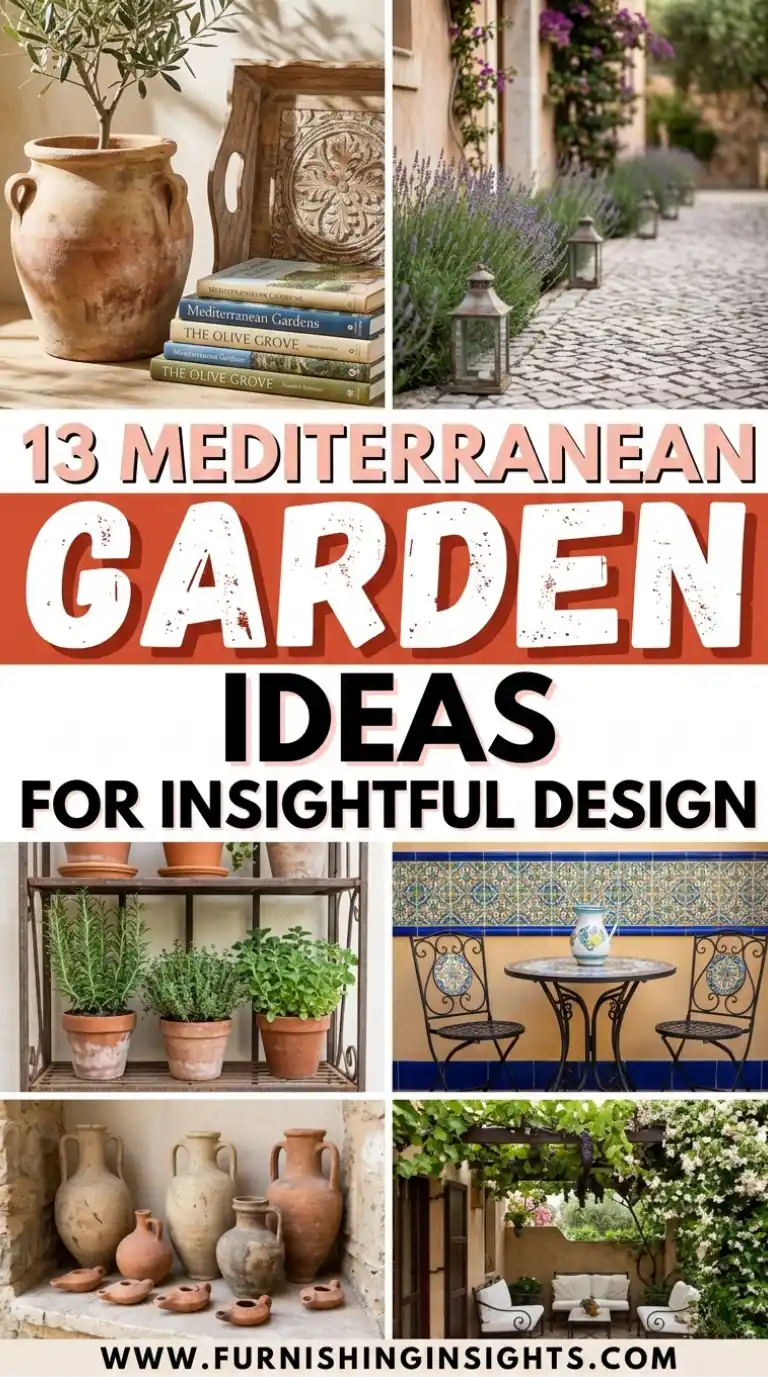
Drought-tolerant lavender pathways
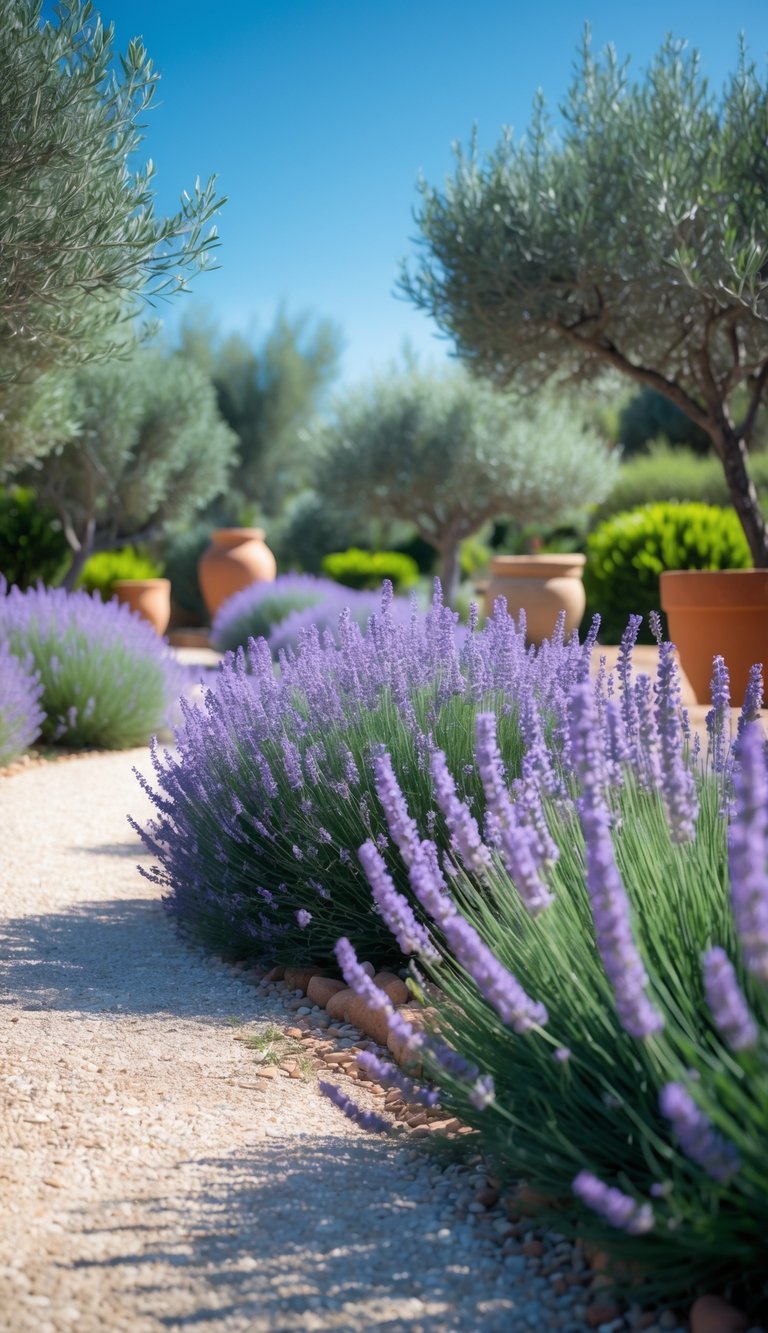
I plant lavender along paths for scent and color, skipping extra water. Lavender likes good drainage and full sun, so I raise beds or use gravel for runoff.
I space plants for airflow and fewer diseases. A light mulch of small stones keeps soil cool and moisture steady.
English or Spanish lavender sticks around for long blooms. After flowering, I prune to keep things tidy and push new growth.
Natural stone patios and walkways
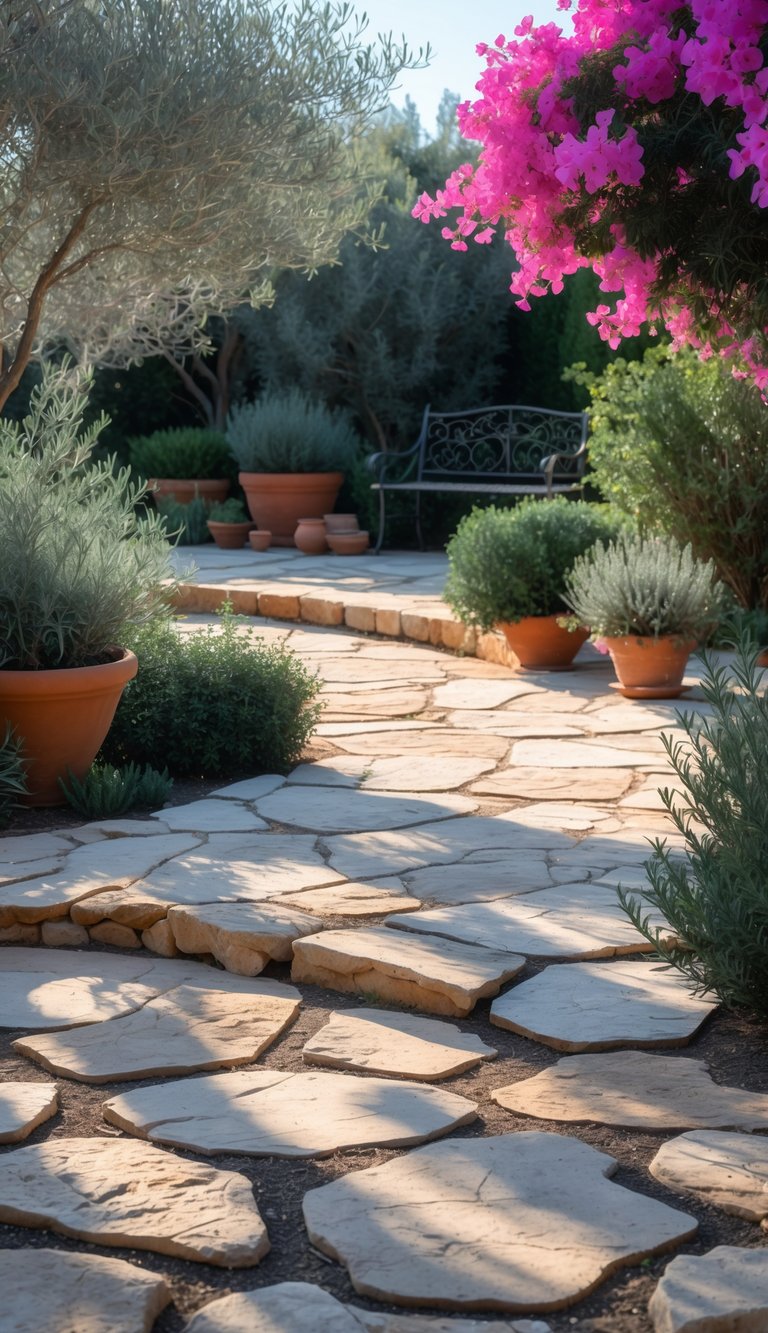
I go for natural stone to give my Mediterranean garden real character. Stones like flagstone or cobble mix well with gravel and soft plantings.
Irregular shapes make things look relaxed, but cut pavers work for a neater vibe. Stones feel cool underfoot and need less fuss than concrete.
Low herbs or pebbles edge my paths, defining the way. The design stays simple so plant colors really pop.
Vibrant bougainvillea climbing walls
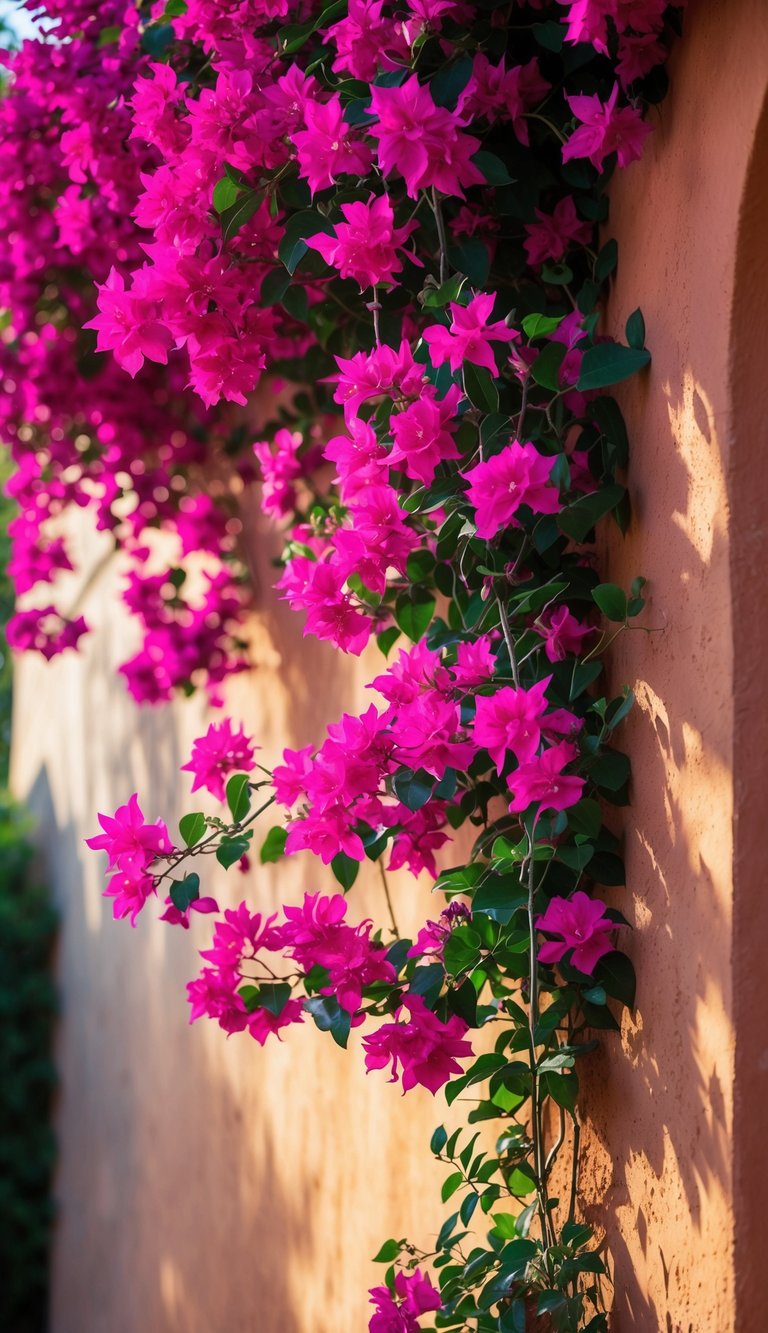
Bougainvillea brings bold color to plain walls and fences. Its papery bracts climb fast if I give them a sturdy trellis or wires.
I pick strong, bright varieties and train stems out evenly. A living wall like this just needs the occasional trim and a bit of feeding.
Terracotta pots and garden accents
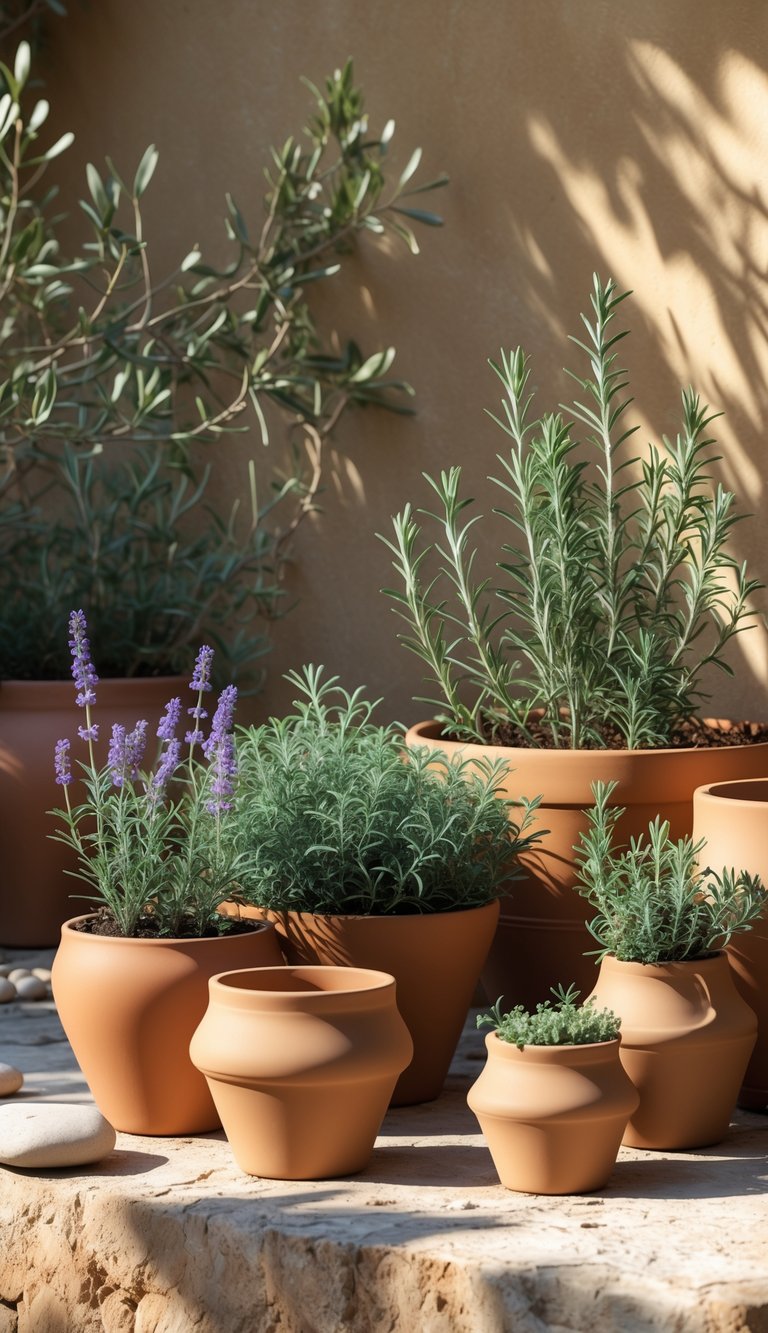
Terracotta pots bring warmth and structure, and honestly, they just look better as they age. The clay breathes, which Mediterranean plants love.
I group pots at different heights for depth. Small terracotta touches—birdbaths, tiles, wall planters—make things feel rustic but not overdone.
I watch the watering and seal pots if winter’s rough. That way, they last and my plants stay happy.
Aromatic herb garden with rosemary and thyme
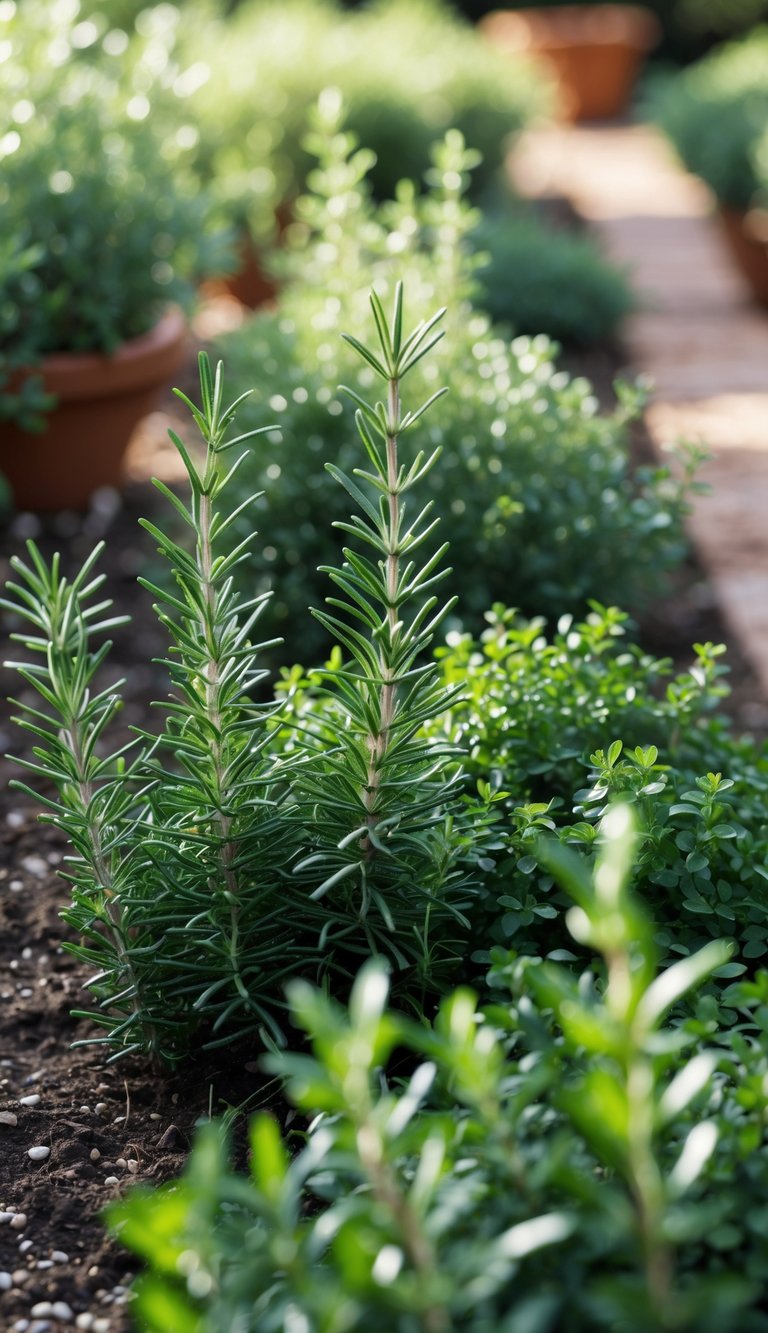
Rosemary and thyme thrive in pots or sunny borders. They handle heat and low water like champs.
Their scent fills the air if you brush past, and I toss fresh sprigs in my cooking. Well-drained soil and plenty of sun make them happy.
Light pruning keeps their shape. I harvest often to encourage new growth—plus, it’s delicious.
Shaded pergola seating areas
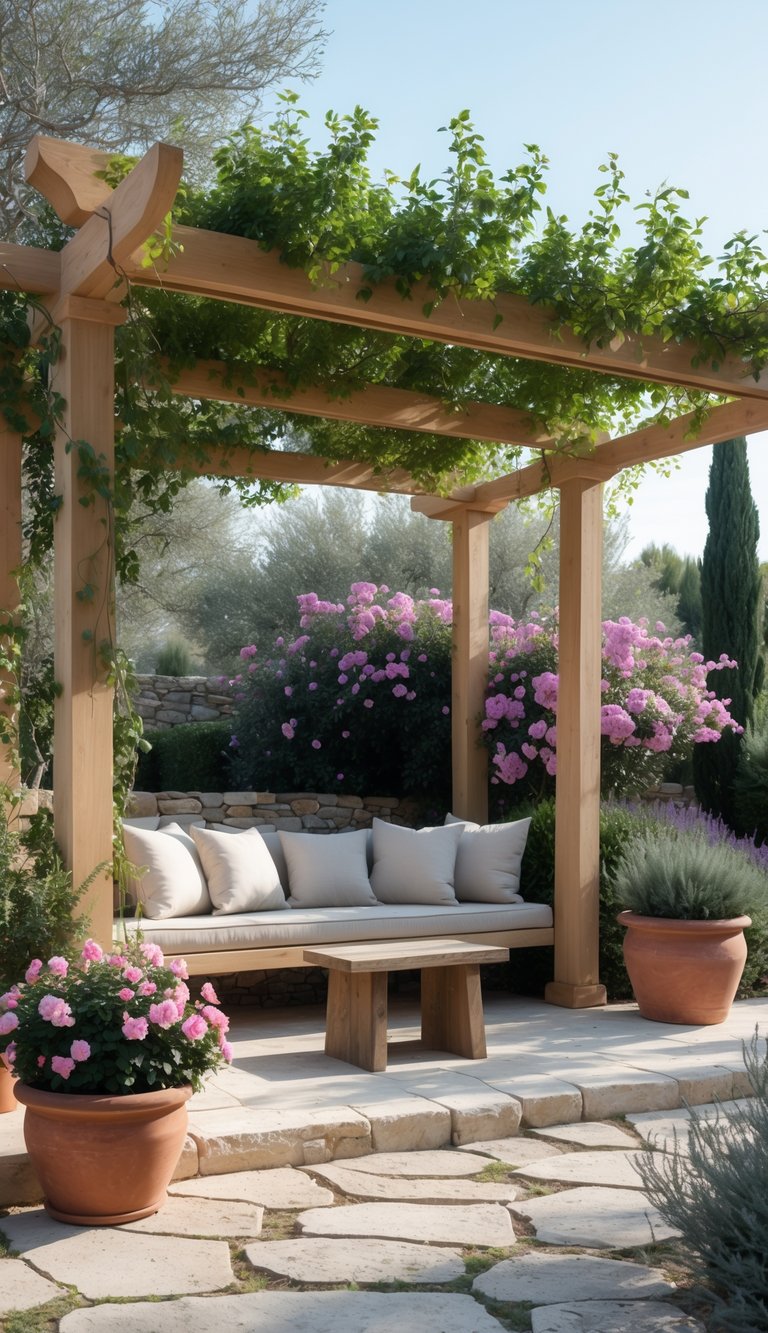
I set a pergola where the late sun hits and let vines climb for dappled shade. Natural wood and airy fabrics keep it cool and grounded.
A simple table and chairs work for meals, or a low sofa with cushions for reading. Potted herbs and terracotta accents seal the Mediterranean vibe.
Elegant water fountains and features
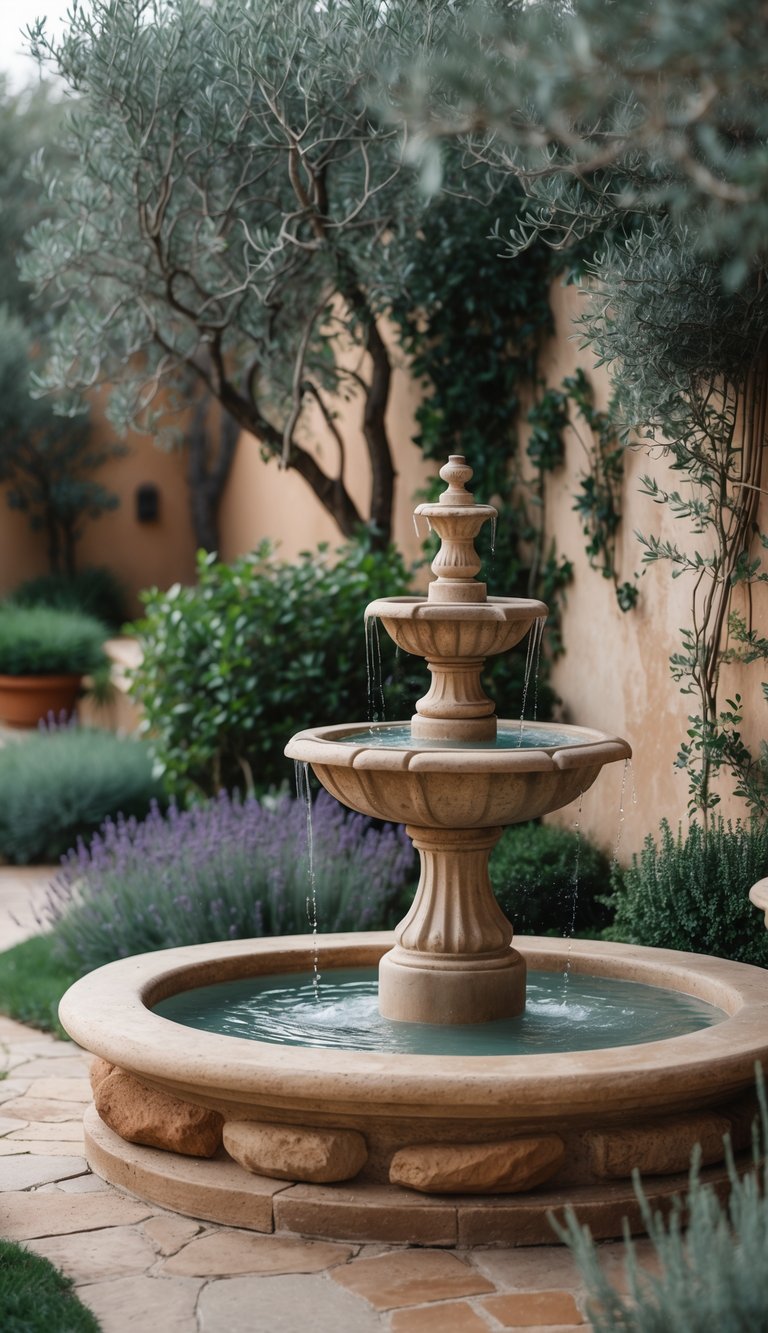
A fountain brings calm sound and a focal point into my garden. A small tiered stone piece or mosaic basin fits right in among olive trees and drought-tolerant plants.
I go for cast stone or terra cotta—they last and don’t need much care. Placing the fountain near seating makes everything feel cooler and more inviting.
Olive trees for authentic Mediterranean vibe
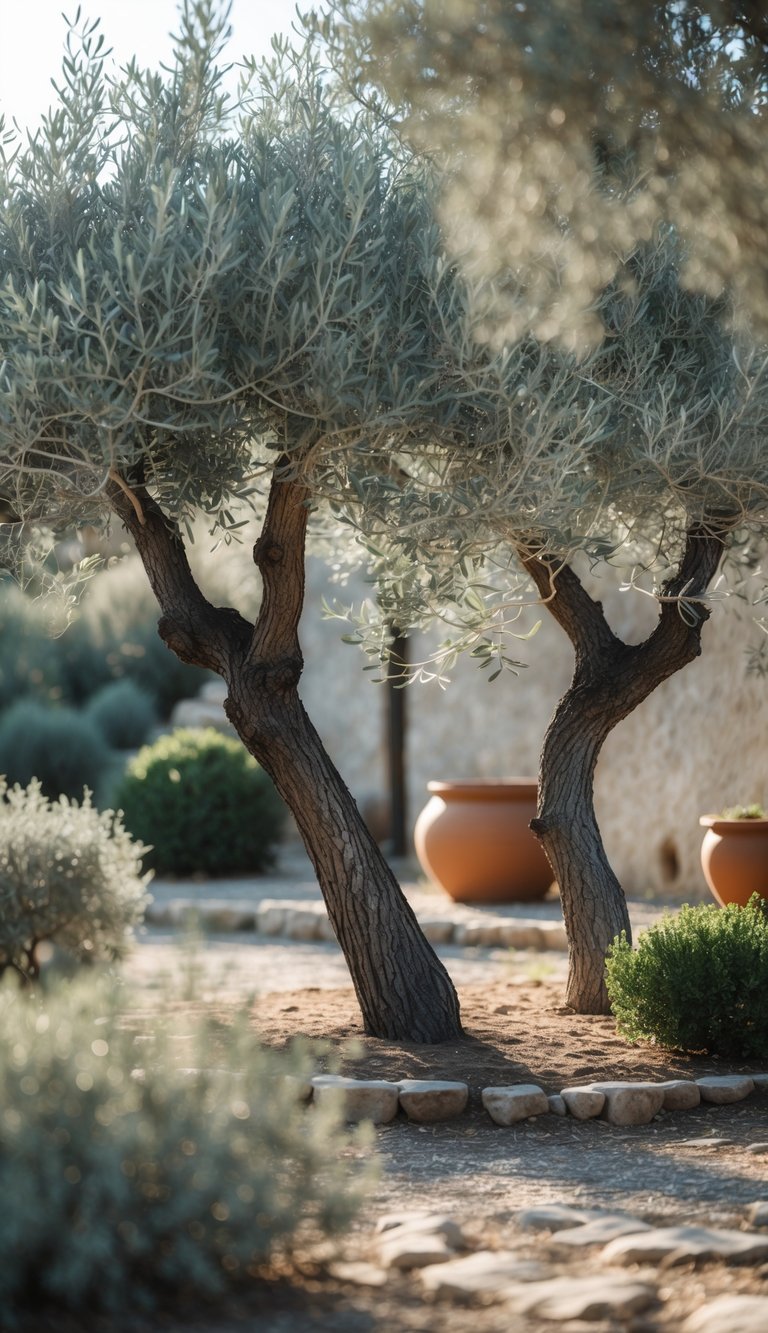
Olive trees anchor my Mediterranean garden with silvery leaves and gnarled trunks. They bring a calm, timeless look and don’t guzzle water.
I pair them with rosemary, lavender, or low grasses for more Mediterranean flair. In pots or the ground, they work for patios and borders alike.
Gravel ground cover instead of lawns
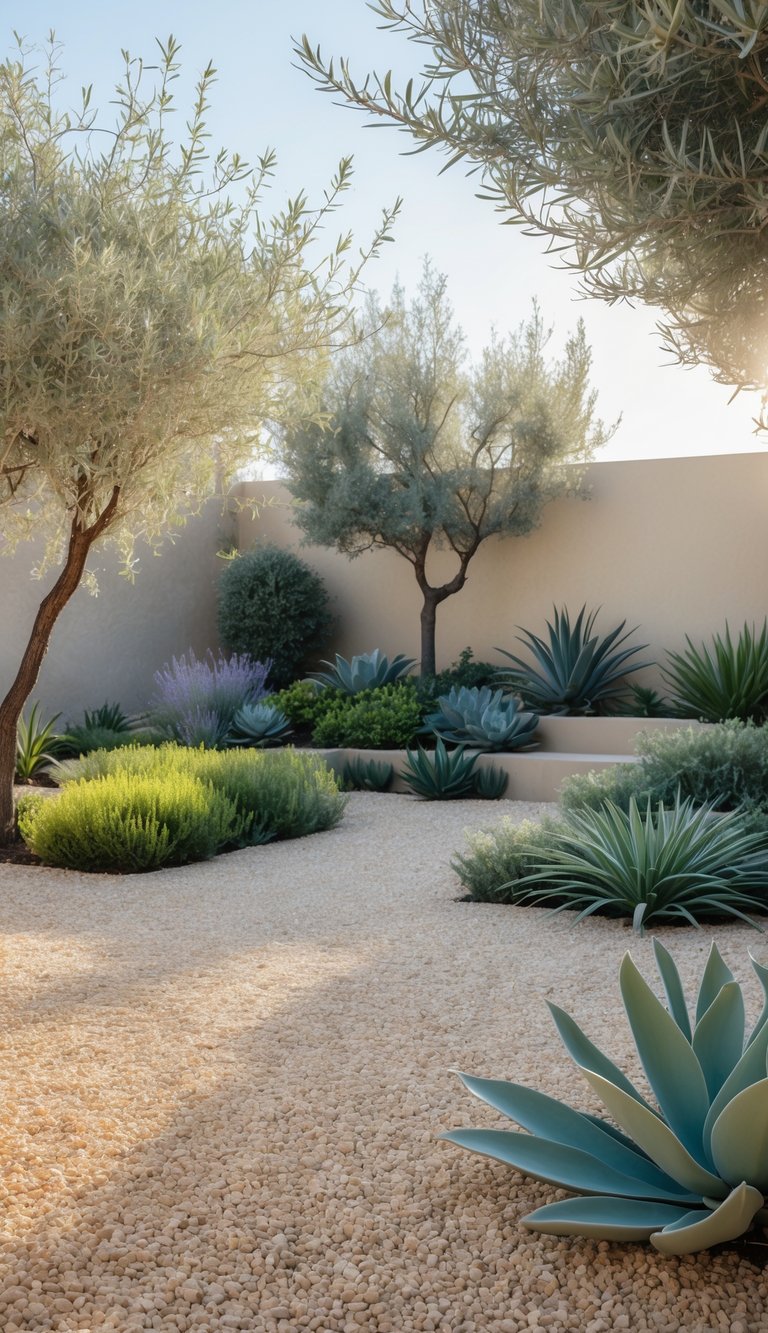
I swapped most of my lawn for gravel—less water, no mowing. Gravel keeps soil dry, blocks weeds, and fits plants like lavender and rosemary.
Well-draining gravel and a weed barrier underneath keep things tidy. Stepping stones and terracotta pots break up the look.
I still leave a few soft spots for kids or pets. Gravel makes the garden low-maintenance and keeps things warm and natural.
Outdoor dining spaces with rustic furniture
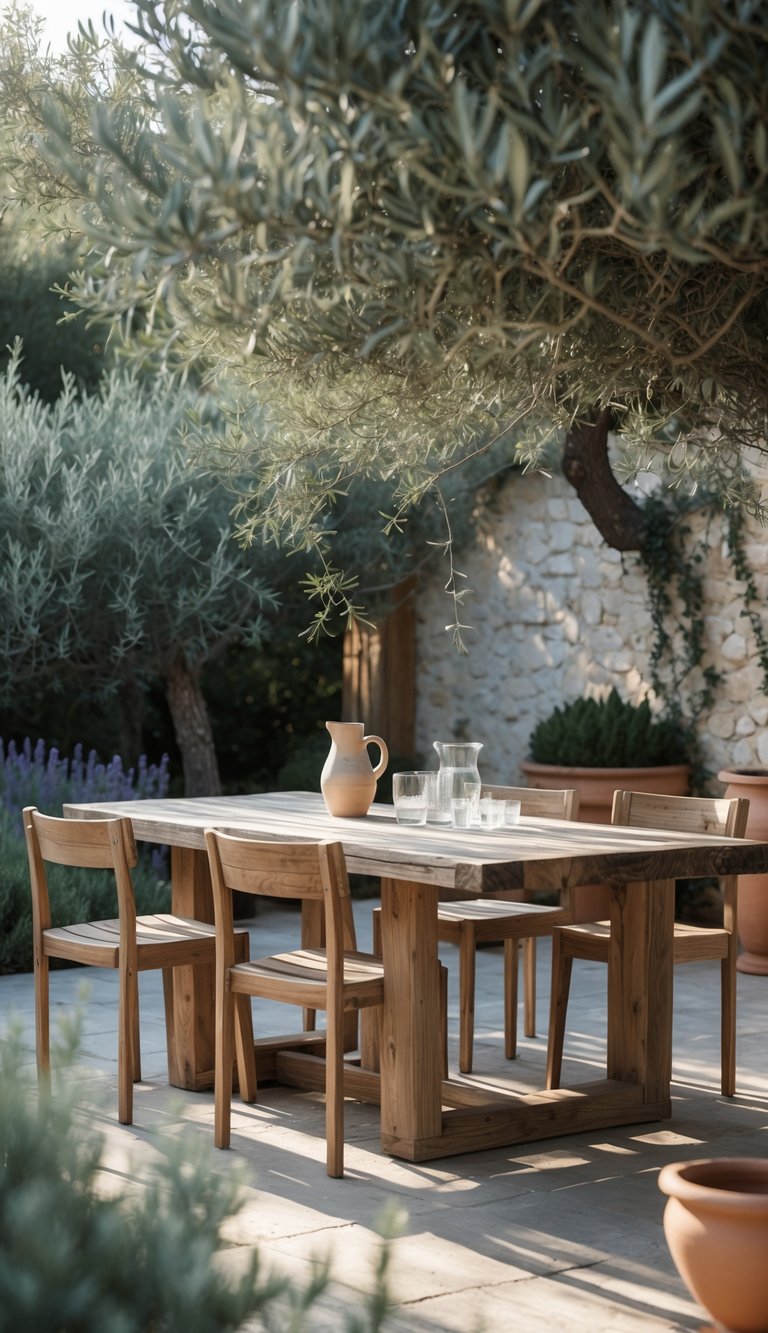
Sturdy wooden tables and mismatched chairs make meals feel cozy and real. I add cushions in simple Mediterranean patterns for comfort and color.
The table goes under a pergola or near a fruit tree for dappled shade. Terracotta dishes and metal lanterns keep the look authentic but not fussy.
Colorful ceramic tiles as decorative elements
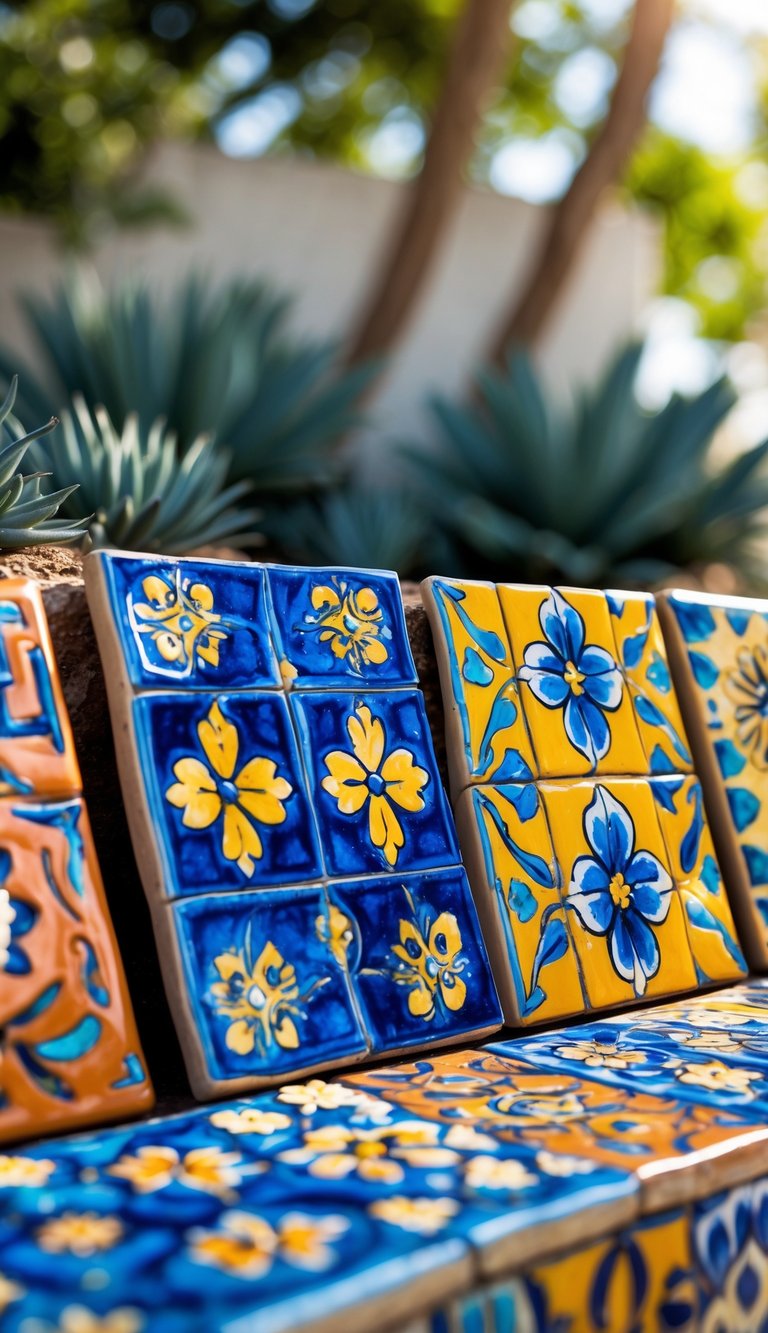
I use colorful ceramic tiles for instant personality. They shine on walls, steps, and tabletops when sunlight hits them just right.
Hand-painted tiles pair well with terracotta pots and simple plants like lavender or rosemary. Tiles last ages and keep color without extra work.
Climbing jasmine or wisteria for fragrance
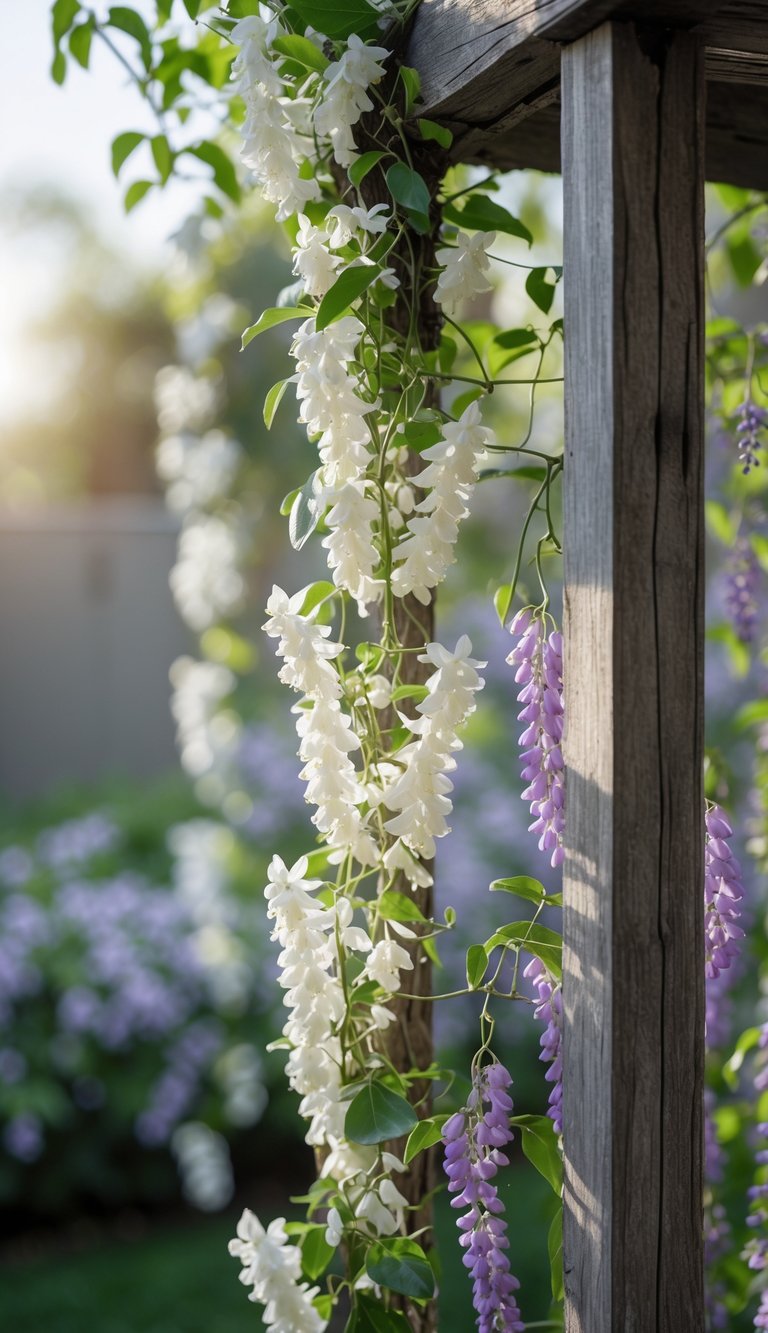
I plant climbing jasmine and wisteria for scent and structure. Jasmine offers a sweet, night-time perfume, while wisteria brings a heady spring bloom.
I train them on arbors, trellises, or pergolas to guide their growth and protect walls. Both need sun and good drainage—jasmine’s a bit more forgiving with shade.
Wisteria gets a hard prune once a year to control size and boost blooms. Jasmine just needs a lighter touch to keep it flowering and fragrant.
Sun-soaked terraces with comfortable lounges
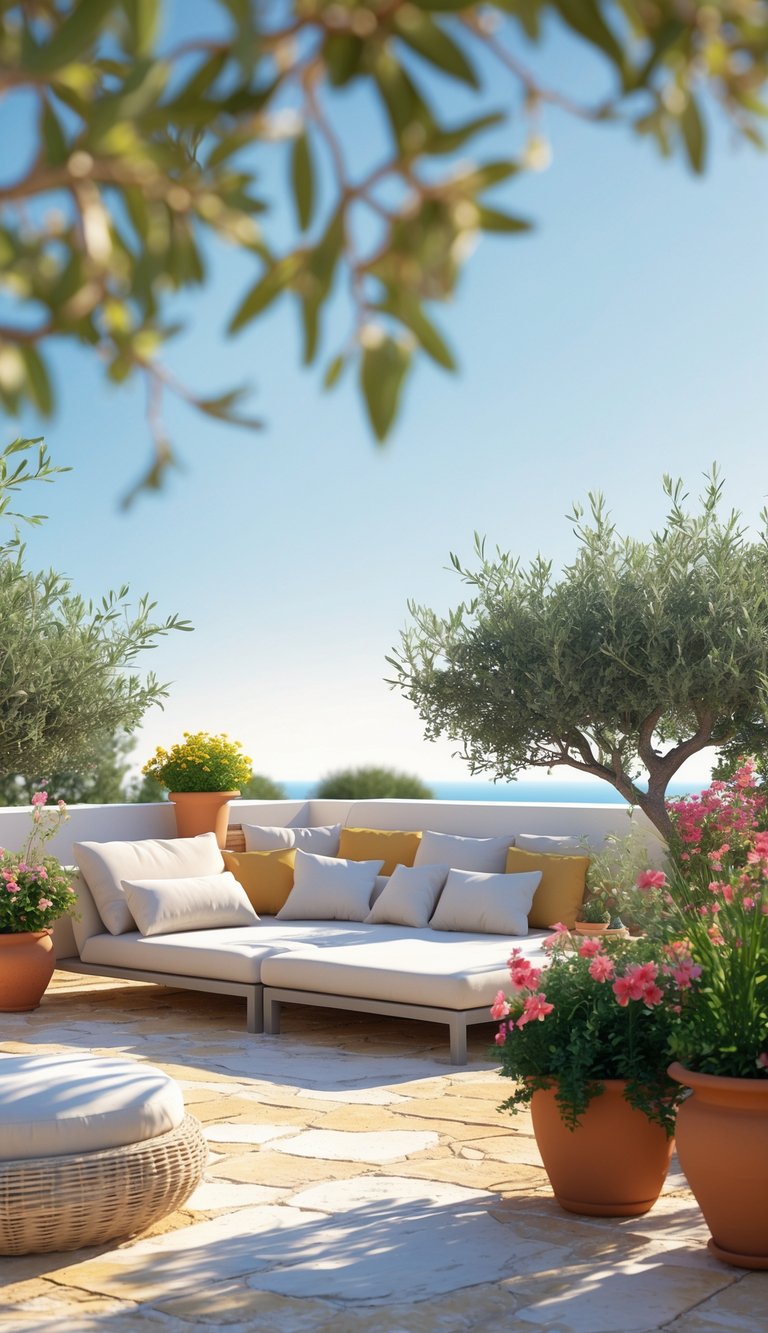
I set deep, cushioned seating where the sun pours in. It’s the spot for lazy afternoons or quiet mornings.
I pick breathable fabrics and light colors to keep things cool. Potted olive trees and lavender add scent and need little water.
A pergola or retractable shade lets me control the sun. Sometimes I wonder if I’ll ever get up from there.
Key Elements of Mediterranean Garden Design
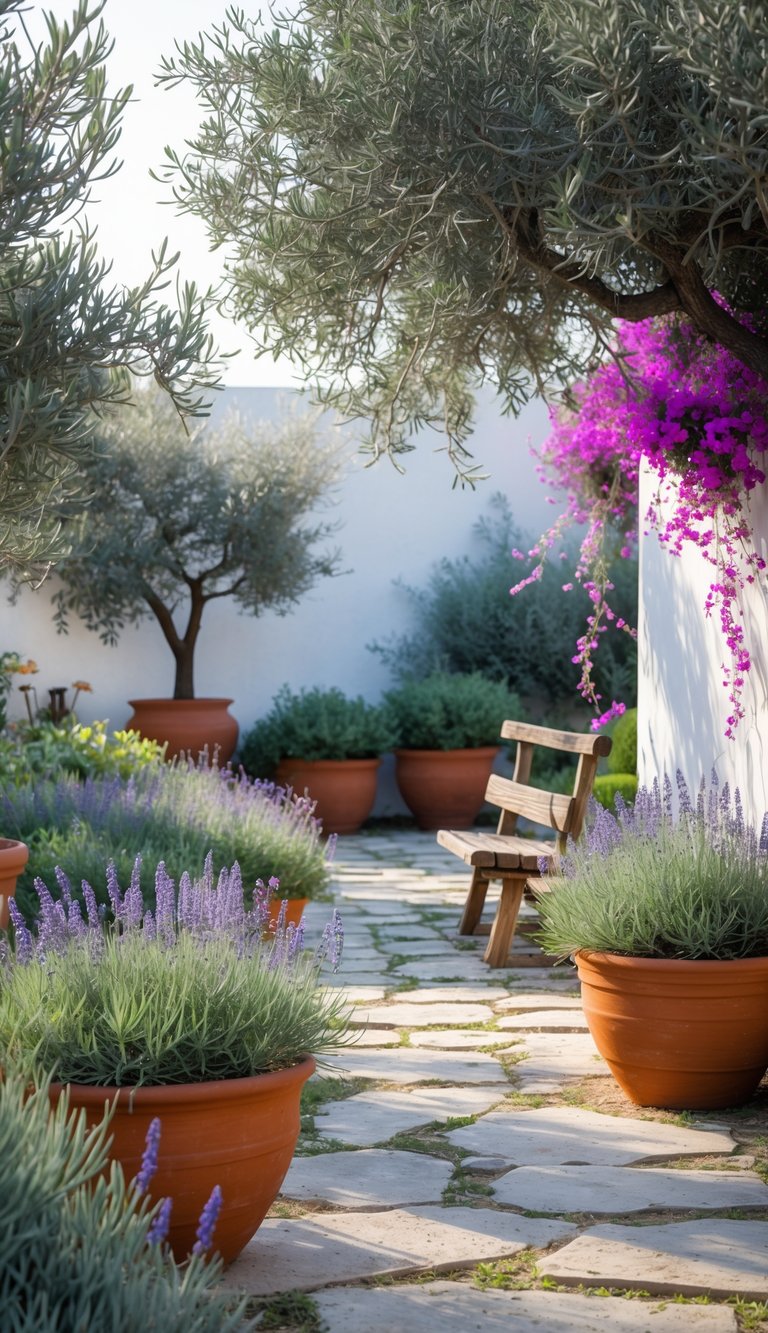
I aim for sun-loving, low-water gardens that mix hardscape and plants.
Stone, terracotta, and drought-tolerant species help me build outdoor rooms with texture, shade, and year-round interest.
Design Principles
I start with structure—pathways, raised beds, and seating shape clear outdoor rooms. Gravel or decomposed granite works for paths, and natural stone steps keep maintenance down and drainage up.
Shade lands where people sit. Pergolas, olive trees, or espaliered fruit trees give dappled cover and cut the heat but don’t block breezes.
Repetition matters. Repeating pots, clipped shrubs, or sweeps of gravel tie the garden together. I keep lawn tiny and use hardscape for play and dining zones.
Color Palette Considerations
I lean toward warm, muted colors that echo Mediterranean light—terra cotta, soft gold, sage green, and deep blue. Pots, furniture, and walls all get in on the color game.
Foliage color is just as important as blooms. Silver-gray leaves like lavender and artemisia pop against dark green olives and cypress. Flowers stay simple—white, purple, yellow—so things don’t get too busy.
I try to match materials to my color picks. Natural stone and weathered terracotta keep everything in sync.
Sometimes I’ll add paint to shutters, a door, or a single wall for a pop of color, but I don’t overdo it.
Typical Plant Species
I like to plant drought-tolerant shrubs, herbs, and small trees that handle poor, well-drained soil with ease.
Some of my go-to choices are olive (Olea europaea), lavender (Lavandula spp.), rosemary (Rosmarinus officinalis), and Italian cypress (Cupressus sempervirens).
Layering by height keeps things interesting. I tuck in groundcovers like oregano or thyme, then add mid-height shrubs—santolina or rockrose work well—and finish with trees like citrus or fig for a bit of canopy.
This mix creates structure all year and gives you blooms in different seasons. Sometimes I’ll sneak in a few annuals or bulbs for quick color—gaura, salvias, maybe tulips if the climate’s right.
I skip water-hungry lawn grasses and stick with plants that don’t need much fertilizer. Makes life a lot simpler.
Maintaining a Mediterranean Garden
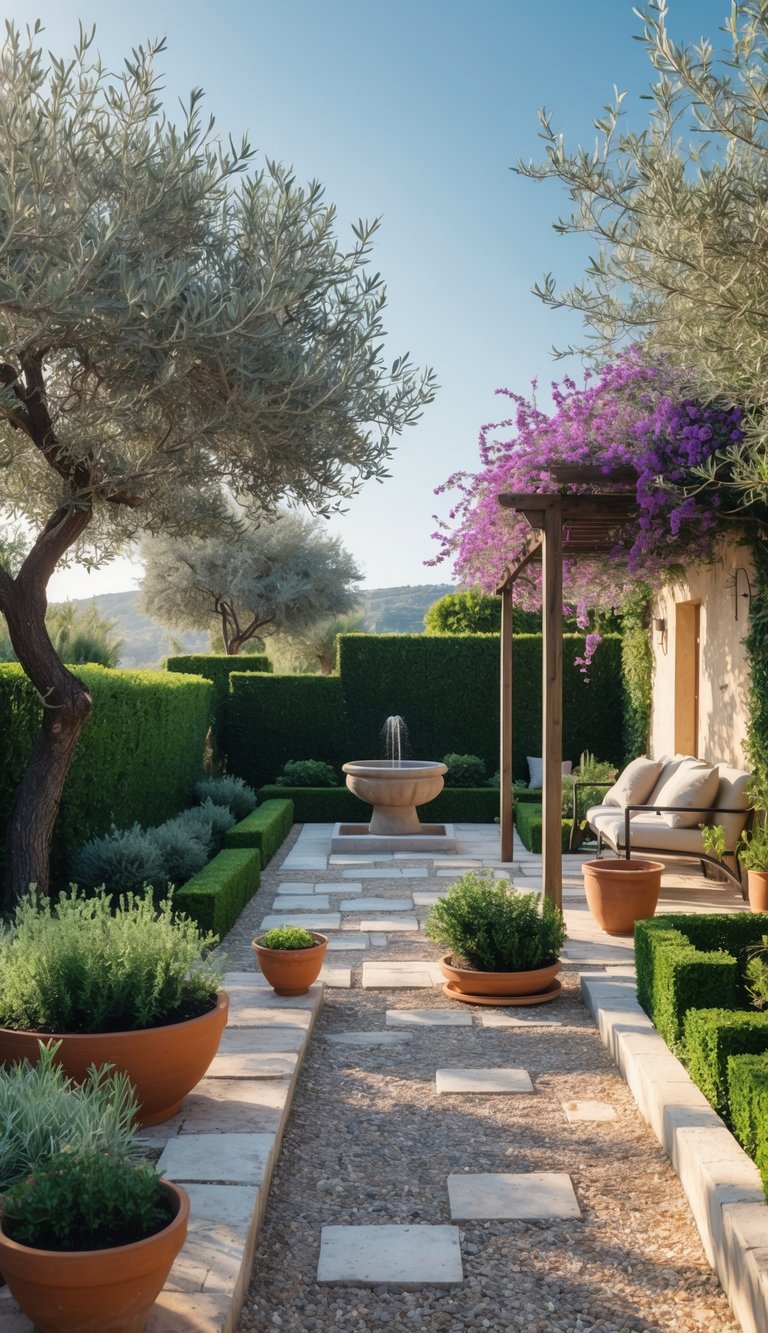
Saving water, feeding poor soils, and timing tasks with the seasons keeps plants healthy and maintenance low.
The routine’s not complicated: targeted watering, seasonal pruning, mulching, and a little attention to drainage and nutrients where it matters.
Watering Strategies
I water deeply but not often. That way, drought-tolerant plants push their roots down deep.
For established shrubs and olive trees, I soak the root zone for 20–30 minutes every couple of weeks in summer—more if it’s blazing hot or the ground’s sloped.
New plantings always get more frequent, shorter soaks until they settle in. I use drip irrigation or soaker hoses so water goes right to the roots and doesn’t just vanish into the air.
Overhead sprinklers on hot afternoons? I avoid those—nobody wants scorched leaves or surprise fungal issues. I set emitters close to the root flare and try to check them once a month for clogs.
A 2–3 inch layer of gravel or organic mulch really helps cut evaporation. I keep mulch away from stems to avoid rot.
If I’m unsure about soil moisture, I’ll use a probe or just poke a finger in the dirt and adjust from there.
Seasonal Care
Late winter or early spring is when I prune, before things start to leaf out. I’ll cut out dead wood, shape hedges a bit, and clear any suckers from trunks.
For topiary or bougainvillea, I go easy on the pruning during the growing season so I don’t lose flowers. I cut back herbaceous perennials in late fall or early spring to tidy up and keep pests down.
If a hard freeze is coming, I cover tender plants with frost cloth. In high summer, I move container plants into afternoon shade or tuck them somewhere more protected.
During warm, humid months, I check for pests and any signs of fungus. I clear away fallen leaves and clean out irrigation lines in spring. If shrubs or olives look weak, I’ll feed them with a slow-release fertilizer in early spring.
Soil Preparation and Amendment
I always test soil pH and texture before planting. Mediterranean plants really like well-drained soil, somewhere between slightly alkaline and neutral pH.
If the soil’s heavy clay, I mix in coarse sand, gravel, and chunky organic matter. This helps drainage and makes the soil easier to work with.
I usually add 1–2 inches of compost to the planting holes. Then I backfill using a mix of native soil and grit for better root aeration.
For containers, I go with a fast-draining mix—equal parts potting soil, perlite, and coarse sand or grit does the trick.
I skip heavy nitrogen fertilizers since they just push out soft, thirsty growth. Instead, I use a low-nitrogen, balanced slow-release fertilizer about once a year.
In spring, I like to topdress with compost. Every few years, I retest the soil and tweak the pH or nutrients if something seems off.