
8 Coffee Table Arrangement Ideas to Elevate Your Living Room Style

A well-styled table can change the entire feel of your space. Discover Coffee Table Arrangement ideas that are simple, stylish, and perfect for any home décor style.
I love how a well-styled coffee table can totally change a room’s mood. It just makes your space feel pulled together in a way that’s hard to explain.
Here are some simple, practical ways to arrange objects so your table looks balanced, personal, and easy to live with.
I’ll walk you through ideas that focus on shape, texture, and function. Think bold sculptural pieces, stacked books, trays, low flowers, greenery, and candles.
Expect tips on picking items that add impact without making things feel cluttered. Let’s get into it.
Use a statement sculptural accent as the centerpiece to create a modern look
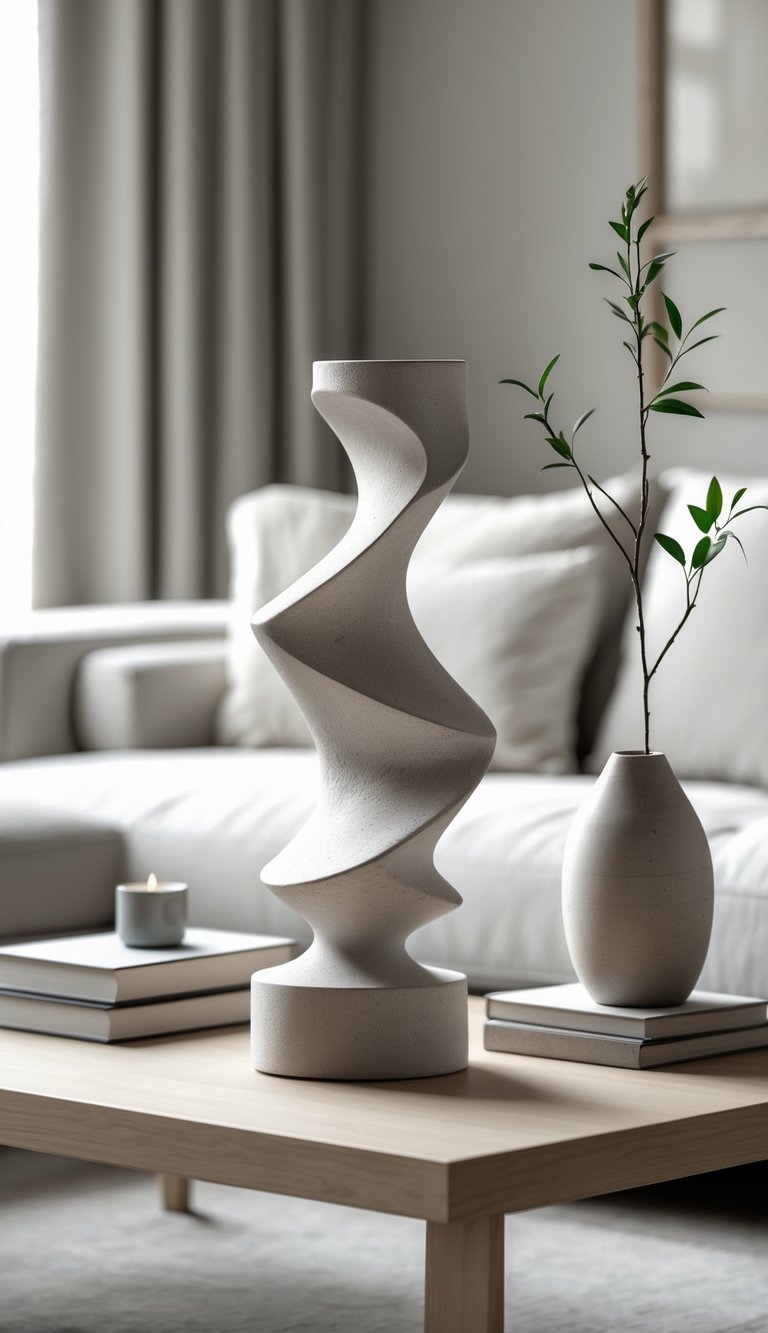
I usually grab a sculptural piece as the focal point to give my coffee table a modern edge.
A single bold form really anchors the surface and keeps things clean.
To balance the sculpture, I add low items like a small tray or a couple of stacked books.
That way, the artwork still stands out but the table doesn’t look empty.
Incorporate a stack of coffee table books with varying sizes for visual interest
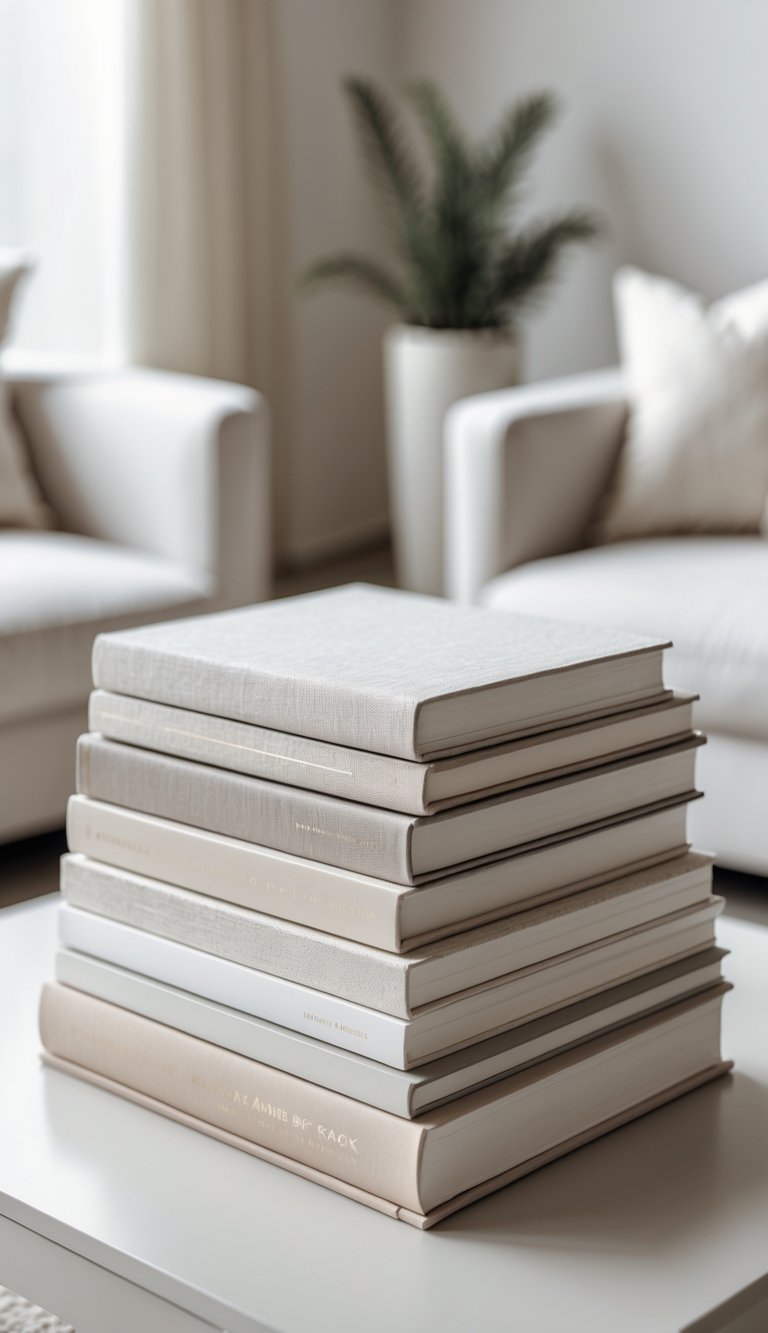
I stack books from largest on the bottom to smallest on top. It adds some height and creates a clear focal point without crowding things.
Mixing thick art books with thinner paperbacks brings in texture. I stick to three or four books per stack so they don’t topple over or look messy.
Sometimes I’ll top a stack with a small object, like a candle or a tray. It just ties everything together and keeps things practical.
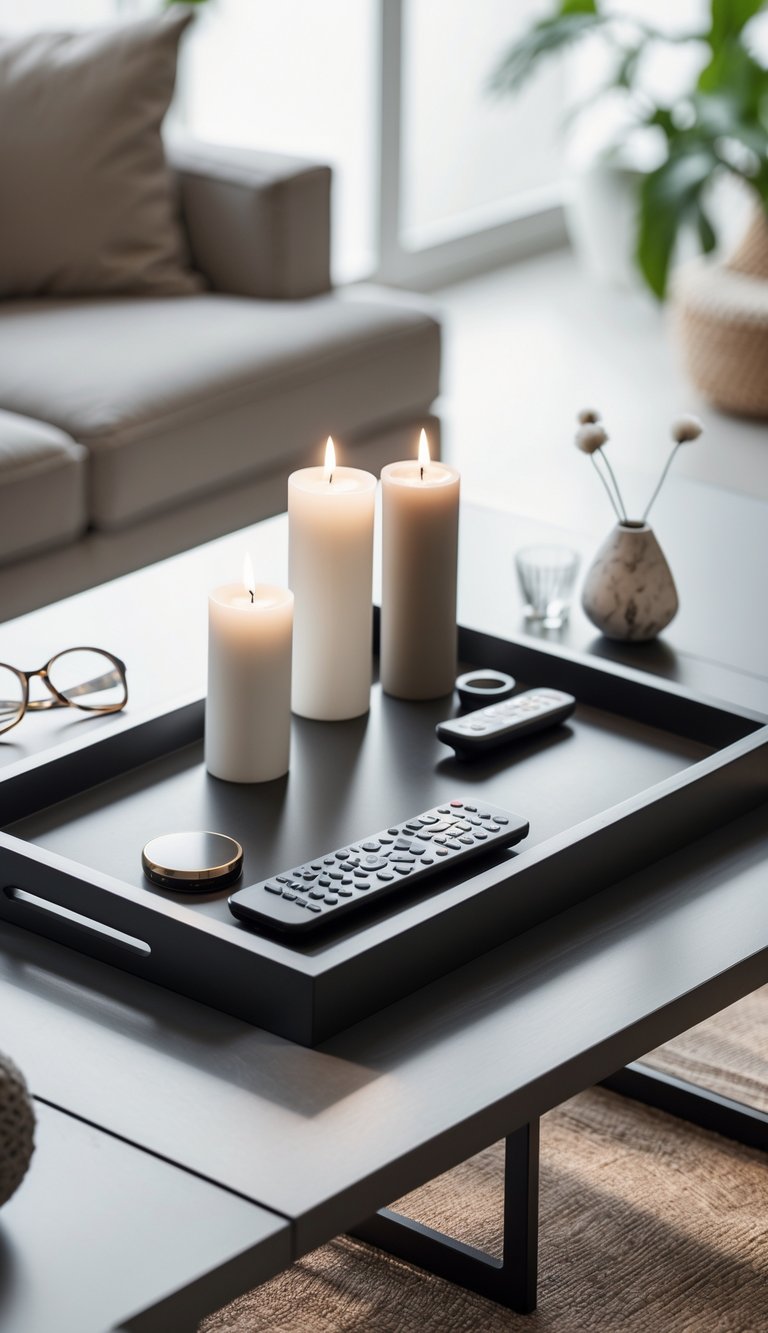
Place a decorative tray to organize candles, remotes, and small accessories
I like using a decorative tray to keep small items tidy and stylish on my coffee table.
It gathers remotes, candles, and little accessories so everything feels intentional, not scattered.
I pick a tray that fits the table and matches my room’s colors.
Then I add a candle, a stack of coasters or a slim book, and a dish for remotes or keys.
It’s handy because I can move the whole tray if I need the space. Plus, essentials are always right there.
Add a low floral arrangement with seasonal blooms for freshness
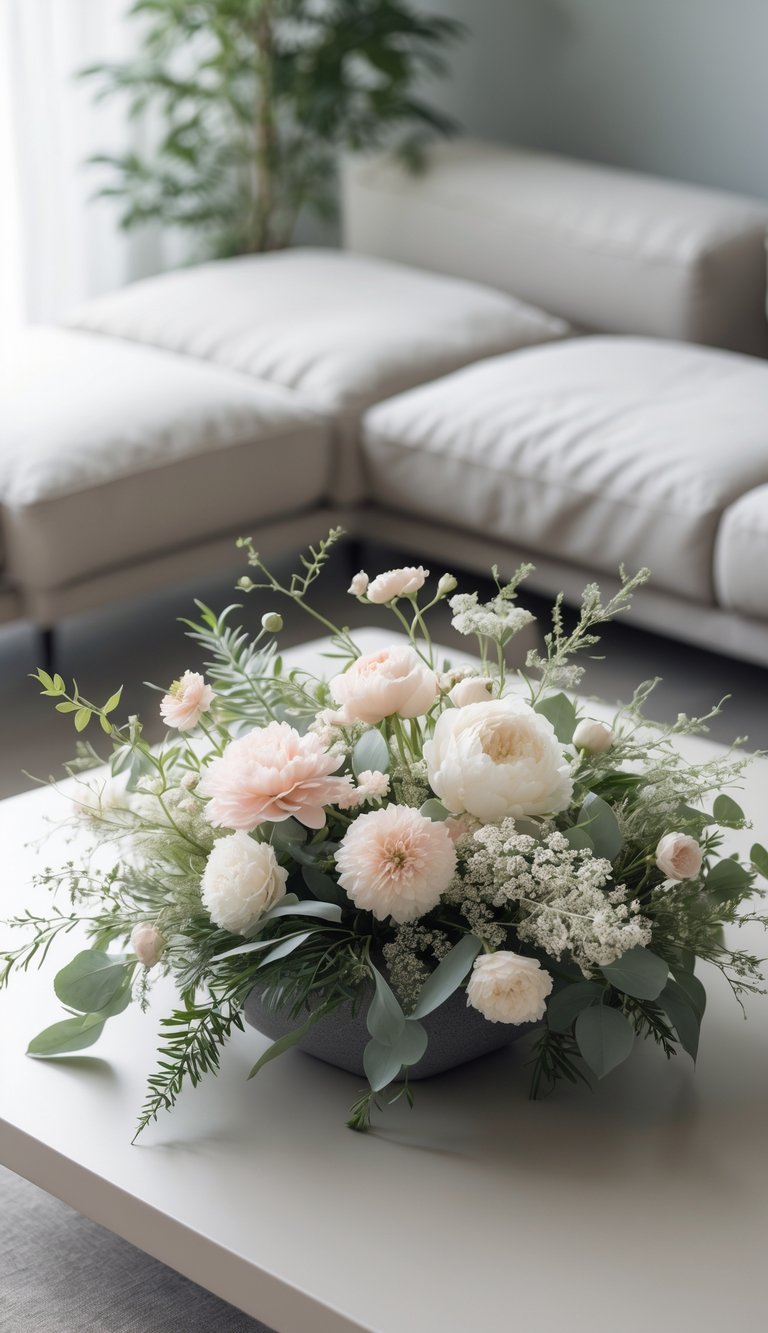
I put a low vase on the coffee table to keep sight lines open and conversations easy.
Seasonal flowers add some color and a natural scent without taking over the room.
I try to pick blooms that last at least a week and trim stems so everything sits compact.
A few sprigs of greenery or buds are enough to make it feel fresh.
Include a small potted greenery or succulent to bring natural texture
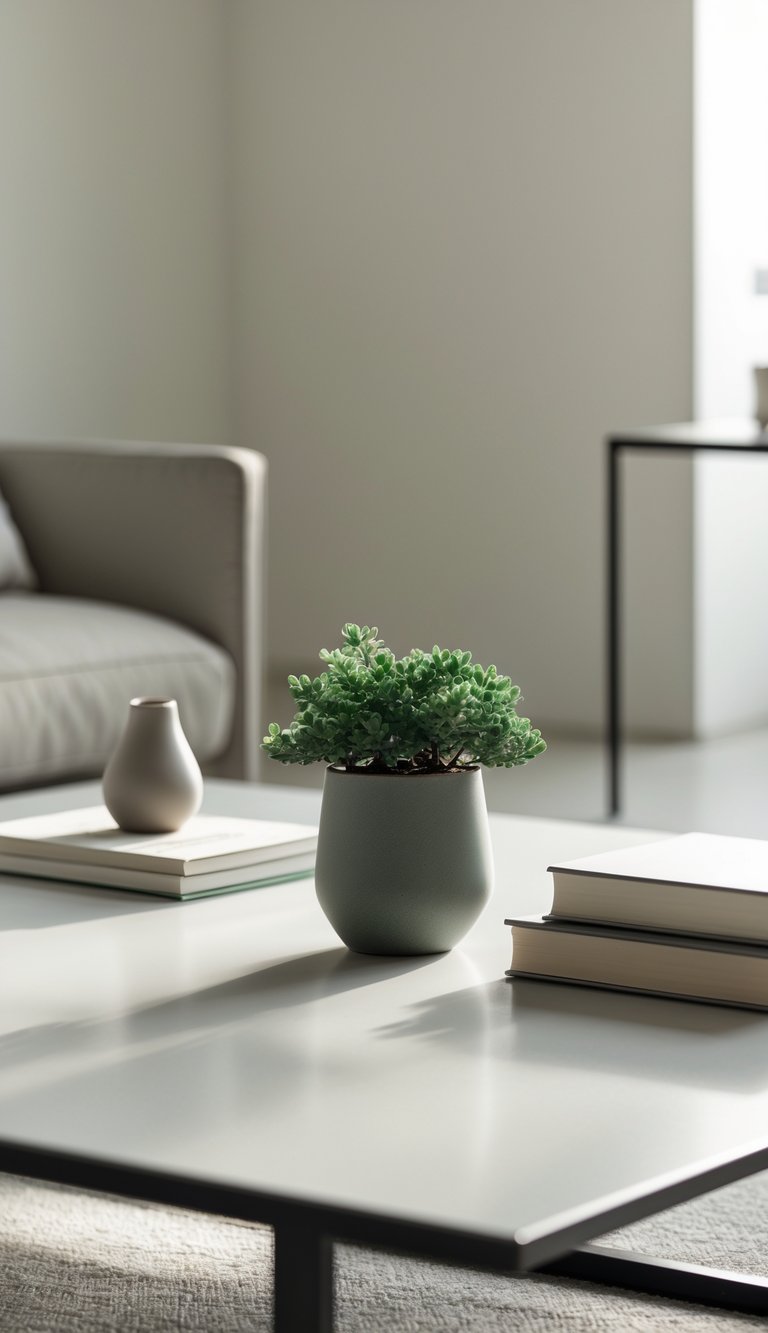
I like adding a small potted plant because it brings in texture without crowding the space.
A succulent or tiny fern barely needs attention and gives a fresh, natural vibe.
I stick it in a simple ceramic or glass pot to fit the room’s style.
Mixing pot shapes or sizes adds some interest, but I keep the overall look calm.
Mix different textures like glass coasters and ceramic bowls to balance the display
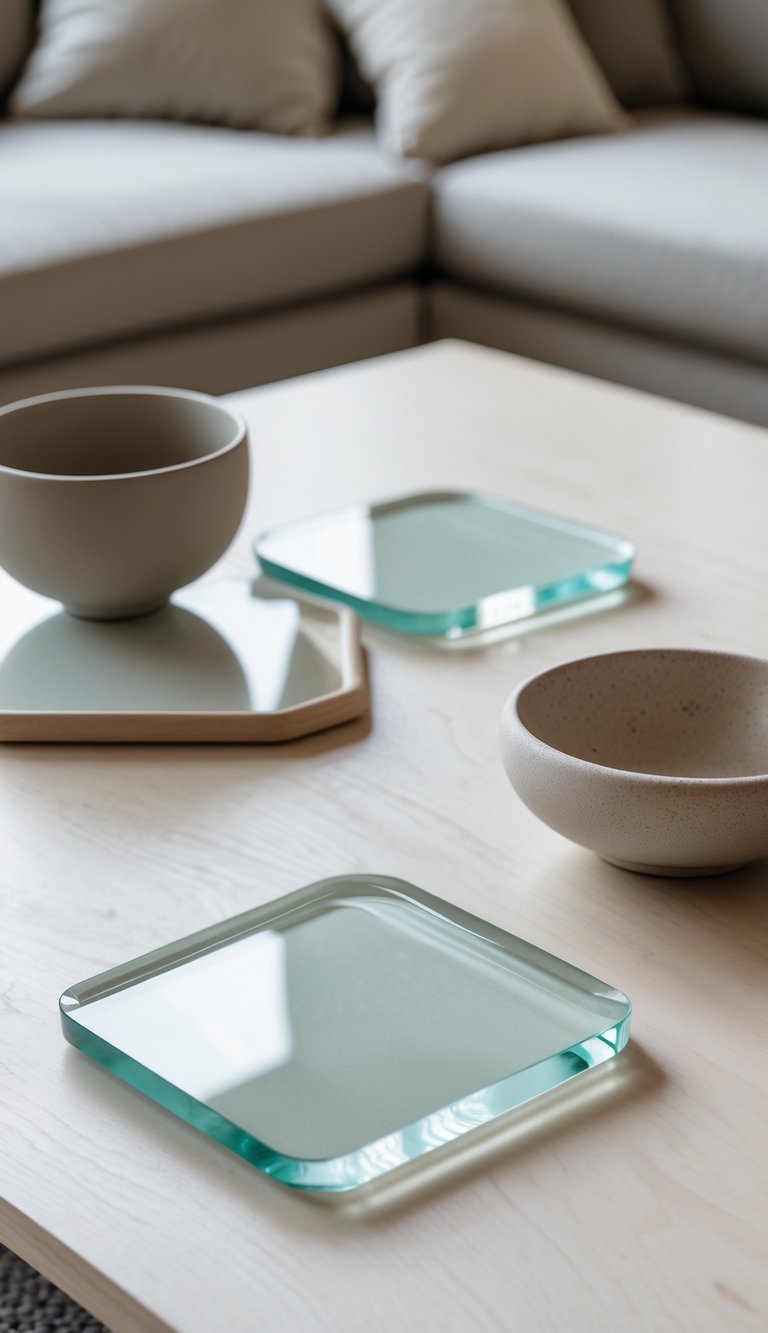
I layer smooth glass coasters with matte ceramic bowls for contrast.
The glass catches light, and the ceramic adds a bit of weight and warmth.
I’ll toss in a soft textile, like a little wool runner, to soften hard surfaces.
That way, the display feels interesting but not busy.
Position unique collectible trinkets or art objects to reflect personality
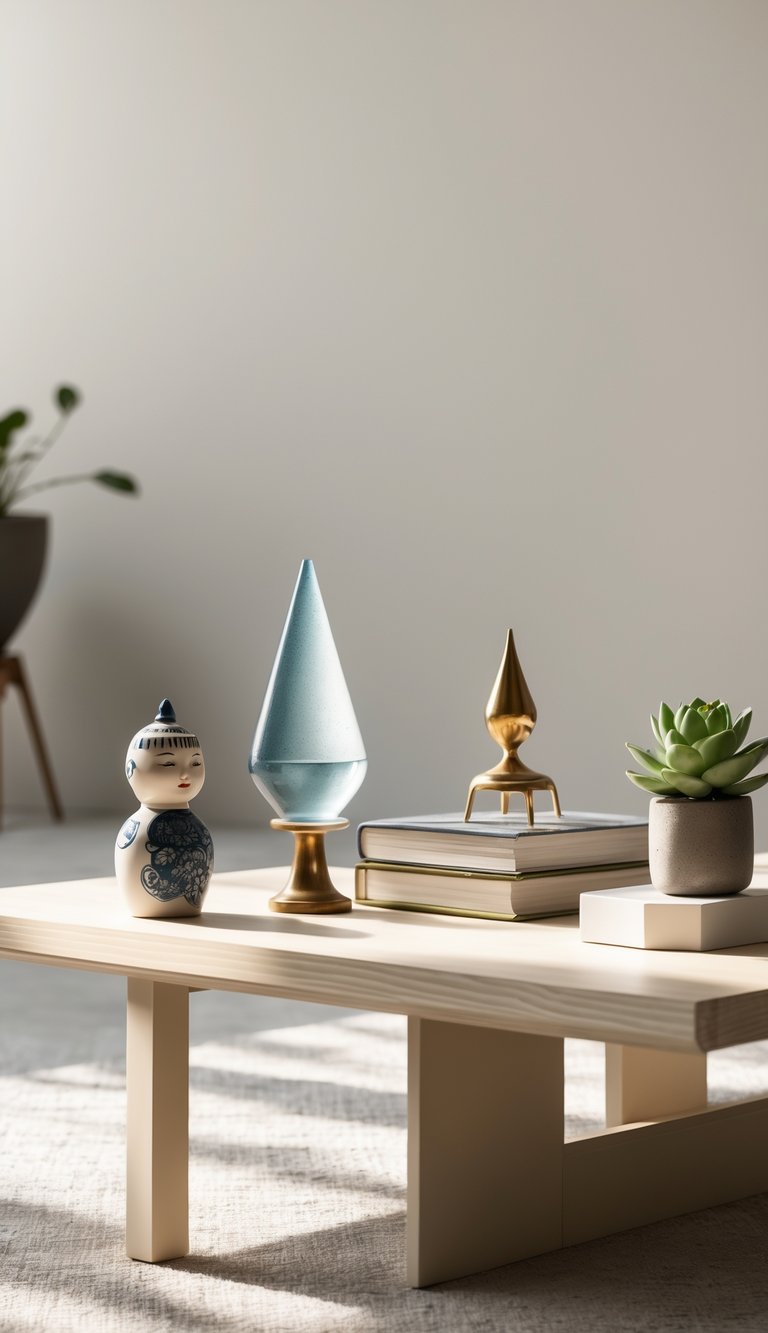
I put out one or two standout collectibles where they’ll catch the eye but not clutter the table.
A small sculpture or framed art piece says something about me and can even start a conversation.
I pair those with low items like a book stack or a shallow tray. This keeps things feeling intentional and personal, not crowded.
Use candles with varying heights to add warmth and dimension
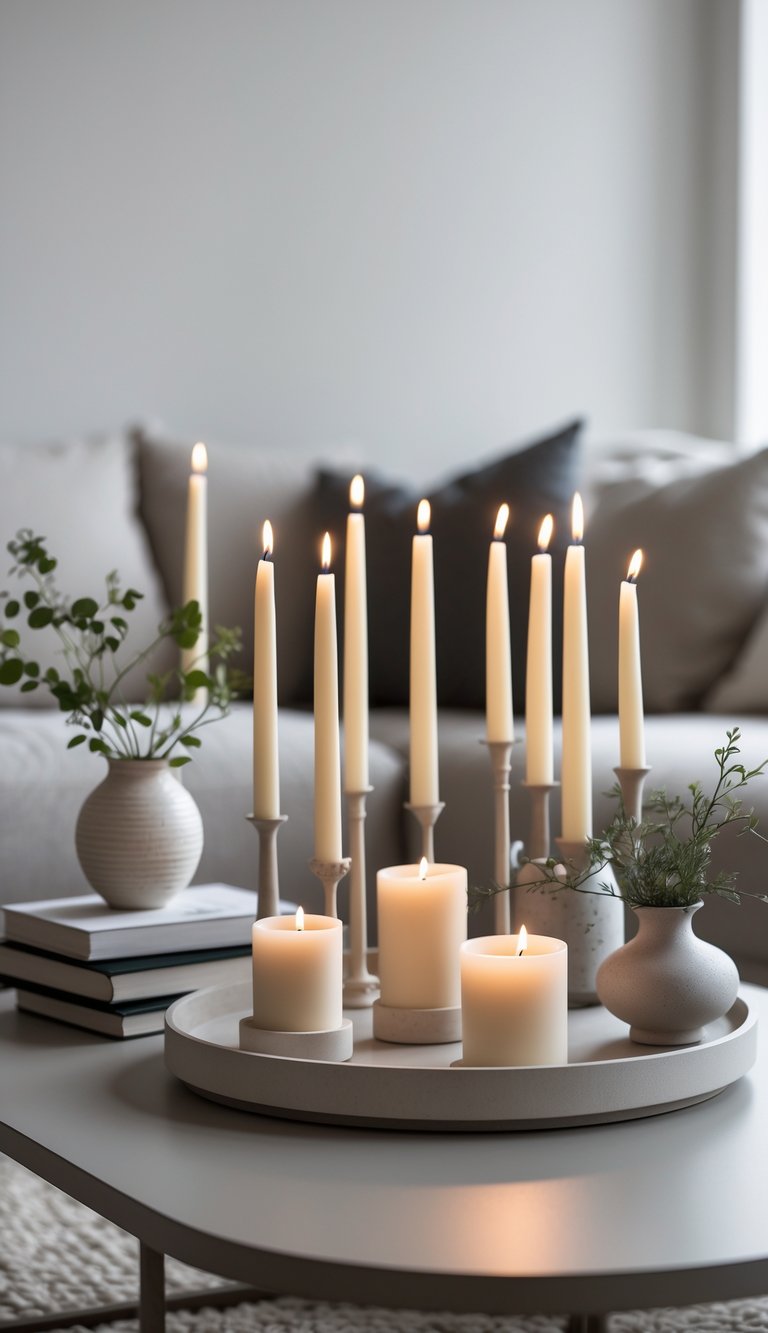
I group candles of different heights for a layered, cozy look on my coffee table. Mixing pillars, tapers, and votives on a tray keeps the shapes feeling deliberate.
Taller candles go at the back, shorter ones in front, so your eye moves naturally across the table. The different heights add depth without making things look crowded.
I usually stick to similar tones for a unified look. And I always use holders or lanterns for safety if the candles are lit.
Styling Principles for Coffee Table Arrangements
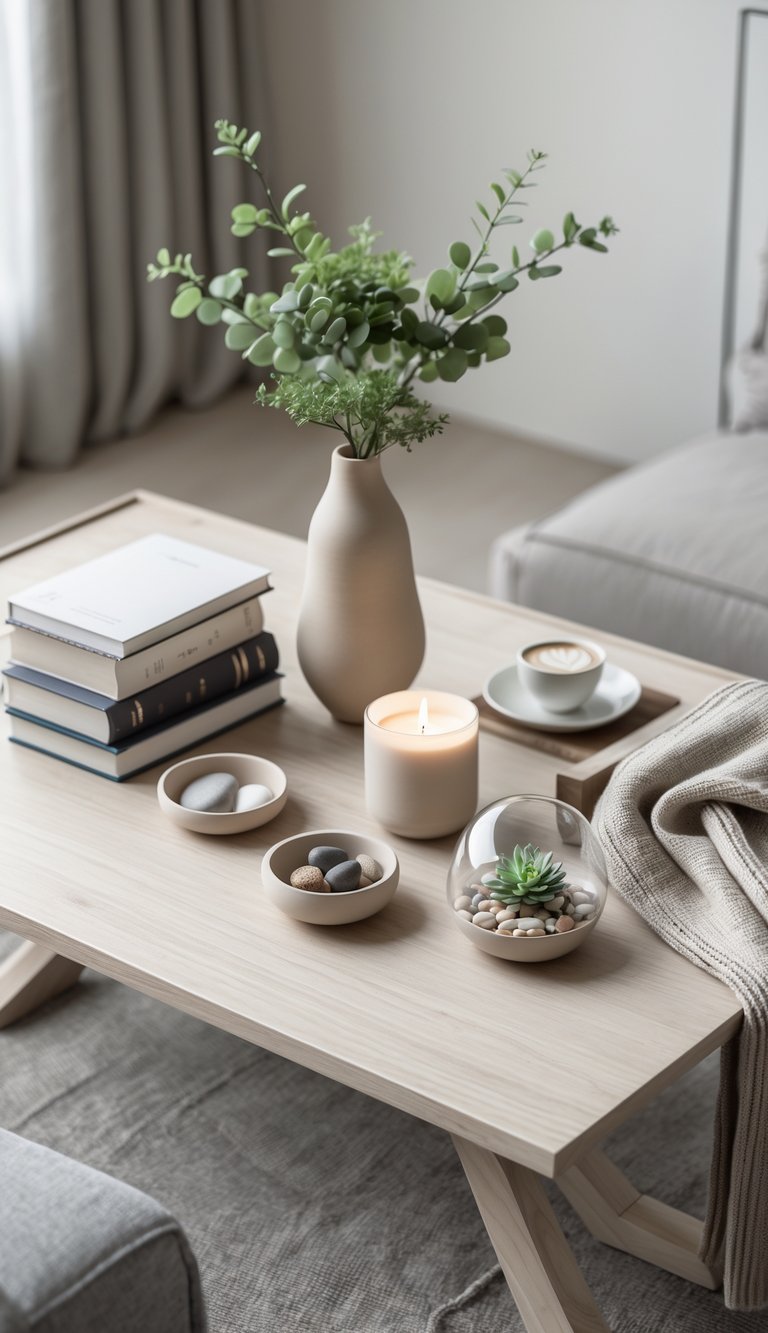
I focus on size, balance, and texture so each piece looks placed, not just tossed on.
Paying attention to scale, a clear focal point, and layering makes the table both useful and attractive.
Balancing Proportions
I match object sizes to the table and the room. On a low, wide table, I go for wider, lower items like trays and bowls.
On a tall, narrow table, I’ll add a couple of taller pieces to lift the eye. Too many tiny things clutter small tables, and one tiny item looks lost on a big surface.
I group items in odd numbers—three or five usually feels balanced. I vary widths and heights in the group so nothing sits in a flat line.
Leaving negative space around groups helps each piece stand out and keeps the table functional.
Choosing a Focal Point
I pick one clear star for each arrangement—a vase with flowers, a sculptural object, or a book stack with a decorative piece on top.
The focal point anchors the eye and gives the setup a purpose.
I usually set the focal point a bit off-center for a natural feel, or center it if the table’s round.
Supporting items like a candle, small plant, or tray point toward the main piece without stealing the show.
I keep colors and patterns near the focal point limited so it stays dominant.
Layering with Texture and Height
I start by placing flat items first—books, trays, or a placemat. Then I add medium and tall elements for depth.
I mix materials: wood, glass, metal, and natural fibers for contrast. Smooth surfaces meet rough textures like woven baskets or ceramic.
For height, I let one or two pieces rise above the rest. I avoid lining up everything at the same height; that just flattens the look.
Selecting Accessories for Visual Impact
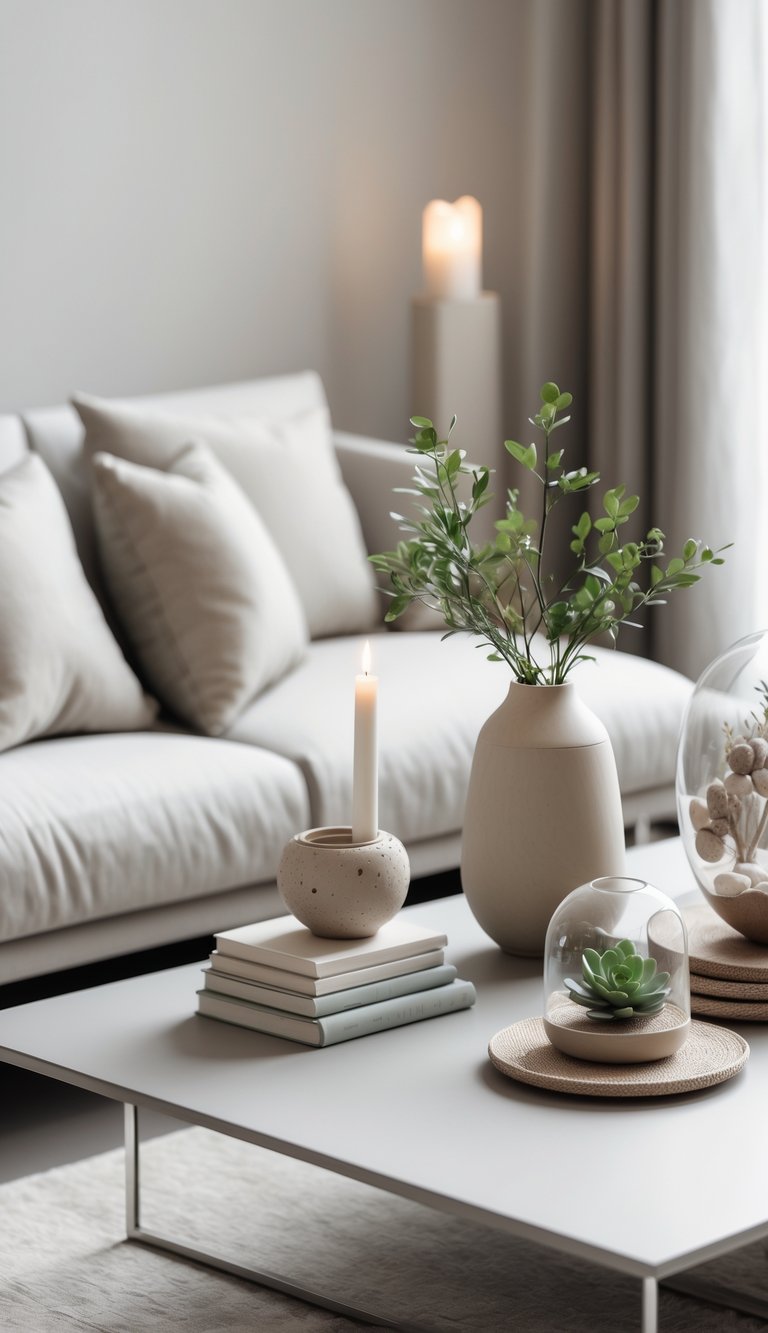
I pick pieces that add color, height, and texture but still keep the table useful. Plants, trays, and meaningful objects all work together.
Incorporating Greenery or Florals
I choose plants or flowers that fit the room’s light and how much care I’m willing to give. For low light, I go with a snake plant or pothos in a small ceramic pot.
Bright rooms get succulents or a single-stem vase with peonies. I change up the height—a taller plant at one end, a low planter or bud vase at the other—to guide the eye diagonally across the table.
I limit colors to two natural tones plus one accent. Maybe green foliage, white ceramics, and a brass candle holder for contrast.
I avoid big, overflowing arrangements that block sight lines or crowd out coasters. Sometimes, just a clipping in a bud vase does the trick.
Using Decorative Trays
I pick trays that fit the table shape and leave about two inches of border around the edge. Rectangular trays work for long tables; round trays for round tables.
Trays group things—a couple of coffee-table books, a small plant, and a candle. Grouping cuts clutter and gives you a clear focal point.
I mix materials for contrast—maybe a wood tray with a metal or marble accent. But I try to keep finishes in line with the rest of the room so it doesn’t get noisy.
I always measure before buying. The tray should hold the grouped items without looking empty or jam-packed.
Integrating Personal Touches
I like to add one or two personal objects that might spark a little conversation—a travel bowl, maybe a vintage camera, or just a framed photo that means something to me.
I keep these pretty modest in size. No need for anything huge that takes over the whole display.
Usually, I’ll place a personal item near the tray or perch it on a stacked book. That way, it stands out but doesn’t make things look cluttered.
A bit of elevation goes a long way. Even a small object feels intentional if you give it the right spot.
Sometimes I’ll swap things out for the season. Maybe I’ll trade a bowl of shells for a tiny holiday ornament. It just keeps things feeling fresh and timely.
I try not to go overboard. One statement piece and maybe a supporting item—that’s usually enough for a good balance.
