
How to Maximize Small Bedroom Space Without Clutter

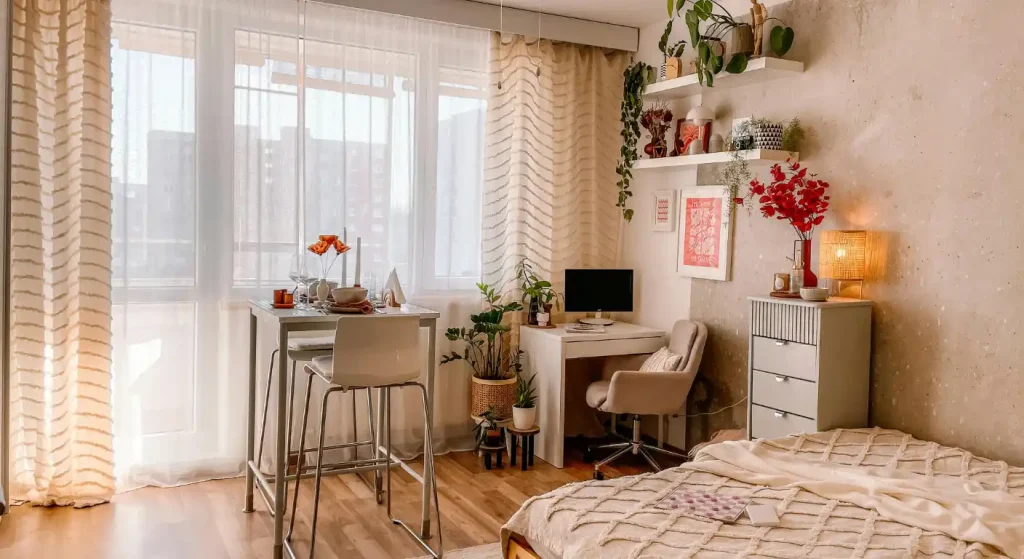
A small bedroom shouldn’t feel like a storage unit you happen to sleep in. Standard furniture layouts fail when floor space is at a premium, leaving you feeling cramped and disorganized. This setup destroys your sleep and makes mornings stressful.
Fortunately, you do not need a bigger house to fix this issue. You just need a better strategy. You will learn how to use architectural zoning, vertical alignment, and hidden storage to double your usable space.
By changing how you view your floor plan, you can turn a tight room into an organized oasis. Let us look at exactly how to maximize small bedroom space using proven design principles.
Small Bedroom Spatial Optimizer
Select a furniture challenge to redesign its footprint:
Choose a strategy to expand your room vertically or visually:
Where is your closet wasting space?
1. Elevate the Layout with Multi-Functional Bedroom Furniture
The single largest space killer in your room is the footprint of your bed. A standard queen bed takes up about 33 square feet of floor space. In a tight room, that can easily devour half of your available walking area.
Key Spatial Takeaway: You must force the footprint of your bed to do double duty by turning it into your primary storage hub.
+-------------------------------------------------------------+
| Standard Bed Footprint: Reclaims 0 sq ft of storage         |
+-------------------------------------------------------------+
| Hydraulic Lift Bed: Reclaims 33 sq ft of hidden storage     |
+-------------------------------------------------------------+
Smart Frame Alternatives
Ditch traditional bed frames that offer nothing but empty space underneath. Dust bunnies gather there, and plastic bins look messy. Instead, invest in a hydraulic lift storage bed or a deep drawer captain bed.
Hydraulic lift beds allow you to pop the mattress up effortlessly. This action opens up the entire base for large items like winter coats, suitcases, and extra blankets.
National home layout data shows that utilizing this exact footprint for storage clears up to 33 square feet of floor space elsewhere in the room. This change eliminates the need for a bulky, freestanding dresser.
Rethink Your Nightstands
Once the bed is sorted, look at the items flanking it. Traditional nightstands stand on the floor and take up valuable real estate. You can replace them with floating shelves or wall mounted desks that pull double duty.
A floating shelf holds your phone and water glass without touching the floor. If you work from home, extend this idea by installing a drop leaf wall desk next to the bed.
You can flip the desk up for remote work setups during the day. Then you fold it down flat against the wall at night. This keeps your traffic lanes clear when you are ready to relax.
Use Nesting Furniture
For seating or extra surfaces, look for nesting furniture. A set of nesting tables slides completely under each other when not in use. You pull them out only when you need a spot for your coffee or laptop.
When shopping for items, always look for pieces that serve two purposes. Buy an ottoman that opens up to store blankets inside.
Pick a vanity that hides a flip up mirror so it can act as a workspace too. Shopping with this mindset keeps your room functional.
2. Maximize Vertical Space in Bedroom Design
Most people only think about layout in a horizontal way. They look at the floor and try to push everything against the walls.
This mindset creates a crowded room while leaving the top half of your walls completely empty.
Key Spatial Takeaway: Shift your mindset from horizontal placement to vertical architectural thinking to find hidden square footage.
+-------------------------------------------------------------+
| The 80/20 Vertical Rule                                    |
| [====================] 80% Storage (Above 4-foot mark)      |
| [====] 20% Storage (Below 4-foot mark)                      |
+-------------------------------------------------------------+
The 80/20 Vertical Rule
Interior designers use the 80/20 Vertical Rule to handle tight quarters. This rule states that 80% of storage in a small room should exist above the 4 foot mark.
Doing this keeps your visual field open near the floor. It prevents the room from feeling tight and closed in.
To apply this rule, install floor to ceiling wardrobe units instead of wide, short dressers.
A standard dresser leaves three to four feet of empty air above it. A tall wardrobe uses that space to store out of season clothes and extra pillows.
Perimeter Wall Shelving
Next, build up around your bed. Install floating shelving units directly above your headboard and around the perimeter of the room. Place these shelves high enough so you do not hit your head when sitting up.
- High Shelves: Keep books, baskets, and decorative items near the ceiling.
- Perimeter Tracks: Draw the eye upward, making the walls feel taller than they are.
For safety, ensure these shelves are anchored directly into wall studs. Use heavy duty drywall anchors if studs are not available.
High Hung Drapery Tricks
You can also use textiles to change how tall your room feels. Hang your curtain rods just two inches below the ceiling line instead of right above the window frame. Let the fabric extend all the way down to touch the floor.
This simple trick creates long vertical lines. It tricks your brain into thinking the windows are massive and the ceiling is high. This simple design trick helps you maximize vertical space in bedroom layouts without construction.
3. The Visual Illusion: Color Psychology and Lighting Tricks
How a room feels is just as important as its actual square footage. You can use visual tricks to make a tight space feel open and airy. This step focuses entirely on how light and color interact with your eyes.
+————————————————————-+
| Traditional Painting: Breaks up walls, shrinks the room |
+————————————————————-+
| Monochromatic Painting: Blurs boundaries, expands the room |
+————————————————————-+
Monochromatic Paint Schemes
Start with a monochromatic paint scheme. This means you paint your walls, baseboards, doors, and trim the exact same color.
- Matte Finish: Use a flat or matte finish on the walls to absorb light softly.
- Satin Finish: Use a semi gloss or satin finish on the trim for durability.
When everything matches, you eliminate visual boundaries. The eye does not stop at the baseboard. Instead, it moves smoothly across the surfaces, making the walls look farther away.
Bounce Light with Mirrors
After painting, focus on light distribution. Place a large, oversized mirror directly opposite your main window.
+------------------+      +------------------+
|                  |      |                  |
|   Window Light   | ===> |   Oversized      |
|                  |      |   Mirror         |
+------------------+      +------------------+
       |                         |
       +========== Blends =======+
The mirror catches the incoming natural light and bounces it back into dark corners. This effectively doubles the light in the room. It creates a window effect on a wall that was previously blank.
Eliminate Floor Lamp Clutter
Do not let lamps take up floor space or tabletop space. Floor lamps require a wide base that interrupts your walking path. Table lamps take up half of your nightstand surface.
Replace these items with flush mount ceiling fixtures and wall mounted sconces. Plug in sconces can be mounted directly to the drywall on either side of your bed.
They provide excellent reading light and leave your nightstand surface completely free for personal items.
4. Closet Optimization: Hidden Spatial Gains
Think of your closet as the engine room of your bedroom organization. If your closet is messy, that clutter will spill out into your sleeping area. Optimizing this hidden space relieves pressure on the rest of the room.
+-------------------------------------------------------------+
| Standard Hinged Door: Steals 3 to 4 sq ft of swing space    |
+-------------------------------------------------------------+
| Sliding/Pocket Door: Reclaims 100% of floor clearance       |
+-------------------------------------------------------------+
Eliminate the Door Swing
Start by looking at how you open your closet. Standard hinged doors require about 3 to 4 square feet of completely empty floor space just to swing open. You cannot place a chair, a basket, or a desk anywhere near that path.
[ Closet Interior ]
——–| |——–
/ \ <– Hinged doors steal floor clearance
/ \
[ Reclaimed Area ] <– Swap for pocket doors or curtains
Swap those traditional doors out for bifold options, pocket doors, or premium textile curtains. A heavy linen curtain slides side to side on a simple ceiling track. This change instantly reclaims that floor clearance, letting you place furniture right next to the opening.
Double Your Hanging Space
Inside the closet, stop relying on a single hanging rod. Most closets leave a large empty void beneath hanging shirts.
- Install a Double Rod System: Place one rod high up for shirts and jackets, and a second rod lower down for pants and skirts.
- Add Modular Organizers: Use vertical cubbies to store sweaters instead of stacking them on hangers.
This simple adjustment doubles your hanging capacity instantly.
Utilize Door Backs
Finally, use the back of your closet doors if you kept the hinged style. Hang a heavy duty over the door organizer to hold shoes, belts, scarves, and accessories.
Keeping these small items off your bedroom floor and out of sight makes a massive difference. It clears up the visual noise in your bedroom.
This method gives you excellent small bedroom storage ideas that cost very little money to implement.
Conclusion
Maximizing a tight footprint isn’t about owning less; it’s about positioning smart. You do not need to live in a barren room to feel organized.
By prioritizing vertical storage, using multi functional investments, and clearing floor obstructions, any tight room can feel spacious.
Before you move any furniture, open up an app like Magicplan or SketchUp to map out your layout digitally.
Test different positions for your bed on your phone screen first. This prevents you from straining your back moving heavy items around.
Choose one strategy from this guide to implement this weekend. Clear your nightstand floor space by installing a floating shelf, or look into a double rod for your closet.
Small adjustments add up quickly to create an open, relaxing space. This is how to maximize small bedroom space for long term comfort.


