1930s Living Room Decor Ideas: Classic Art Deco Tips and Modern Adaptations

Step back in time with these 1930s Living Room Decor Ideas that blend vintage charm with timeless style. Discover tips to recreate the elegance and warmth of a classic 1930s living room in your home.
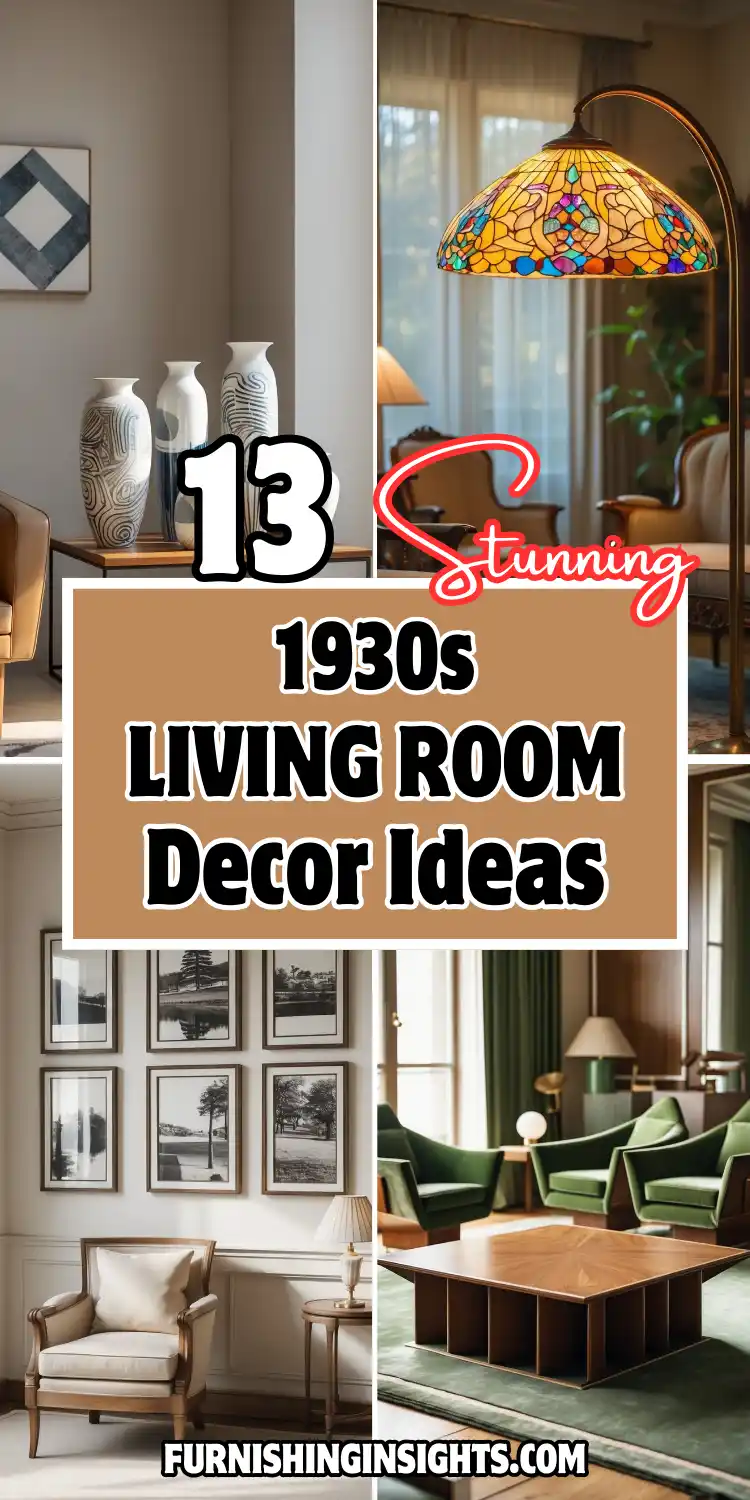
I’ve always been fascinated by the charm of the 1930s — the era of art deco, bold patterns, and cozy living rooms where every piece told a story.
The first time I tried to recreate that vibe in my own home, I realized it wasn’t just about vintage furniture or pastel wallpaper; it was about capturing a feeling — elegance mixed with comfort, sophistication without stuffiness.
If you’re drawn to the timeless glamour and warmth of 1930s design, you’re in luck.
In this article, we’ve rounded up 13 inspiring living room decor ideas that bring the spirit of the ’30s into a modern home.
Whether you love sleek lines, bold accents, or soft nostalgic touches, these ideas will help you create a space that’s both stylish and inviting.
Incorporate bold geometric Art Deco patterns on rugs or wallpaper

I love strong geometric patterns to anchor a 1930s vibe. Rugs or wallpaper with chevrons, sunbursts, or stepped motifs instantly set that Art Deco mood.
Deep jewel tones with metallic accents feel right to me. I keep the rest of the decor simple so the pattern can really shine.
Use sleek Streamline Moderne furniture with curved edges

Streamline Moderne pieces draw me in with their smooth curves and no-fuss shapes. They give a nod to the era without going overboard.
I like pairing rounded sofas or armchairs with chrome or Bakelite accents. The curves keep the space open and soft.
Mixing vintage pieces with a few modern touches keeps things from feeling like a museum. It’s all about balance, right?
Add mirrored coffee tables to reflect light and enhance glam

A mirrored coffee table bounces light around and makes the room feel bigger. The reflective surface brightens up dull corners without adding clutter.
I go for sleek frames—nothing too ornate. Mirrored tops look great with velvet sofas and geometric rugs for that vintage-meets-modern mix.
Just a few decorative pieces on the table, nothing wild. That way, the glam factor stays high but the vibe is still chill.
Choose low-hanging pendant lights with metallic finishes

Low-hanging pendant lights really nail the 1930s look for me. Metallic finishes like chrome, brass, or silver just scream Art Deco.
I hang them over the seating area or coffee table for a cozy, focused glow. Keeping the fixtures streamlined keeps that clean, machine-age feel.
Accent walls with rich jewel tones like emerald or sapphire

Deep jewel tones instantly give a 1930s living room mood and depth. I like emerald or sapphire for just one wall to keep things interesting but not too dark.
Brass fixtures and velvet upholstery feel right with these colors. The contrast makes original moldings and artwork really pop.
Display vintage brass or chrome lighting fixtures

Brass and chrome lights always anchor a 1930s look for me. They offer clean lines and a subtle shine that fits the period.
I put a restored pendant or sconce where it’ll draw the eye—above a seating group, maybe. Authentic pieces or good restorations keep things honest and lived-in.
Metal finishes with glass shades or geometric details bring balance. Sometimes just one striking fixture sets the whole tone.
Include wooden side tables with clean, simple lines

Wooden side tables with smooth edges and simple shapes echo the 1930s perfectly. They add warmth and a sense of craftsmanship, but don’t take over the room.
I lean toward darker woods like walnut or oak for that authentic feel. One beside the sofa keeps books and lighting handy while staying true to the era.
Add velvet upholstery in deep colors for a luxurious touch

Velvet in rich jewel tones really brings out that 1930s glamour. It’s cozy and has a nice sheen without being too much.
I like deep emerald, navy, or burgundy on sofas and armchairs. These play well with wood, brass, and the geometric patterns from the era.
Accessories stay simple—solid cushions, low-profile rug—so the velvet can stand out. Velvet can last if you care for it, so I rotate cushions and vacuum gently now and then.
Use stepped or ziggurat shapes in furniture design

Stepped and ziggurat shapes just feel so 1930s to me. They add a clear geometric rhythm to sofas, cabinets, and mirror frames.
I look for tiered edges or stacked layers—those Art Deco lines are unmistakable. Wood, metal, or lacquer finishes all work as long as things don’t get too fussy.
I keep proportions bold but not overwhelming. Sometimes one stepped statement piece is all you need to tie things together.
Incorporate stained glass lampshades for period-authentic lighting

Stained glass lampshades bring rich color and hand-crafted detail to the space. They give a warm, diffused light that’s perfect with velvet and dark wood.
I pick shades with geometric or floral patterns typical of the time. Just one statement lamp can anchor a seating area nicely.
I clean them gently with a soft cloth—no harsh cleaners. That keeps the glass and metal looking good for years.
Place ceramic or glass vases with abstract designs

I like ceramic or glass vases with abstract shapes for visual interest that doesn’t crowd the room.
Their clean lines and bold patterns echo Art Deco forms and fit well on mantels or tables.
Mixing matte ceramics with glossy glass adds contrast. Limiting the palette to two or three tones keeps it cohesive and feels right for the period.
Frame black-and-white vintage photographs or prints

Black-and-white photos really anchor a 1930s living room. I stick with simple frames—Art Deco shapes or thin black ones—so the images stand out.
I like mixing portraits and cityscapes. Hanging them in a grid or tight salon arrangement feels true to the era’s style.
Utilize built-in shelving with geometric cutouts

Built-in shelves with geometric cutouts echo Art Deco lines and add storage. They give a bold, structured look that doesn’t overwhelm.
I arrange books, sculptures, and framed photos in alternating cubbies for balance.
Lighting inside the cutouts helps highlight the shapes and avoids dark corners.
Muted woods or lacquered finishes keep things period-appropriate. It feels tidy and subtly decorative—just how I like it.
Defining 1930s Living Room Style

I see the 1930s living room as a blend of clean shapes, rich textures, and practical comfort.
Geometric patterns, streamlined furniture, and lighting that’s both stylish and useful really define the look for me.
Key Design Elements
I focus on four main elements when recreating a 1930s living room: form, materials, color, and lighting.
Furniture shows curved or angular lines with low profiles and tapered legs.
Upholstery often uses velvets, leather, or tightly woven fabrics in solid or geometric patterns.
Colors lean toward muted jewel tones—deep teal, mustard, olive—and contrast with cream or warm gray walls.
Rugs and wallpapers use bold geometry: chevrons, sunbursts, and stepped motifs.
Lighting plays a dual role.
I pick lamps and fixtures with chrome, bakelite, or frosted glass.
They provide strong task light and also serve as sculptural focal points.
Influential Designers and Movements
I name two key movements that shaped the look: Art Deco and Streamline Moderne.
Art Deco brought luxury and geometric ornament: mirrored surfaces, inlaid wood, and stylized motifs.
Streamline Moderne simplified forms into aerodynamic, horizontal lines and smooth curves.
René Lalique worked wonders with glass, while Jean-Michel Frank had a knack for pared-back luxury.
American makers mixed craft with industrial details.
Craftspeople used accessible materials because of the Depression, so durability and economy influenced design as much as style.
Adapting 1930s Decor for Modern Homes

I try to keep the 1930s spirit while making rooms livable today.
I pick a few strong vintage elements and pair them with modern pieces for balance and comfort.
Blending Vintage and Contemporary Pieces
I start by choosing one or two authentic 1930s items—like a curved Art Deco sofa or a chrome-legged coffee table—as focal points.
I place those pieces against clean, modern furniture to avoid a cluttered, museum feel.
For seating, I mix a restored 1930s armchair with a low-profile modern sofa.
That contrast keeps the room comfortable and grounded.
Lighting should read as deliberate.
I use a period pendant or brass floor lamp, and then add recessed or slim LED fixtures for everyday tasks.
Accessories matter: a single geometric mirror, a velvet cushion in sapphire or mustard, and a few streamlined ceramics bring cohesion without crowding the space.
Color Palettes and Material Selection
I usually stick to a restrained palette: warm neutrals, black accents, and a single bold jewel tone—think sapphire or emerald.
These colors nod to 1930s Art Deco, but they still feel fresh in modern spaces.
For walls, I lean toward matte eggshell or soft plaster finishes. They feel timeless and really let the furniture do the talking.
I like to mix gloss and texture when it comes to materials.
Pairing lacquered or mirrored surfaces with natural wood and wool rugs just works.
Metals like brass or chrome add a nice touch, though I keep shiny finishes to fixtures and small tables.
That way, the space feels calm and actually livable—not like a showroom.


